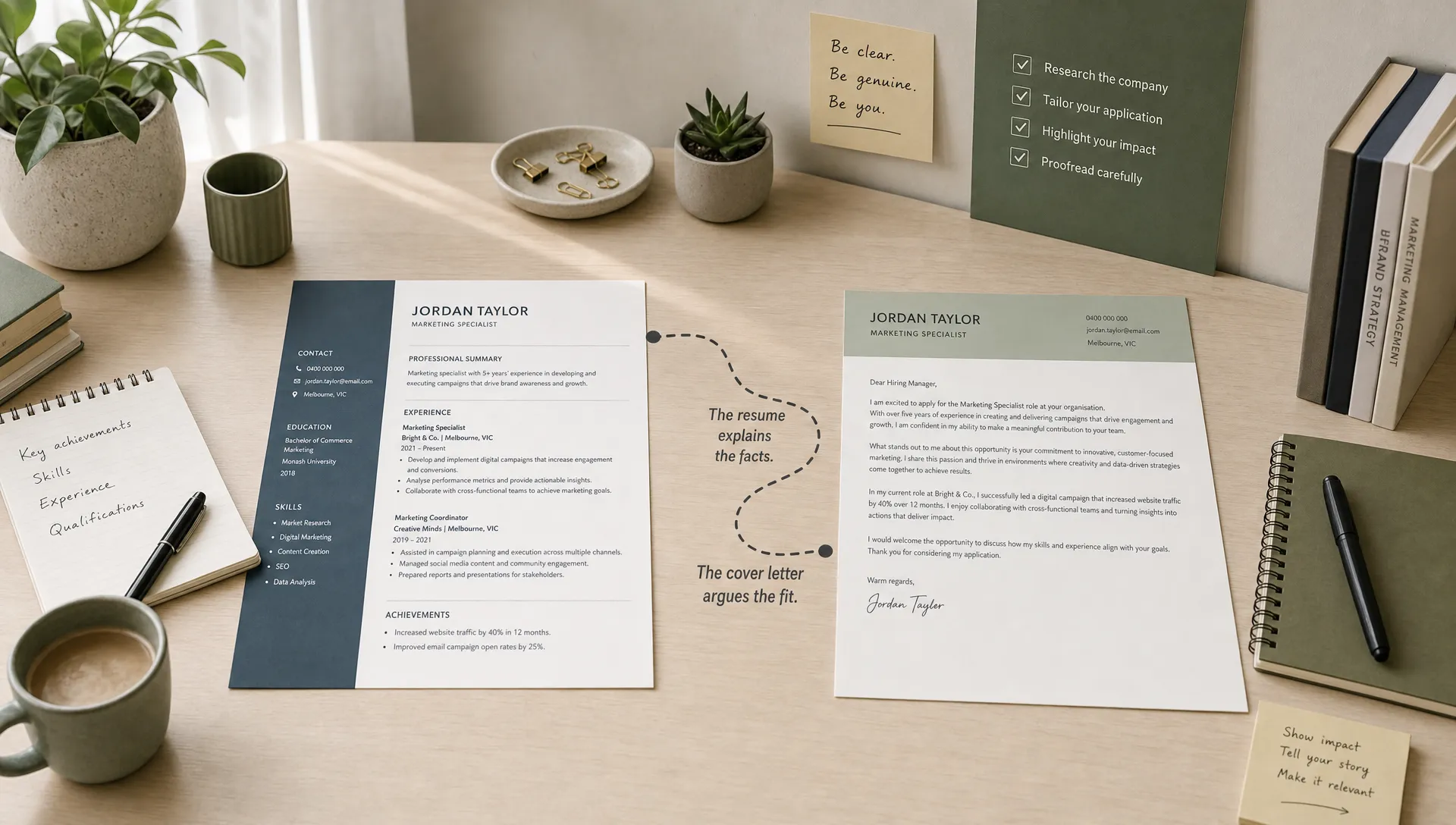
Short answer: yes, you should use Easy Apply on LinkedIn, but only as part of a smarter job search strategy. It can save time, help you move quickly on suitable roles, and keep momentum high when you are applying across multiple opportunities. But if you use it as a one-click shortcut for every job you see, it can also make your applications weaker, less targeted, and easier to ignore.
For students, graduates, and career changers, this distinction matters. You may already be competing against candidates with more experience, stronger networks, or clearer role alignment. Easy Apply can help you get into the race, but it will not fix a resume that does not match the role, a vague LinkedIn profile, or a missing skills story.
The goal is not to avoid Easy Apply. The goal is to know when it helps, when it hurts, and how to use it without becoming another generic application in a recruiter’s queue.
What does Easy Apply on LinkedIn actually do?
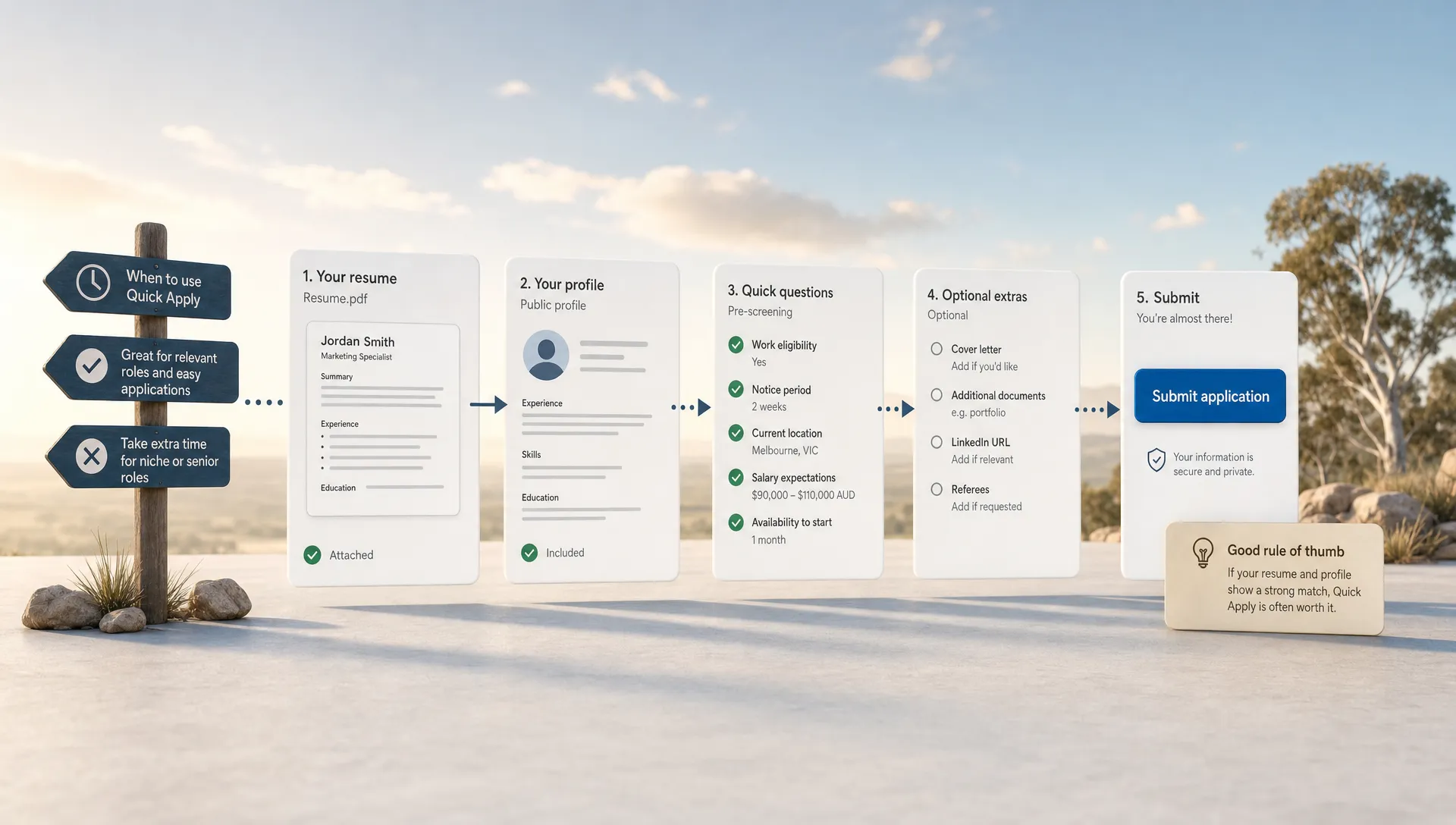
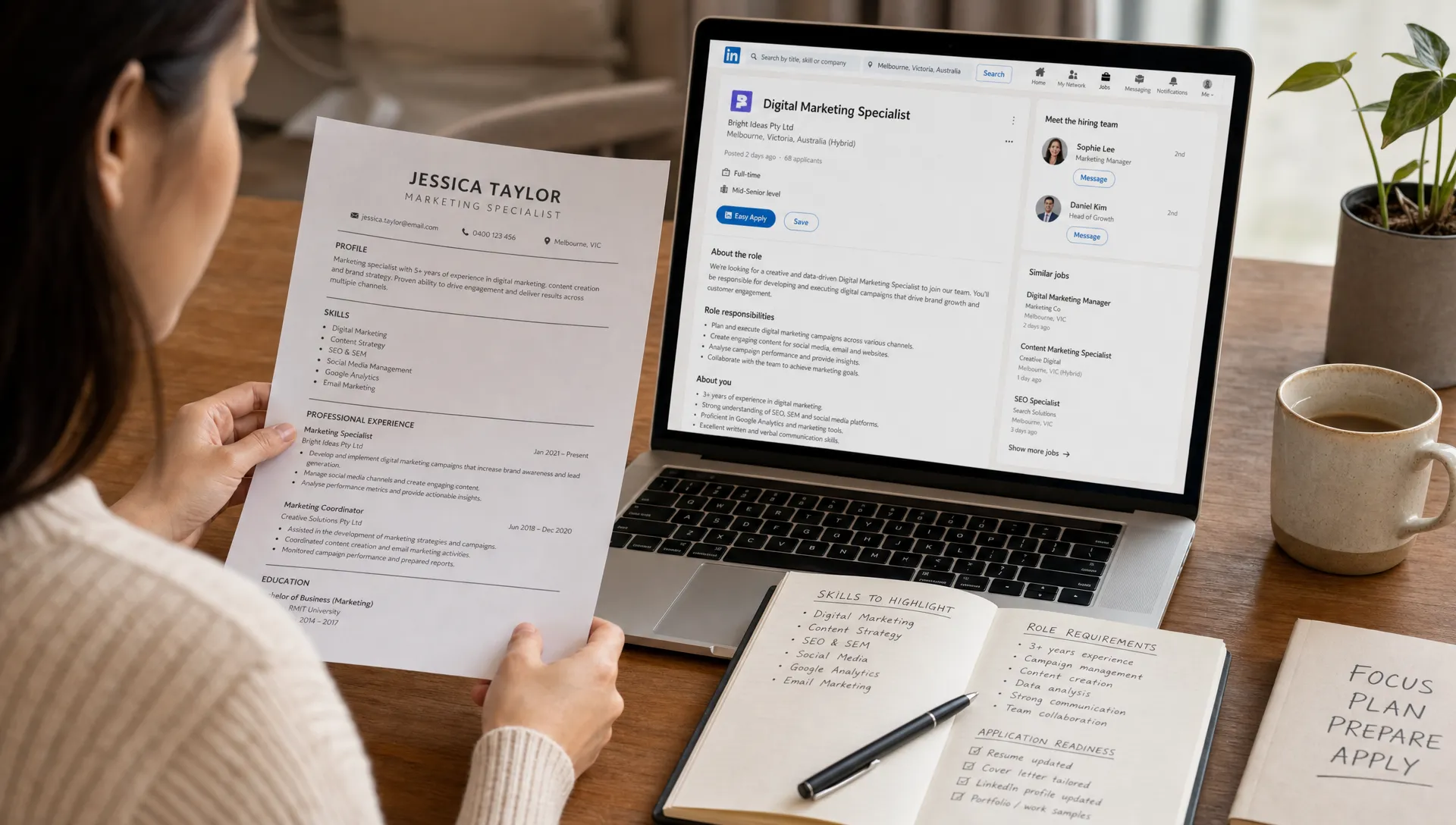
Easy Apply is a LinkedIn application option that lets you apply to certain jobs without leaving LinkedIn. Instead of being sent to an employer’s external careers page, you can submit your LinkedIn profile, resume, contact details, and sometimes answers to screening questions through a simplified application flow.
LinkedIn’s Help Centre explains that not every job has Easy Apply. Some employers choose to redirect candidates to their own application system instead. When Easy Apply is available, the process is usually much faster than a traditional application.
That speed is the entire appeal. You can apply while commuting, between classes, after work, or during a quick job search session. For job seekers who feel overwhelmed by long forms and repetitive uploads, Easy Apply feels like a relief.
But the same thing that makes it convenient also creates the main problem: everyone else can apply quickly too.
Why Easy Apply feels so tempting
Job hunting is emotionally draining. Every application takes effort, and many candidates receive little or no response. When a job platform offers a faster path, it is natural to use it.
Easy Apply can feel especially useful if you are:
There is nothing wrong with wanting efficiency. In fact, a job search needs volume to some extent. If you only apply to one role at a time and wait weeks for a response, you may slow your progress unnecessarily.
The issue is that speed without strategy can become a numbers game where you send more applications but learn very little from the results. If you are getting no replies, the problem may not be that you need to click Easy Apply more often. It may be that your resume, profile, or role targeting needs sharper alignment.
That is where many job seekers get stuck. They increase activity, but not quality.
The hidden downside: low effort applications are easy to overlook
Recruiters and hiring teams are usually reviewing applications under time pressure. A simplified application process can attract a large number of candidates, including people who only partly match the role. This means your application has to communicate fit quickly.
If your resume is generic, the recruiter may not see the connection between your background and the job. If your LinkedIn profile is incomplete, the employer may not get enough confidence to move you forward. If your experience is relevant but poorly framed, your strongest evidence may be buried.
This is one reason candidates feel like they are being ignored even when they are applying consistently. The mechanics of modern hiring can be brutal. Applications can be filtered, skimmed, delayed, or lost in a crowded process. If that sounds familiar, Versadox has explored the bigger pattern in why job seekers are getting ghosted.
Easy Apply does not automatically mean your application is low quality. But it does make it easier to submit before your materials are ready. That is the trap.
When Easy Apply on LinkedIn is worth using
Easy Apply works best when the role is already a strong match and you have a tailored resume ready to go. In that case, the simplified process helps you move quickly without sacrificing relevance.
Use Easy Apply when:
For example, if you are a marketing graduate applying for a marketing assistant role that asks for content creation, social media scheduling, basic analytics, and communication skills, Easy Apply can be perfectly reasonable if your resume already highlights those areas.
The same applies to career changers. If you are moving from retail management into customer success, and your resume clearly translates customer handling, conflict resolution, performance targets, and CRM exposure, Easy Apply can help you submit quickly to roles where your transferable skills are obvious.
The key phrase is “obvious”. If the match is only clear after a long explanation, Easy Apply alone may not be enough.
When you should not rely on Easy Apply
There are situations where Easy Apply is too thin for the opportunity. If the job matters a lot to you, or if your fit is not immediately obvious, you should usually do more than submit through LinkedIn.
Be cautious with Easy Apply when:
This does not mean you should never use Easy Apply for competitive roles. It means you should not let it be your only move. A better approach may be to apply through LinkedIn, then follow up with a tailored message, connect with someone at the organisation, or apply through the company website if that process allows stronger supporting material.
In some cases, the extra effort is the advantage. Many candidates will take the fastest route. If you take the more thoughtful route, you can stand out before the interview stage.
How to use Easy Apply without weakening your job search
The smartest approach is to treat Easy Apply as a delivery method, not a strategy. Your strategy is role alignment. Easy Apply is just one way to send the application.
Check the match before you apply
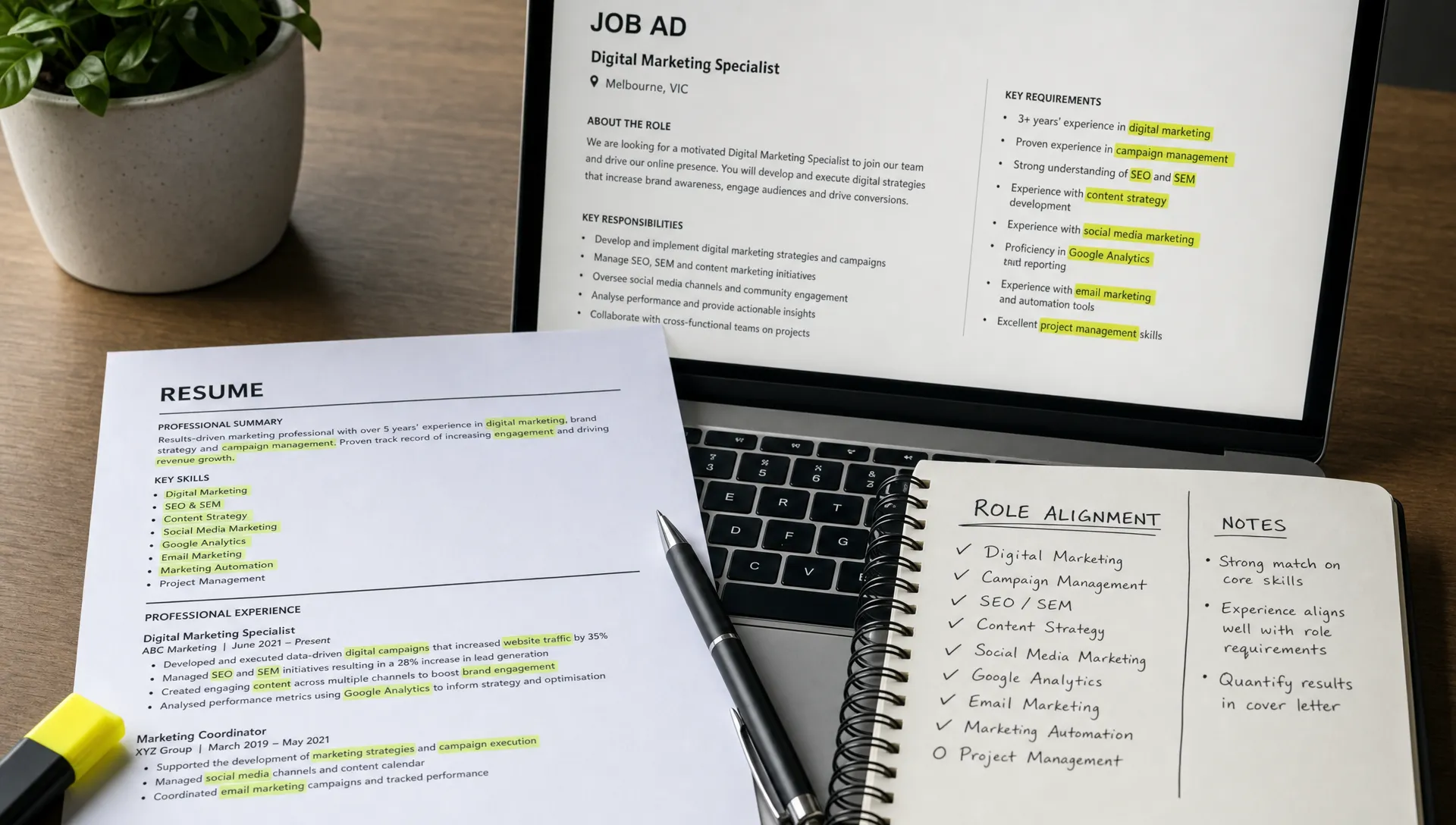
Before clicking, scan the job description and ask a simple question: “Would a recruiter understand why I fit this role within 10 seconds of opening my resume?”
If the answer is yes, Easy Apply may be fine. If the answer is no, pause. You may need to adjust your summary, skills section, project descriptions, or bullet points before submitting.
This is especially important for students and graduates who may not have long employment histories. Your evidence may come from coursework, internships, casual jobs, volunteering, leadership roles, or group projects. If that evidence is not clearly connected to the job, the recruiter may miss it.
Tailor the top third of your resume
For Easy Apply roles, the top of your resume matters. A recruiter may skim quickly, so the first section should make your fit obvious.
Focus on:
If you are applying to different role types, do not use the same resume for all of them. A resume for a business analyst graduate role should not look identical to one for a customer service coordinator role, even if both are entry-level.
Make your LinkedIn profile support the resume
With Easy Apply, your LinkedIn profile may be reviewed alongside your resume. If the two tell different stories, that can create doubt.
Your LinkedIn profile does not need to be perfect, but it should be consistent. Your headline, About section, experience, education, skills, and recent activity should support the roles you are targeting.
For example, if your resume positions you for data analyst roles, but your LinkedIn headline only says “Student” and your skills section is empty, you are missing an easy credibility signal.
Answer screening questions carefully
Some Easy Apply applications include screening questions about work rights, location, experience, qualifications, salary expectations, or availability. Do not rush these.
Answer honestly and clearly. If a question asks how many years of experience you have with a tool, do not exaggerate. If you have used it through university projects rather than paid work, your resume should make that context clear.
Screening questions can influence whether your application is reviewed. Treat them as part of the application, not an annoying formality.
Add a human touch where possible
Easy Apply is digital, but hiring is still human. If you can connect with the recruiter, hiring manager, alumni, or someone in the team, a thoughtful message can add context to your application.
This does not mean spamming people with “please hire me” messages. A better message is brief, specific, and respectful. Mention the role, why it caught your attention, and one relevant point about your background.
Your reputation and relationships can influence opportunities in ways that are not always visible on a job board. Versadox explores this idea in your reputation as a second resume, which is especially relevant when you are trying to stand out beyond the application form.
Track what happens after you apply
If you use Easy Apply often, tracking matters. Otherwise, you will not know whether it is working.
Record the role, company, date applied, resume version, application method, and outcome. After a few weeks, patterns may appear. You may find that Easy Apply works for certain roles but not others. You may find that direct applications produce more interviews. You may discover that your resume gets responses for assistant roles but not analyst roles, which points to a positioning gap.
Without tracking, rejection feels personal. With tracking, it becomes data you can improve.
A simple decision rule for Easy Apply
If you are unsure, use a three-level decision rule.
Green light: Use Easy Apply when your resume is already tailored, your LinkedIn profile supports the same story, and the role is a clear match.
Amber light: Use Easy Apply plus another action when the role is attractive but competitive. That extra action might be a tailored cover letter through the company site, a recruiter message, or a connection request to someone in the organisation.
Red light: Do not apply yet when your resume does not show the required skills, your profile is outdated, or you are relying on the recruiter to “figure out” your potential. Fix the gap first.
This simple rule prevents the biggest mistake: confusing activity with progress.
What should you do before clicking Easy Apply?
Before using Easy Apply on LinkedIn, give yourself a quick readiness check. You do not need to spend hours rewriting everything, but you do need enough alignment to be taken seriously.
Ask yourself:
This is where a career intelligence tool can help. Versadox is designed to help job seekers compare applications against real roles, identify gaps, and improve resumes and cover letters before applying. Instead of guessing whether your resume is ready, you can use role alignment insights, readiness scoring, and guided improvements to make the application stronger.
That matters because the goal is not just to send more applications. The goal is to send applications that give employers a clear reason to interview you.
So, should you use Easy Apply on LinkedIn?
Yes, but use it deliberately.
Easy Apply is useful for speed, volume, and convenience. It is not a replacement for a targeted resume, a clear LinkedIn profile, or a thoughtful job search strategy. If you are applying to roles where you are already a strong match, it can save time. If you are applying to roles where your fit needs explanation, it can be too limited on its own.
Think of Easy Apply as a shortcut only after you have done the important work. If your application is aligned, the shortcut helps. If your application is weak, the shortcut just sends the weakness faster.
For students, graduates, and career changers, that is the main lesson. You do not need to be the most experienced candidate in the pile. But you do need to make your relevance easy to understand.
Frequently Asked Questions
Is Easy Apply on LinkedIn bad for job seekers? No. Easy Apply is not bad by itself. It becomes a problem when you use it for every role without tailoring your resume or checking whether you are a strong match.
Do recruiters look at Easy Apply applications? Yes, recruiters can review Easy Apply applications, but high application volume means they may skim quickly. Your resume and profile need to show relevance fast.
Should I apply on LinkedIn or the company website? If the role is important or requires detailed supporting material, the company website may give you more room to tailor your application. For straightforward roles where your resume is already aligned, Easy Apply can be suitable.
Can I use the same resume for every Easy Apply role? You can, but it is usually not the best approach. Even small changes to your summary, skills, and recent experience can improve how well your resume matches the role.
How many Easy Apply jobs should I apply for? There is no perfect number. Focus on a balance between quality and volume. If you are applying to many roles and getting no interviews, review your targeting, resume alignment, and LinkedIn profile before increasing the number.
Apply with more clarity before you hit submit
Easy Apply can move fast, but your career strategy should not run on guesswork. Before you send another application, check whether your resume actually matches the role you want.
With Versadox, you can build stronger resumes and cover letters, compare your application against real roles, identify gaps, and apply with more confidence. If you want to understand how career technology can support a smarter job search, you can also explore how Versadox works.
The Perfect Time is a Myth: The Unfiltered Truth About Career Moves
Waiting for perfect economic conditions is a complete myth. Use this data-driven, four-step strategic blueprint to confidently design and execute your next massive career pivot.





.svg)