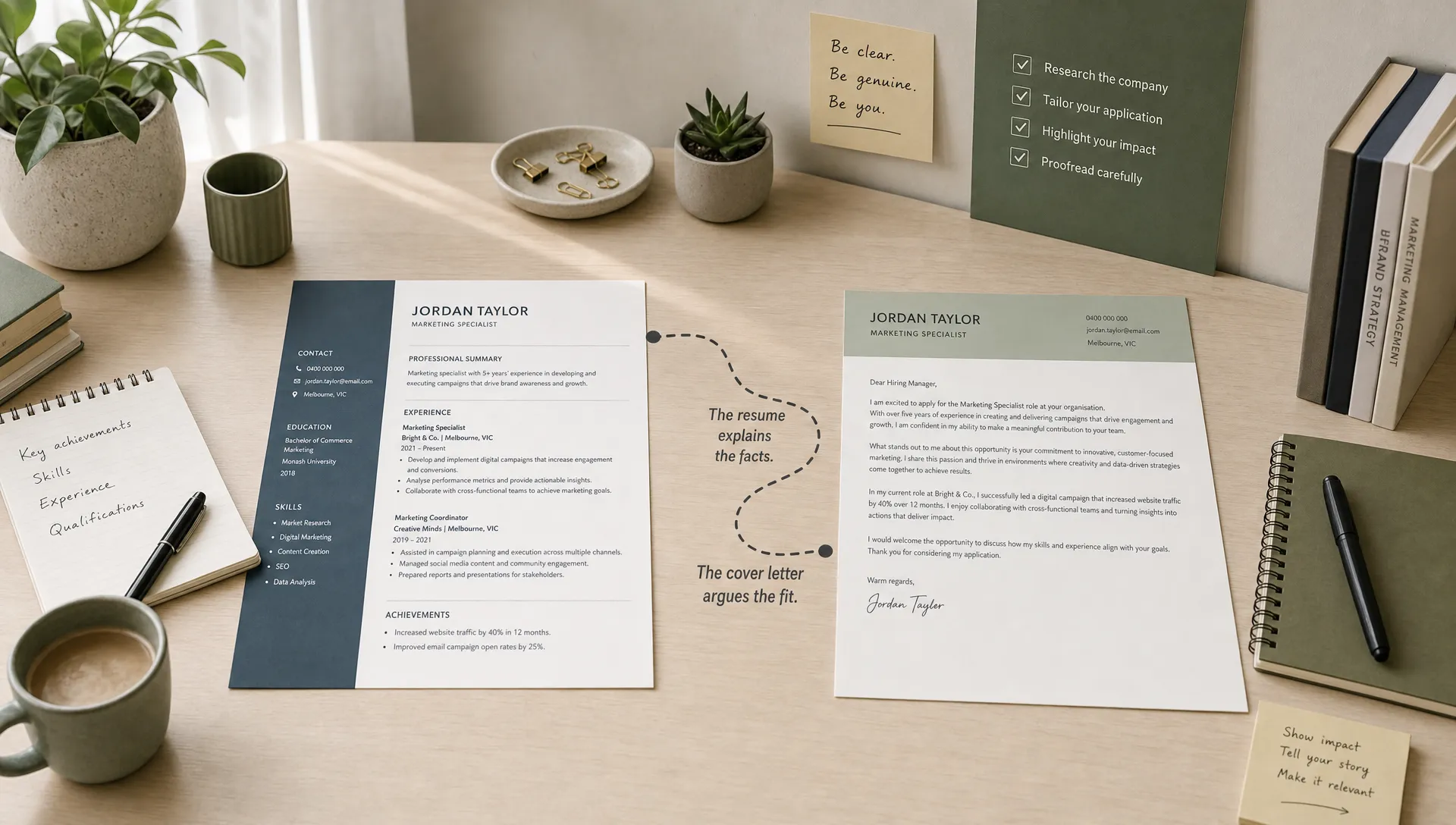
Skills for Your Resume That Employers Actually Notice
Jacob Atkinson
Versadox Founder
A strong resume is not the one with the longest skills section. It is the one that makes an employer think, “This person can do the work.”
That distinction matters. Many job seekers list the same familiar words, communication, teamwork, leadership, problem-solving, Microsoft Office, and attention to detail. Those skills are not wrong, but they are easy to ignore when they appear without context. Employers notice skills when they are relevant to the role, backed by evidence, and written in the language of the job.
For students, graduates, and career changers, this is good news. You do not need decades of experience to look capable. You need to show the right skills in a way that helps recruiters, hiring managers, and applicant tracking systems understand your fit quickly.
What employers really look for in resume skills
When an employer scans your resume, they are not judging your skills in isolation. They are asking a practical question: can this person solve the problems this role exists to solve?
That means the best skills for your resume are not always the most impressive ones. They are the most aligned ones. A graduate applying for a marketing assistant role may get more value from showing campaign reporting, content scheduling, customer research, and clear writing than from listing every university subject they completed. A retail worker moving into administration may stand out by translating customer service into scheduling, data entry, conflict handling, point-of-sale accuracy, and process follow-up.
Employers usually notice three things first:
This also matters for automated screening. Applicant tracking systems can identify keywords and role-related terms, but they cannot rescue a vague resume. If you want a deeper look at balancing keywords with your real human strengths, Versadox explores this in why your human edge still matters in an ATS-driven job market.
The skills employers actually notice
There is no universal list of perfect resume skills. A software internship, childcare role, accounting graduate program, disability support position, and project coordinator job will all demand different strengths. Still, the skills that stand out tend to fall into a few practical categories.
The strongest resumes do not simply copy this list. They choose the skills that match the target role, then prove them with examples.
Hard skills get you matched, soft skills get you believed
Hard skills are usually easier to verify. If a job asks for Excel, MYOB, Python, forklift operation, first aid, case notes, or social media scheduling, employers can quickly see whether you have that capability. These skills are especially important for ATS matching because they often appear as clear keywords in job ads.
Soft skills are different. Employers value them, but they are harder to trust when they appear as unsupported claims. Almost anyone can write “great communicator” or “team player”. Fewer people show what that looked like in practice.
Instead of listing soft skills as personality traits, connect them to behaviour. For example, “teamwork” becomes more credible when you write that you coordinated tasks across a four-person university project, supported new casual staff during busy shifts, or helped resolve scheduling issues in a volunteer group. Versadox covers this idea in more depth in how everyday socialisation can become real resume evidence.
A simple rule helps: hard skills can sit in your skills section, but soft skills should usually appear inside your experience bullets as proof.
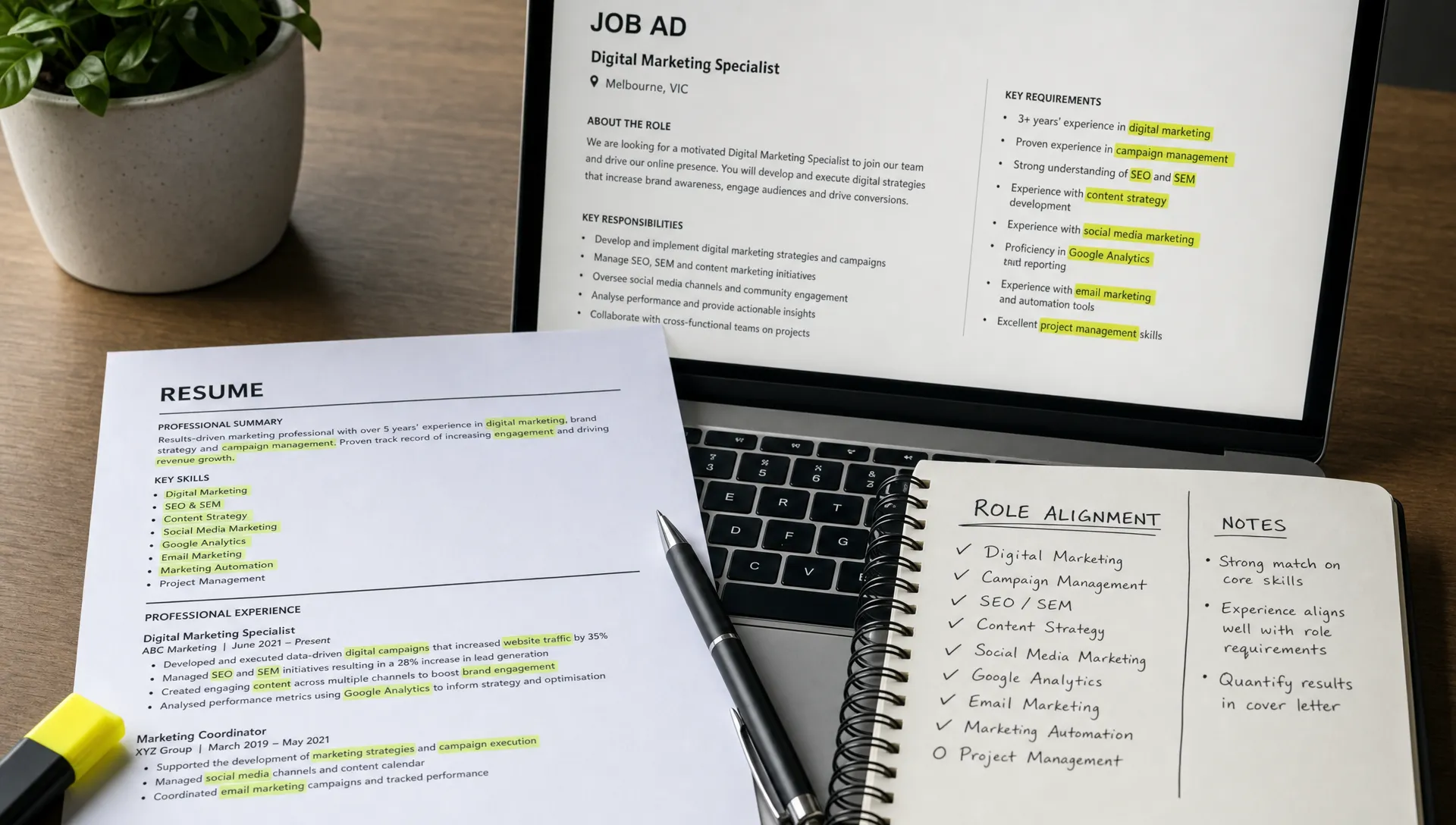
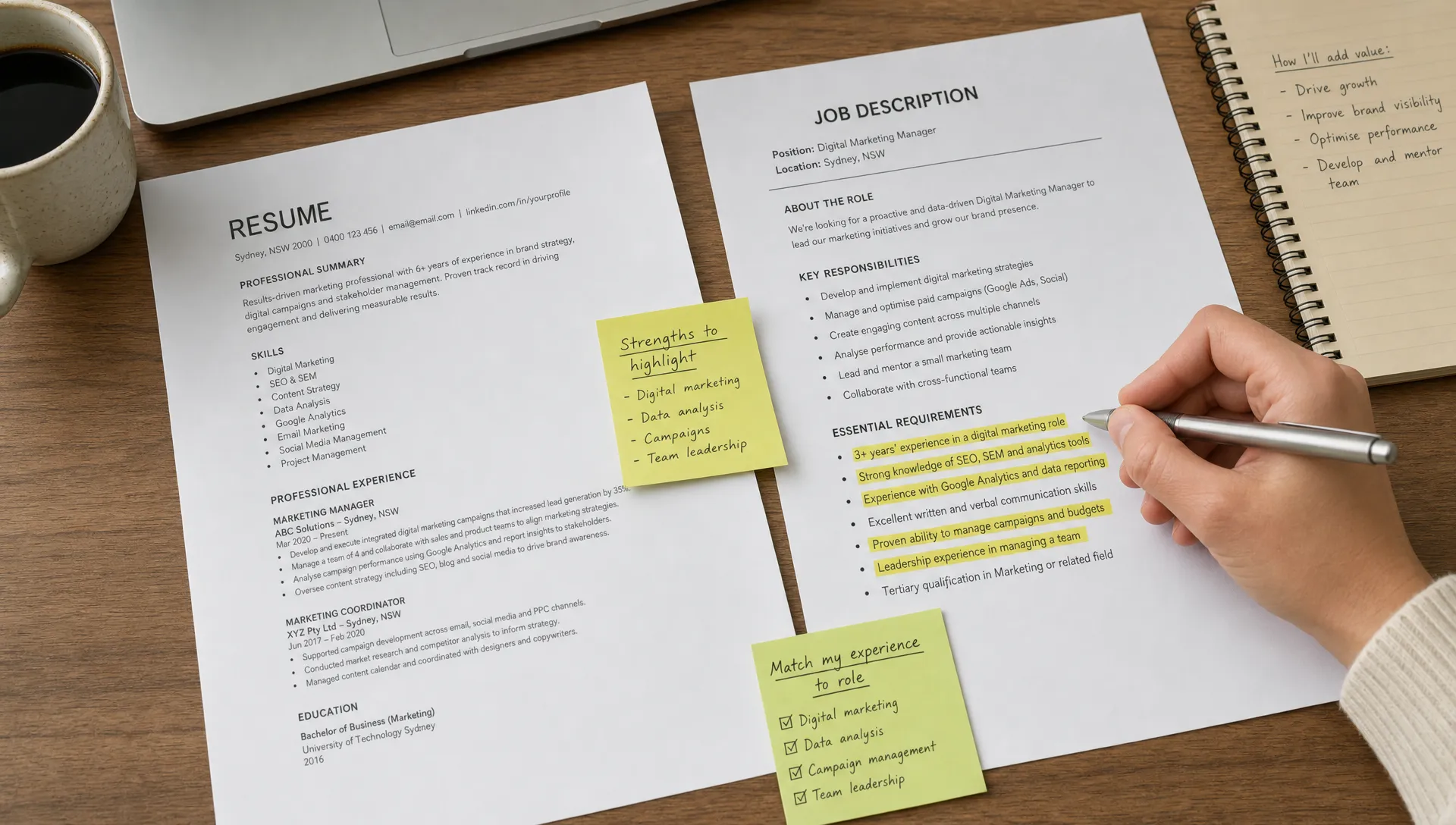
How to choose the right skills for each job
The biggest mistake job seekers make is treating their resume skills section as permanent. Your core experience may stay the same, but the skills you highlight should shift depending on the role.
Use this simple method before you apply:
For Australian job seekers, resources such as Jobs and Skills Australia can also help you understand common tasks and skill expectations across occupations. Global reports point in a similar direction. The World Economic Forum Future of Jobs Report 2025 highlights analytical thinking, resilience, flexibility, technological literacy, and lifelong learning as important workforce capabilities, but your resume still needs to connect those broad skills to the specific role in front of you.
Where to put skills on your resume
A dedicated skills section is useful, but it should not carry the whole resume. Employers notice skills more when they appear in the right places.
If a skill is essential to the role, it should usually appear more than once, but not as copy-paste repetition. For example, a data analyst resume might include “SQL” in the skills section, mention SQL reporting in a project, and describe a work or study example where SQL helped answer a business question.
Weak skills wording versus stronger skills wording
The words you choose can make a major difference. Strong resume writing is not about sounding fancy. It is about being specific.
If you do not have numbers, do not invent them. Scope, frequency, tools, audience, and outcome can still make a skill concrete. “Handled daily customer enquiries during peak trading periods” is stronger than “people person”, even without a percentage or dollar figure.
Skills students and graduates can use without sounding inexperienced
Students and graduates often underestimate their skill base because they think experience only counts if it came from a full-time professional job. Employers know early-career applicants are still developing. What they want is evidence of readiness.
Useful skills may come from:
The key is translation. “Worked at a cafe” might become cash handling, customer communication, order accuracy, shift coordination, conflict management, and working under pressure. “Completed group assignments” might become research, presentation, collaboration, deadline management, document editing, and peer feedback.
Career changers face a different challenge. You may have plenty of experience, but employers may not immediately see how it transfers. Your job is to make the bridge obvious.
Instead of leading with old job titles, lead with capabilities that match the new field. A teacher moving into learning design might highlight curriculum planning, stakeholder communication, workshop facilitation, assessment design, and digital learning tools. A hospitality manager moving into operations might highlight rostering, supplier coordination, team leadership, customer escalation, stock control, and compliance.
A career change resume should not pretend your past is unrelated. It should reframe your past so the employer sees why it matters.
Common mistakes that make resume skills easy to ignore
Even capable applicants can weaken their resume by presenting skills poorly. Watch out for these common issues.
First, avoid a skills list that looks like a random keyword dump. Employers can tell when a resume is trying to be everything at once. If you are applying for a junior finance role, “video editing” may not need space unless the role specifically values content creation or reporting visuals.
Second, do not rely on adjectives. Words like motivated, passionate, reliable, and hardworking are positive, but they are not evidence. Replace them with actions that prove the same idea.
Third, avoid exaggerating your level. If you have used Excel for basic data entry, do not claim advanced financial modelling. Overclaiming may get you an interview, but it can damage trust when technical questions begin.
Fourth, do not hide important skills inside dense paragraphs or overly designed templates. Clean formatting, clear headings, and ATS-ready structure help both humans and systems find the information they need.
Finally, do not send the same resume everywhere. A resume for a graduate analyst role should not highlight the exact same skills as a resume for a customer success role, even if both are entry-level office jobs.
A simple resume skills template you can adapt
Your skills section should be easy to scan and grouped logically. For many roles, a structure like this works well:
Technical skills: Excel, Google Workspace, CRM updates, data entry, reporting, Canva.
Communication skills: Client emails, phone enquiries, stakeholder updates, presentation delivery.
Transferable strengths: Prioritisation, problem-solving, collaboration, attention to detail.
The exact headings should change depending on the role. A design applicant might use “Design tools”, “Creative production”, and “Client communication”. A data applicant might use “Data tools”, “Analysis”, and “Reporting”. A support worker might use “Client care”, “Documentation”, and “Compliance”.
The goal is not to create a perfect universal list. The goal is to make the employer’s decision easier.
Frequently Asked Questions
How many skills should I put on my resume? Most resumes work best with 8 to 15 well-chosen skills, depending on the role and your experience level. Prioritise the skills that appear in the job ad and that you can prove through experience, study, projects, or training.
Should I include soft skills in my skills section? You can include a few, but soft skills are more convincing when shown through achievements or responsibilities. For example, “trained new staff” proves communication and leadership better than listing both words by themselves.
What skills should I put on my resume if I have no work experience? Use skills from study, volunteering, sport, clubs, personal projects, and everyday responsibilities. Research, presentations, customer interaction, time management, digital tools, teamwork, and problem-solving can all be valid if you explain the context.
Should I change my skills for every job application? Yes. You do not need to rewrite your entire resume every time, but you should adjust the skills section, summary, and key bullet points so they match the role you are applying for.
Is it okay to copy skills from the job description? It is okay to use the employer’s wording when it truthfully describes your experience. Do not copy skills you do not have. The strongest resume mirrors the role while staying honest and evidence-based.
Build a resume that proves the right skills
Employers notice skills when they can quickly connect them to the role. That means your resume should not just say what you are good at. It should show why those strengths matter for this application.
Versadox helps job seekers compare their resume against real roles, identify gaps, understand readiness, and make guided improvements before applying. With tools for resumes, cover letters, role alignment, ATS-ready templates, and PDF export, it is built to help students, graduates, and career changers apply with more clarity and confidence.
Before you send your next application, ask one question: does this resume make my most relevant skills impossible to miss? If not, that is the place to start.
The Perfect Time is a Myth: The Unfiltered Truth About Career Moves
Waiting for perfect economic conditions is a complete myth. Use this data-driven, four-step strategic blueprint to confidently design and execute your next massive career pivot.





.svg)