A job resume is often treated like a formality, something you quickly update before applying and hope is “good enough”. In reality, it is one of the most important documents in your job search. It is the first structured explanation of who you are professionally, what you can do, and why an employer should speak with you.
If you have ever wondered, “what is a job resume, really?”, the simplest answer is this: it is a targeted career document that summarises your skills, experience, education, achievements, and suitability for a specific type of work.
But a strong resume does more than list your history. It helps employers make a decision. It tells them whether your background matches the role, whether you understand what the job requires, and whether inviting you to interview is worth their time.
What is a job resume?
A job resume is a concise document used when applying for work. It gives employers a snapshot of your professional background, usually across one to three pages, depending on your level of experience and the type of role.
A resume is not your full life story. It does not need to include every subject you studied, every casual job you held, or every task you have ever completed. Its job is to organise the most relevant information so an employer can quickly understand your fit.
A good resume usually answers four questions:
- Can you do the work required in this role?
- Have you shown similar skills, responsibilities, or results before?
- Do you understand what this employer is looking for?
- Is there enough evidence to invite you to the next stage?
That evidence can come from many places. For a student, it might include university projects, part-time work, volunteering, internships, or leadership roles. For a graduate, it might include placements, coursework, technical skills, and early workplace experience. For a career changer, it might focus on transferable skills, relevant achievements, and a clear explanation of how previous experience connects to the new direction.
Why does a resume matter?
Your resume matters because most employers use it as an early filter. Before you get a phone call, before you can explain your story in person, and before a hiring manager sees your potential, your resume has to make the case for you on paper.
In a competitive market, employers may receive dozens or hundreds of applications for a single role. Many use Applicant Tracking Systems, known as ATS, to organise applications and search for relevant information. Recruiters and hiring managers also tend to scan resumes quickly before deciding which ones deserve a closer look. That does not mean your resume must be perfect, but it does mean it needs to be clear, relevant, and easy to understand.
This is one reason many applicants feel confused when they hear nothing back. Sometimes the issue is not that they are unqualified. It may be that their resume does not show the right evidence clearly enough. If you want to understand the broader mechanics of silence after applying, Versadox has also explored why job seekers are often ghosted in today’s hiring process.
A resume also matters because it shapes the interview. Employers often use it as a conversation guide. If your achievements, projects, and skills are presented well, they give the interviewer better topics to explore. If your resume is vague, generic, or disorganised, you may spend the interview trying to fill in gaps that could have been addressed earlier.
Your resume is not the only thing employers notice
A resume is important, but it is not the whole story. Employers may also consider your online presence, referrals, portfolio, reputation, communication style, and how you conduct yourself during the process.
Think of your resume as your formal evidence, not your entire professional identity. It should support the broader impression you create. If your resume says you are reliable, collaborative, and detail-oriented, your behaviour throughout the hiring process should reinforce that message.
This is especially true in industries where networks, references, and past conduct matter. Your reputation can quietly influence opportunities, which is why it can function almost like your reputation as a second resume. The strongest job seekers align both: a strong written resume and a strong professional presence.
What should a job resume include?
Most resumes follow a familiar structure, although the order may change depending on your background and target role. The goal is not to follow a template blindly. The goal is to make the most relevant evidence easy to find.
A strong job resume often includes:
- Contact details: Your name, phone number, email address, location, and relevant professional links, such as LinkedIn or a portfolio.
- Professional summary: A short opening section that explains your current focus, key strengths, and target role.
- Key skills: A focused list of technical, workplace, or industry-specific skills that match the role.
- Work experience: Your roles, employers, dates, responsibilities, and achievements, written in a way that shows impact.
- Education and training: Degrees, certificates, courses, licences, or relevant study.
- Projects or placements: Especially useful for students, graduates, and career changers who need to show practical evidence.
- Volunteer work or extracurricular experience: Helpful when it demonstrates leadership, teamwork, communication, customer service, or initiative.
- Awards, achievements, or certifications: Useful when they strengthen your credibility for the role.
In Australia, it is usually not necessary to include a photo, age, marital status, or other personal details that do not help an employer assess your ability to do the job. Keep the focus on professional relevance.
Resume, CV, and cover letter: what is the difference?
In Australia, the terms “resume” and “CV” are often used interchangeably in everyday job applications. Many employers will ask for a CV when they simply mean a resume-style document outlining your experience and qualifications.
There are some exceptions. In academic, research, medical, or highly specialised fields, a CV may be longer and more detailed. It might include publications, conference presentations, research grants, teaching history, and professional memberships. For most students, graduates, and general job seekers, however, a resume and CV request usually refer to the same core document.
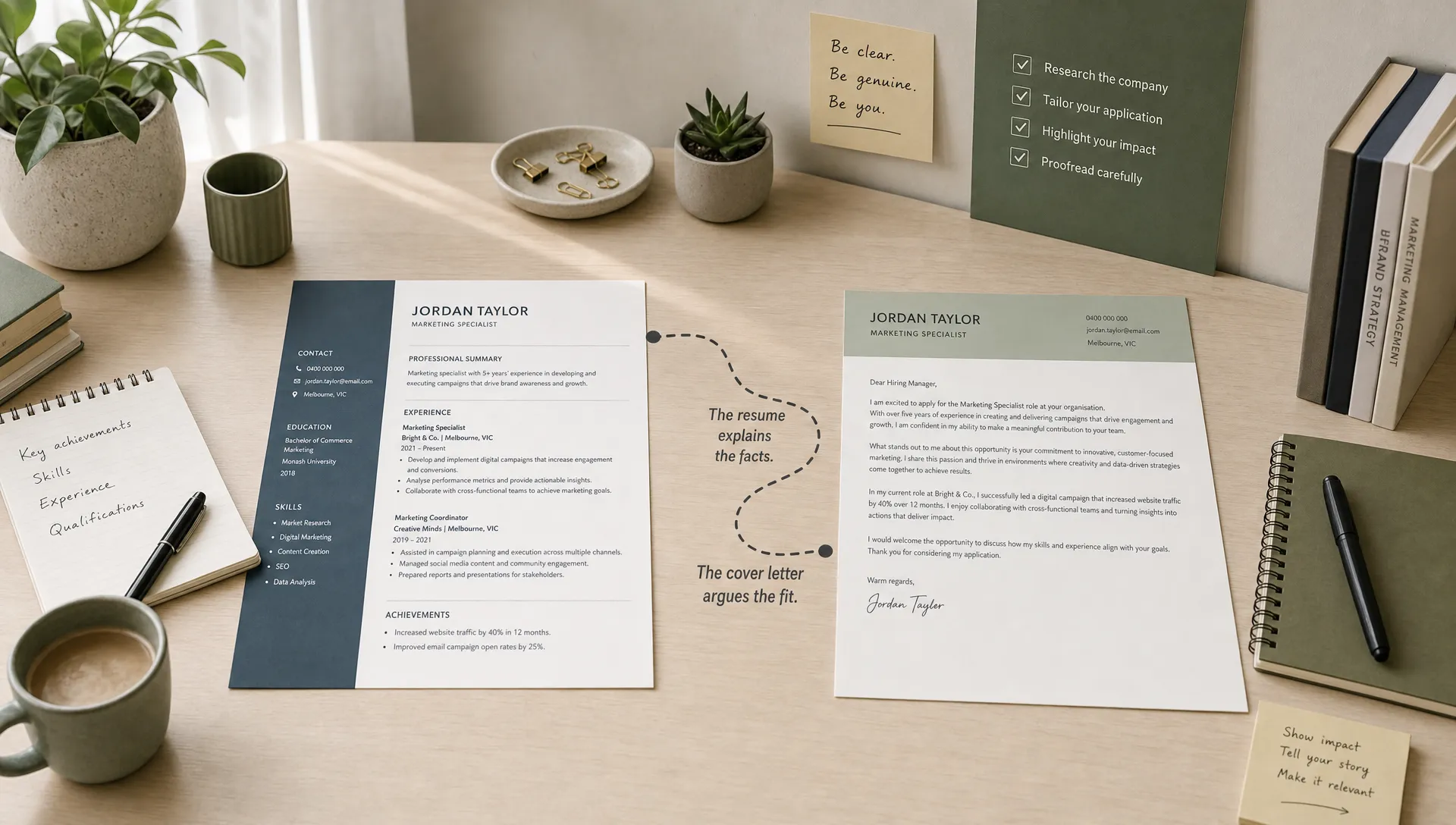
A cover letter is different. Your resume provides structured evidence. Your cover letter explains your motivation, introduces your fit, and connects your background to that specific employer. The resume answers “what have you done?” while the cover letter answers “why this role, and why you?”
How employers read a resume
Most employers do not read every resume from top to bottom at first. They scan. They look for signals that match the role, then decide whether to keep reading.
Common signals include job titles, recent experience, relevant skills, qualifications, industry exposure, achievements, and keywords from the job advertisement. They may also look for gaps, unclear timelines, overly generic language, or formatting that makes the document hard to follow.
This is why clarity matters so much. A resume does not need to be flashy. In fact, overly designed resumes can sometimes make information harder to process, especially if an ATS struggles to read them. Simple headings, consistent formatting, clear dates, and plain language often perform better than complicated layouts.
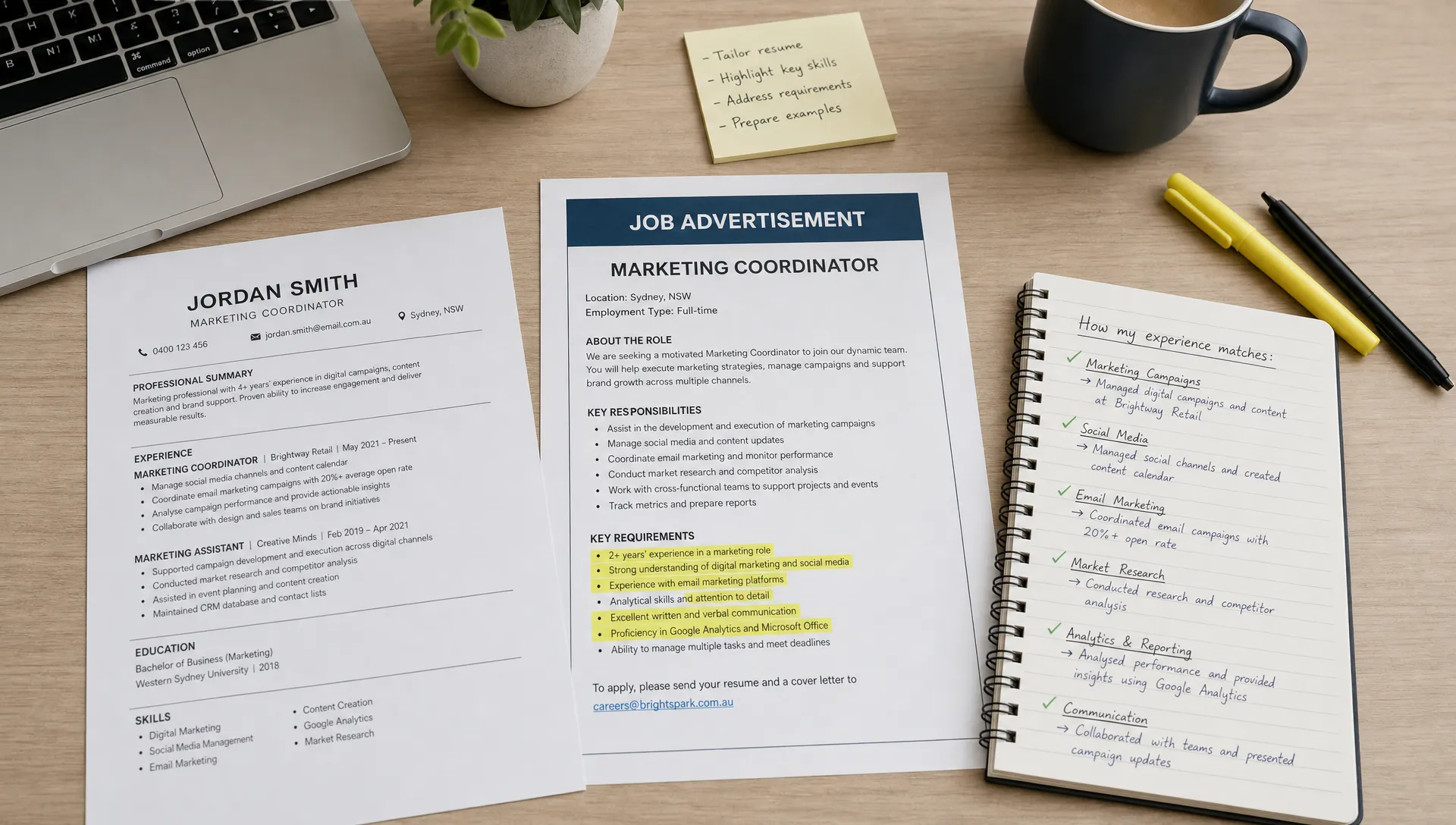
Employers are also looking for evidence, not just claims. Saying “excellent communicator” is weaker than showing how you communicated, who you worked with, and what outcome you helped achieve. Saying “team player” is common, but it becomes stronger when backed by examples from group projects, sport, volunteering, hospitality, retail, or community work. If you are unsure how everyday experience can become resume evidence, the idea is explored further in this guide to how everyday socialisation builds your best resume.
What makes a resume effective?
An effective resume is targeted, specific, readable, and honest. It does not try to impress everyone. It tries to make sense for the role in front of you.
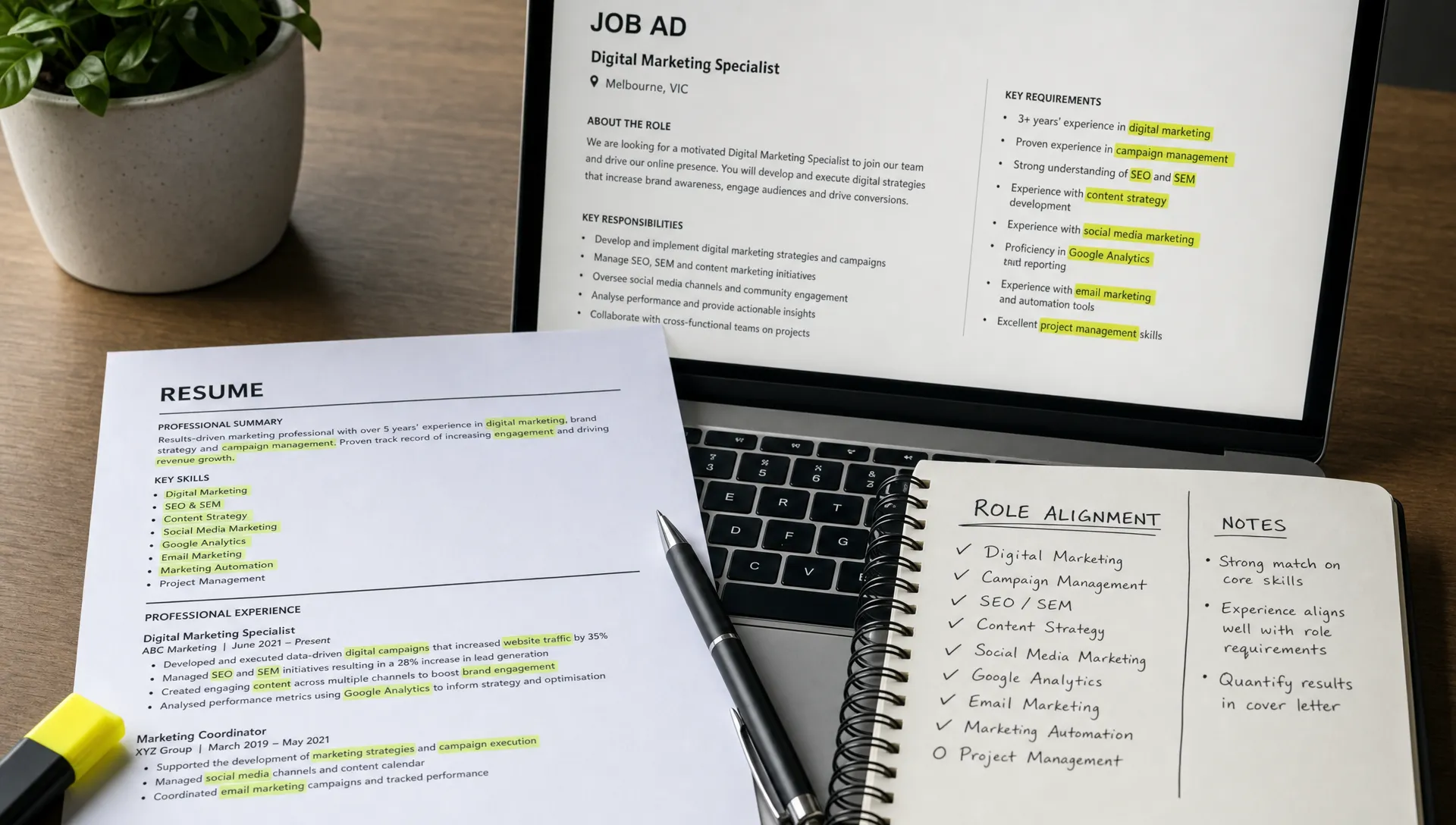
Start by reading the job advertisement carefully. Notice repeated skills, required tools, responsibilities, qualifications, and workplace qualities. Then review your own background and decide which experiences best prove you can meet those needs.
A strong resume also uses achievement-focused language. Instead of only listing duties, explain what changed because of your work. For example, “served customers in a cafe” is accurate, but “served up to 80 customers per shift while maintaining accurate orders and fast service during peak periods” gives the employer more useful information.
For students and graduates, this may feel difficult because you might not have years of professional experience. That is normal. You can still show evidence through coursework, placements, capstone projects, leadership roles, casual work, volunteering, competitions, or self-directed learning.
For career changers, the key is translation. You need to show how your previous experience connects to the new role. Skills such as stakeholder communication, problem solving, training, operations, analysis, customer service, leadership, and project coordination can transfer across industries when described clearly.
Common resume mistakes to avoid
One of the biggest resume mistakes is sending the same document to every employer. A general resume may feel efficient, but it often fails to match the specific role. Even small adjustments to your summary, skills, and experience bullets can make your application more relevant.
Another mistake is using vague language. Phrases like “hard worker”, “fast learner”, and “good communicator” are not wrong, but they are weak without proof. Employers need examples. Replace broad claims with concrete evidence wherever possible.
Formatting can also hurt your chances. Dense paragraphs, inconsistent spacing, unusual fonts, and unclear headings make a resume harder to scan. Your resume should help the reader, not make them work to understand your background.
Some applicants also overlook gaps between their resume and the job ad. If the role asks for stakeholder management and your resume never mentions clients, teams, customers, or cross-functional communication, the employer may assume you do not have that experience. The same applies to tools, certifications, industry terms, and responsibilities.
Finally, proofreading matters. Spelling errors, incorrect dates, broken links, or inconsistent job titles can create doubt. A resume does not need to sound overly formal, but it should show care and attention.
How to improve your resume before applying
Before sending your resume, ask yourself whether it clearly connects your background to the role. If someone spent 30 seconds scanning it, would they understand your main strengths? Would they see why you are applying? Would they find evidence that matches the job advertisement?
A practical pre-application check includes reviewing your professional summary, comparing your skills section with the job requirements, strengthening vague bullet points, removing irrelevant detail, and checking whether your most important evidence appears early enough.
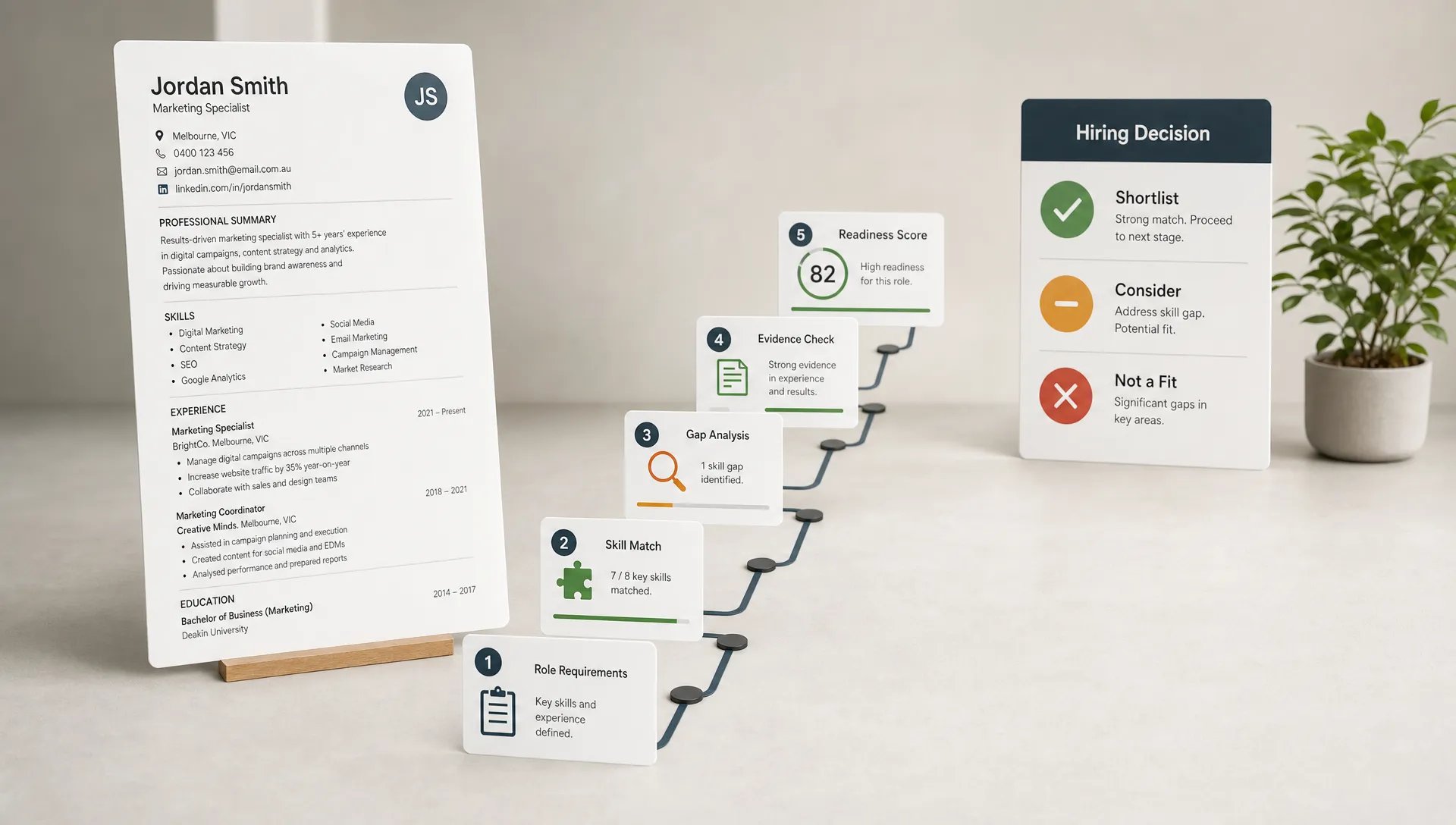
This is where a career intelligence platform can help. Versadox helps job seekers build stronger resumes and cover letters, compare applications against real roles, identify gaps, and receive AI-powered improvements before applying. For students, graduates, and career changers, that can make the application process feel less like guesswork and more like a structured review of readiness.
The aim is not to create a fake version of yourself. It is to present your real experience in the clearest and most relevant way possible.
Frequently Asked Questions
What is a job resume in simple terms? A job resume is a short document that summarises your skills, work experience, education, achievements, and suitability for a role. Employers use it to decide whether to progress your application.
How long should a resume be in Australia? For many students and early-career applicants, one to two pages is enough. More experienced professionals may use two to three pages. The best length is the shortest version that still presents relevant evidence clearly.
Is a resume the same as a CV? In many Australian job applications, resume and CV are used to mean the same thing. In academic, research, or highly specialised roles, a CV may be longer and more detailed.
Do I need a resume for casual or part-time jobs? Yes, a resume is still useful for casual and part-time work. It helps employers quickly see your availability, customer service experience, reliability, communication skills, and any relevant training.
Should I use the same resume for every job? No. You can start from a core resume, but you should adjust it for each role. Tailoring your summary, skills, and experience to the job ad helps employers see your fit more clearly.
Build a resume that shows your fit
A job resume matters because it often decides whether your application gets a closer look. When it is clear, targeted, and evidence-based, it can help employers understand your value faster.
If you are unsure where you stand before applying, Versadox can help you score your resume, identify gaps, compare your application against real roles, and make guided improvements with more confidence. Start by reviewing your resume before your next application, not after another missed opportunity.





.svg)