


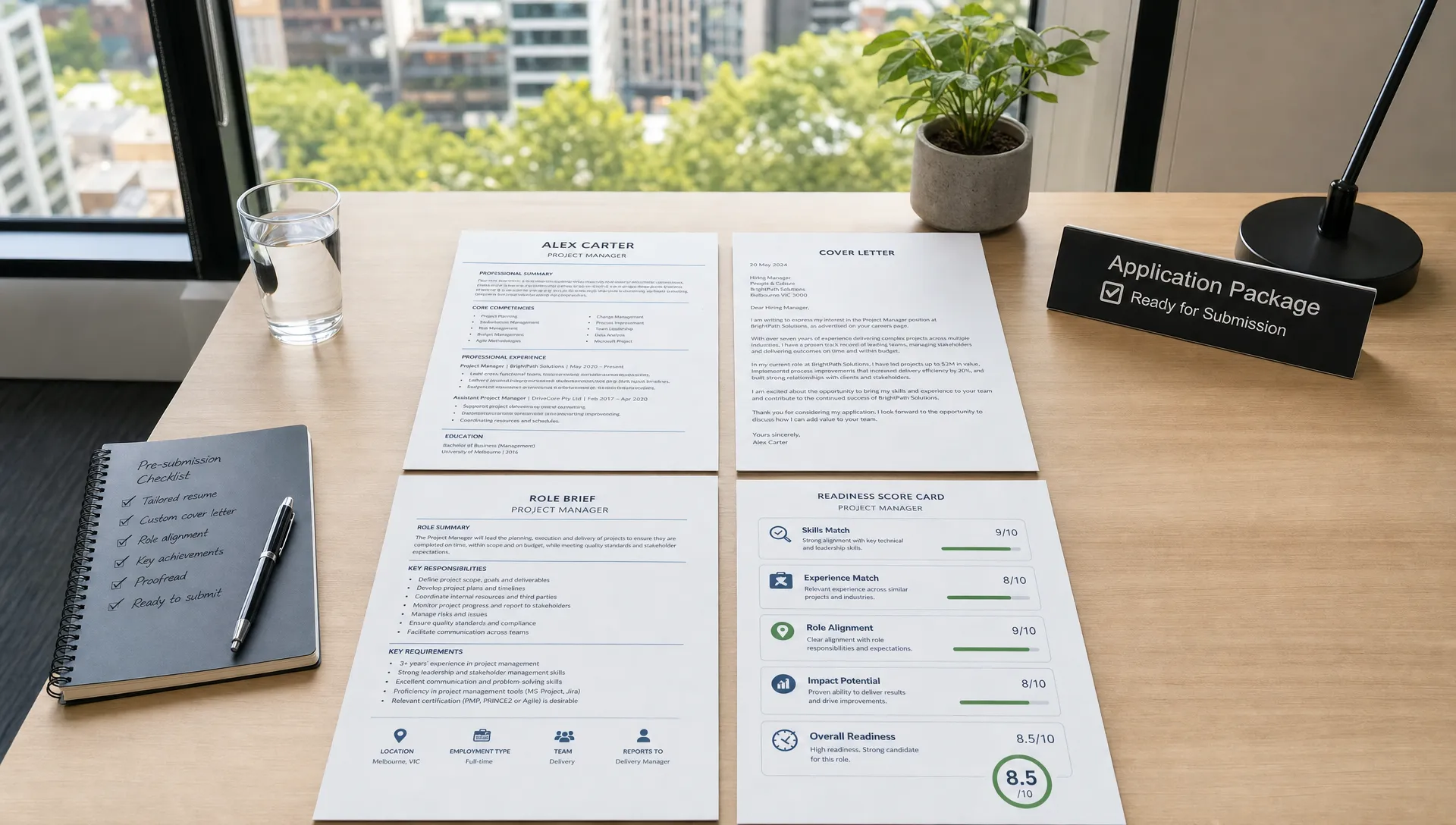
A professional job application in 2026 is no longer just a tidy resume and a polite cover letter. It is a targeted, evidence-based case for why you are a credible match for a specific role, presented in a way that works for both humans and hiring technology.
That shift matters for students, graduates, and career changers. You may not have a long work history yet, but you can still present a mature, professional application by showing alignment, proof, clarity, and attention to detail. The strongest applications do not try to sound impressive in a generic way. They make it easy for an employer to understand three things quickly: what you can do, where you fit, and why you are worth interviewing.
A polished application can still fail if it feels like it was sent to every employer in the market. In 2026, a professional job application starts with relevance. Hiring teams are dealing with high volumes of applications, AI-generated content, keyword-stuffed resumes, and candidates using one-click tools without much thought. The applications that stand out are the ones that feel deliberately built for the role.
Targeting does not mean rewriting every word from scratch. It means adapting your strongest evidence to the job in front of you. If a graduate marketing role asks for campaign coordination, reporting, and stakeholder communication, your resume should not lead with unrelated casual work duties unless they prove those capabilities. If an IT support role asks for troubleshooting, ticketing systems, and customer service, your project work and technical tools should be visible early.
A professional application answers the job ad directly, but naturally. It uses the employer’s priorities as a guide, then supports each claim with examples. That is very different from copying phrases from the ad and hoping an ATS will reward you.
If you are unsure how targeted your current approach is, it may help to review broader job hunting strategies for better application results before sending another batch of resumes.
Most professional applications include a resume, a cover letter or short response, and a digital presence that does not contradict the application. Some roles may also require selection criteria, a portfolio, work samples, certificates, or screening questions.
The format changes by industry, but the underlying standard is consistent. A strong application should include:
Professional does not mean formal to the point of sounding robotic. It means intentional, reliable, and easy to assess.
Recruiters and hiring managers should not have to decode your resume. The top third of the first page should quickly explain who you are professionally, what you are targeting, and what evidence supports your fit.
For early-career candidates, this might include degree, major, internships, projects, technical tools, customer-facing experience, or leadership roles. For career changers, it should show transferable skills without hiding the change. For example, a teacher moving into learning design should foreground curriculum development, stakeholder management, digital learning tools, facilitation, and content design.
A professional resume summary can help anchor the whole application. It should not be a vague objective such as “hardworking individual seeking an opportunity to grow.” Instead, it should be specific to your direction and evidence. If you need a structure, this guide on writing a strong job summary for your resume breaks down how to make that opening section more useful.
In 2026, your resume also needs to be readable by applicant tracking systems. That usually means avoiding overly designed layouts, text boxes that break parsing, graphics used to communicate key information, and unusual section names. A creative layout can look good as a PDF, but if it prevents your experience from being read correctly, it creates risk.
Many applications rely too heavily on claims: motivated, passionate, excellent communicator, fast learner, team player. Those words are not wrong, but they are weak without proof.
A professional job application turns claims into evidence. Instead of saying you have strong communication skills, show that you handled customer enquiries, presented findings to a class or client, wrote reports, trained new staff, resolved complaints, or coordinated a group project. Instead of saying you are analytical, mention the tools, data, decisions, and outcomes involved.
Good evidence can come from many places, especially if you are still building experience:
The key is to connect the evidence to the job. A retail job can support an application for business, operations, sales, customer success, banking, HR, or administration if you frame it properly. The professional step is not pretending your experience is something else. It is translating it into the language of the target role.
A cover letter is still useful when it does a job your resume cannot do. It can explain why the role interests you, why your background makes sense, and how your experience connects to the employer’s needs. It is especially valuable for career changers, graduates with mixed experience, and applicants entering competitive programs.
A professional cover letter in 2026 is usually concise. It should not be a long personal essay or a generic template with the company name swapped in. Strong letters often follow a simple flow: role interest, relevant evidence, fit with the organisation or team, and a confident closing.
The most common mistake is writing about what you want from the employer without showing what you offer. It is fine to be excited about learning and growth, but the employer is hiring to solve a problem. Your letter should make that connection clear.
For example, if you are applying to a digital marketing assistant role, you might refer to experience preparing social content, tracking engagement, writing copy, or using analytics tools. You could also show commercial awareness by briefly noting what the business appears to be trying to achieve online. If you are exploring marketing roles, looking at how a specialist agency such as SEO Bridge positions its SEO services around enquiries and measurable outcomes can help you understand the kind of business language employers may value.
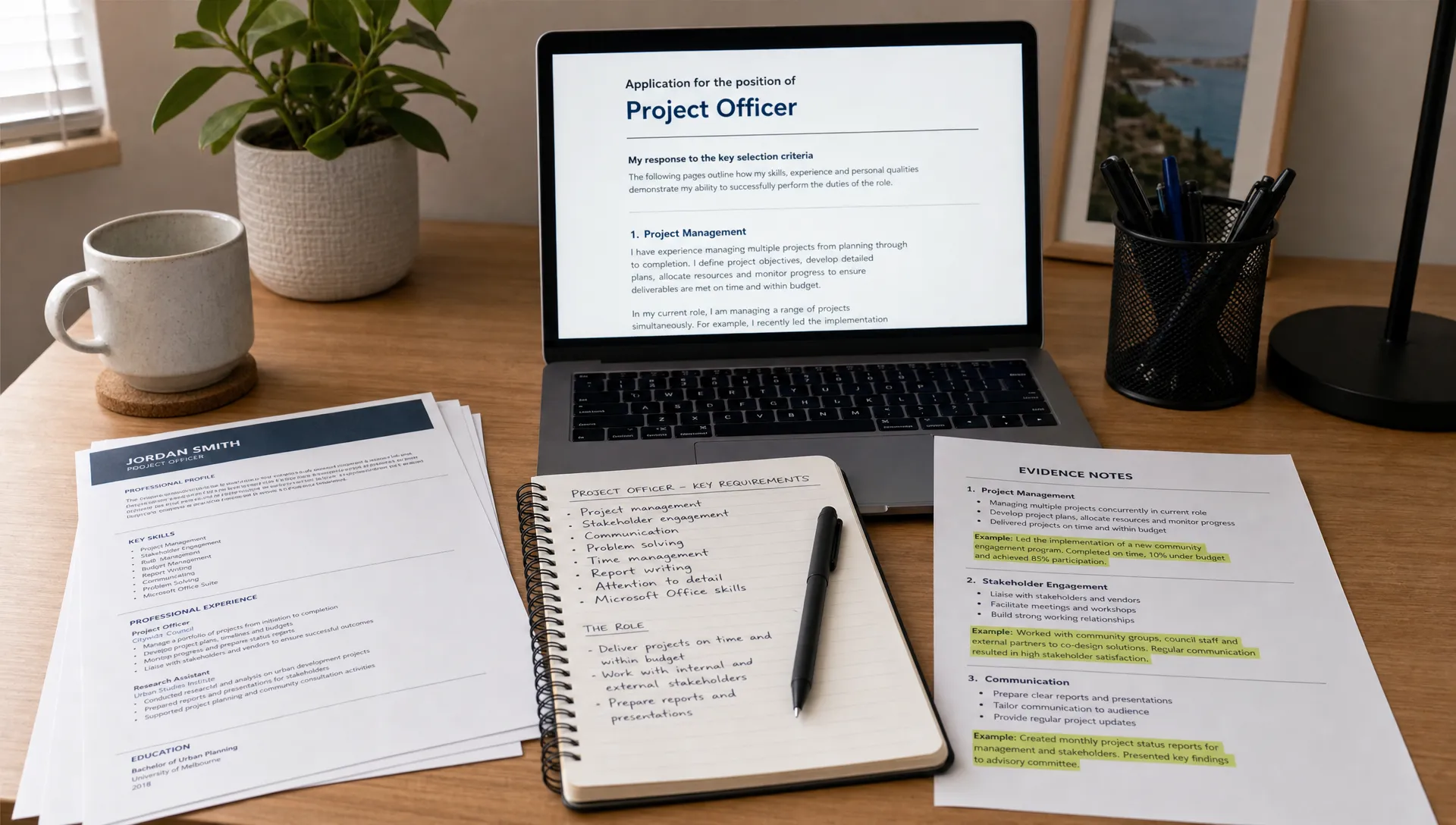
AI tools have changed job applications. They can help draft bullet points, identify gaps, clean up wording, and compare your resume to a job description. Used well, AI can make your application clearer and more strategic. Used carelessly, it can make you sound generic, inflated, or identical to everyone else.
The professional standard is not “no AI.” It is responsible AI use. You should still check accuracy, tone, relevance, and evidence. Never include skills, tools, qualifications, or achievements you cannot discuss in an interview. If a bullet point sounds impressive but you would struggle to explain what you did, it should be rewritten.
AI-generated cover letters can be especially risky because they often use broad phrases such as “I am excited to contribute to your innovative team.” That may be grammatically correct, but it does not prove fit. A professional application keeps the useful structure and replaces vague language with specific evidence.
Versadox is built around this more strategic use of AI. Rather than simply generating text, it helps job seekers compare applications against real roles, identify gaps, review role alignment, and make guided improvements before applying. That matters because the goal is not to produce more applications. The goal is to produce stronger applications.
Many job seekers apply based on hope. They see a role, feel interested, and send a resume. A professional job application in 2026 is more measured. It asks: am I ready for this role, and if not, what is missing?
Market readiness is about how your current profile compares with the role’s expectations. You might be close but missing one tool, one type of example, or one clearer explanation of your transferable skills. You might also be applying too broadly, which makes every application weaker.
Before applying, check whether your application shows:
This is where role comparison and gap identification can save time. If you know what is missing before you apply, you can decide whether to improve the application, build the missing evidence, or target a better-fit role first.
Design matters, but clarity matters more. A professional resume should be easy to scan, easy to print, and easy for software to parse. Unless you are applying for a design-focused role and have been asked for a creative portfolio, your resume should avoid visual gimmicks.
Use standard section headings such as Summary, Education, Experience, Projects, Skills, Certifications, and Volunteering. Keep fonts readable, spacing consistent, and bullet points concise. Save and submit files in the requested format. If the employer asks for a PDF, send a PDF. If they ask for a Word document, follow that instruction.
File names also contribute to professionalism. A file called Resume_Final_FINAL_2026_New.pdf looks careless. A better option is FirstName-LastName-Resume-RoleType.pdf. The same applies to cover letters and portfolios.
Small details are not small when an employer is comparing many candidates. Typos, inconsistent dates, broken links, missing attachments, and incorrect company names all weaken trust.
In many industries, your application does not stop at the documents you upload. Hiring teams may check LinkedIn, portfolios, GitHub, personal websites, or public work samples. They may also notice whether your online presence aligns with the story in your resume.
You do not need to become a personal brand influencer to be professional. You do need consistency. Your LinkedIn headline, experience, education, and skills should not conflict with your resume. If you include a portfolio link, make sure it works and shows relevant work. If you list GitHub, Behance, Medium, or another platform, ensure it supports your application rather than distracting from it.
Reputation also matters. Professionalism includes how you communicate with recruiters, how you leave previous roles, and how others may describe working with you. For a deeper look at that less visible side of employability, Versadox has covered how your professional reputation can act as a second resume.
A professional application includes the messages around it. Your email, LinkedIn message, phone manner, and interview scheduling responses all shape the employer’s impression.
If you email an application directly, keep the message brief and specific. Mention the role, attach the correct documents, and use a polite closing. If you follow up, do it once after a reasonable period unless the employer has given a different timeline. Avoid sounding annoyed, desperate, or entitled.
Professional communication is especially important for early-career candidates because employers are often assessing reliability as much as experience. Responding promptly, reading instructions, and being prepared can separate you from candidates with similar qualifications.
Sometimes the issue is not lack of talent. It is the way the application presents that talent. If you are not getting responses, review your documents for patterns before assuming the market is impossible.
Warning signs include:
This does not mean every rejection is your fault. Hiring is affected by timing, competition, internal candidates, budget changes, and many factors you cannot see. But improving the quality of your application increases your chances of being assessed fairly.
Before you apply, slow down for five minutes and review the application as if you were the recruiter. Ask whether it is clear, relevant, and credible.
Use this checklist before submitting:
If the answer is “no” to several of these, the application may not be ready yet. Improving it before submission is often more effective than sending another generic version.
What is a professional job application in 2026? A professional job application is a targeted, accurate, and evidence-based set of materials that shows clear alignment with a specific role. It usually includes a tailored resume, a relevant cover letter or response, ATS-friendly formatting, and consistent professional details across online profiles.
Does every job application need a cover letter? Not every employer requires one, but a cover letter can help when you need to explain motivation, transferable skills, career change, or fit. If you write one, make it specific and avoid repeating your resume word for word.
How long should a resume be in Australia? Many early-career resumes are one to two pages, while more experienced candidates may need two to three pages. The right length depends on relevance. A concise two-page resume with strong evidence is usually better than a longer document filled with unrelated detail.
Can I use AI to write my job application? Yes, but use it carefully. AI can help improve structure, wording, and role alignment, but you should verify every claim and personalise the final version. A professional application should still sound like you and reflect real experience.
What makes an application look unprofessional? Common issues include typos, incorrect company names, generic summaries, exaggerated claims, poor formatting, broken links, missing attachments, and resumes that are not tailored to the role.
A professional job application in 2026 is not about sounding perfect. It is about making your fit obvious, your evidence credible, and your documents easy to assess.
If you want to strengthen your next application before sending it, Versadox can help you build resumes and cover letters, compare your profile against real roles, identify gaps, and make guided improvements with more confidence. Instead of guessing whether you are ready, you can understand where you stand before you apply.
This is a div block with a Webflow interaction that will be triggered when the heading is in the view.


