A strong resume summary is not a mini autobiography. It is a short, targeted snapshot that tells an employer what kind of candidate you are, what you can contribute, and why your experience fits the role in front of them.
For students, graduates, and career changers, this section can do a lot of heavy lifting. If your experience is not perfectly linear, the summary helps connect the dots before a recruiter starts scanning your work history. If you are applying for a competitive graduate role, it can show focus. If you are changing industries, it can translate your past experience into the language of your next job.
The key is to avoid writing something that sounds polished but says very little. A strong job summary for resume applications should be specific, evidence-based, and aligned with the role.
What is a job summary on a resume?
A job summary, often called a professional summary, resume summary, or profile, is a short paragraph near the top of your resume. It usually appears under your name and contact details, before your education, experience, or skills.
Its purpose is simple: to give the reader a fast answer to the question, “Why should I keep reading this resume?”
If you are still learning the basics of resume structure, it is worth first understanding what a job resume is and why it matters. Your summary is only one part of the document, but because it appears near the top, it shapes the first impression.
A good resume summary should usually include:
It should not repeat your whole resume. It should not list every skill you have. It should not be so broad that it could apply to any person in any industry.
Job summary vs career objective: what is the difference?
A resume summary focuses on what you bring to the employer. A career objective focuses on what you want.
Older resume advice often recommended objective statements like this:
Motivated individual seeking an opportunity to grow my skills in a professional environment.
That sentence is not terrible, but it is employer-centred only at the surface level. It tells the hiring manager you want an opportunity, but it does not explain what value you bring.
A stronger summary would sound more like this:
Business graduate with retail leadership experience, strong customer service skills, and hands-on exposure to data analysis through university projects. Seeking to support client-focused teams with clear communication, problem-solving, and reliable execution.
The second version still shows direction, but it also gives the employer something useful: context, transferable skills, and evidence.
How long should your resume summary be?
For most Australian job seekers, a resume summary should be two to four lines, or about 40 to 80 words.
If it is shorter than two lines, it may not provide enough substance. If it becomes a large paragraph, recruiters may skip it. The goal is to create a tight opening that encourages them to read the rest of your resume, not to tell your full story at the top.
A helpful rule is this: if a sentence does not make you look more relevant for the specific role, cut it or rewrite it.
A simple formula for writing a strong resume summary
You do not need to start from a blank page. Use this formula as a practical guide:
Target role or identity + relevant experience or background + key strengths + evidence or outcome + role fit.
For example:
Entry-level marketing graduate with internship experience in social media scheduling, campaign reporting, and customer research. Confident using data to improve content decisions, with strong writing skills developed through university projects and volunteer communications work.
This works because it answers several questions quickly. The applicant is entry-level, has some practical exposure, understands relevant tasks, and can point to evidence beyond vague enthusiasm.
Your own version can be flexible, but it should still be anchored in the job you want.
What to include based on your career stage
Different candidates need different summaries. A student should not try to sound like a senior manager. A career changer should not hide their previous experience. A graduate should not rely only on academic language.
If you are a student or recent graduate
Focus on education, projects, placements, part-time work, volunteering, and transferable skills. Employers do not expect you to have ten years of experience. They do expect you to explain why your background is relevant.
Example:
Final-year commerce student with customer service experience, strong Excel skills, and project work in market analysis and financial reporting. Known for clear communication, attention to detail, and balancing study with part-time work in fast-paced environments.
This summary is not trying to inflate the candidate’s experience. It uses what they actually have and frames it professionally.
If you are changing careers
A career-change summary should translate your past experience into your target role. Do not lead with everything you are leaving behind. Lead with the strengths that carry across.
Example:
Former hospitality supervisor transitioning into administration, with five years of experience managing rosters, customer issues, supplier communication, and daily operations. Brings strong organisation, stakeholder communication, and problem-solving skills to office support roles.
This works because it makes the connection obvious. The employer does not need to work out how hospitality relates to administration. The summary does that work for them.
If you have professional experience
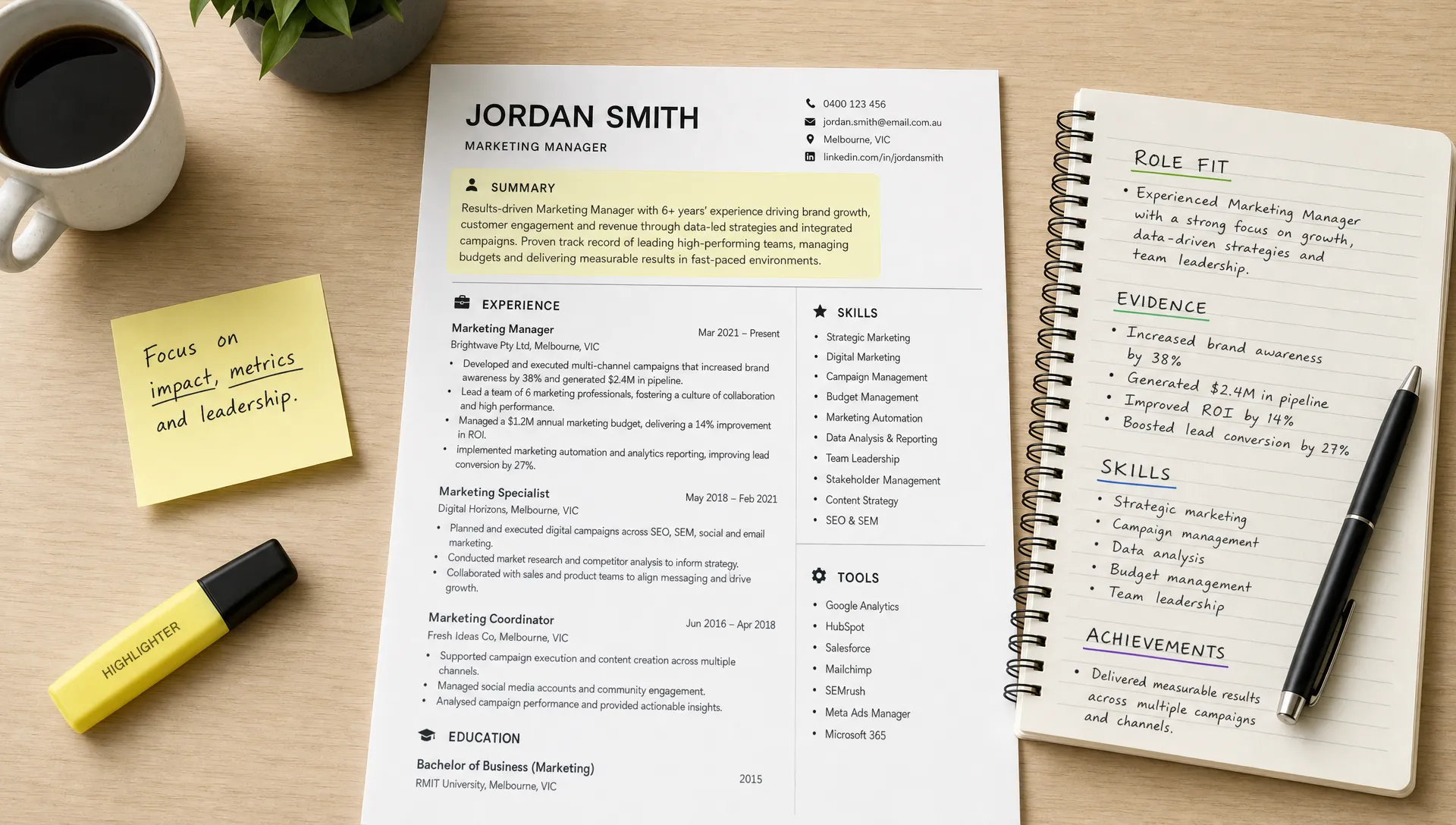
If you already have relevant experience, your summary should be sharper and more outcome-focused. Mention your role type, industry experience, strengths, and one or two concrete results where possible.
Example:
Customer success professional with three years of experience supporting SaaS clients, resolving technical queries, and improving onboarding processes. Skilled in relationship management, product education, and identifying customer needs to improve retention and satisfaction.
This summary gives the reader a clear picture of the candidate’s value without drifting into buzzwords.
The difference between a weak and strong job summary
A weak summary often sounds positive but generic. It may include words like “hard-working,” “passionate,” “team player,” and “fast learner,” but without proof.
Weak example:
I am a motivated and hardworking person with great communication skills. I am looking for a role where I can grow, learn, and contribute to a successful team.
The problem is not that these qualities are bad. The problem is that there is no role focus and no evidence. Almost anyone could write the same thing.
Stronger example:
Retail assistant with two years of experience in customer service, stock management, and point-of-sale operations. Recognised for handling busy trading periods calmly, resolving customer issues, and supporting team members with daily store tasks.
The stronger version shows context. It gives the employer a clearer reason to keep reading.
How to tailor your resume summary to a job ad
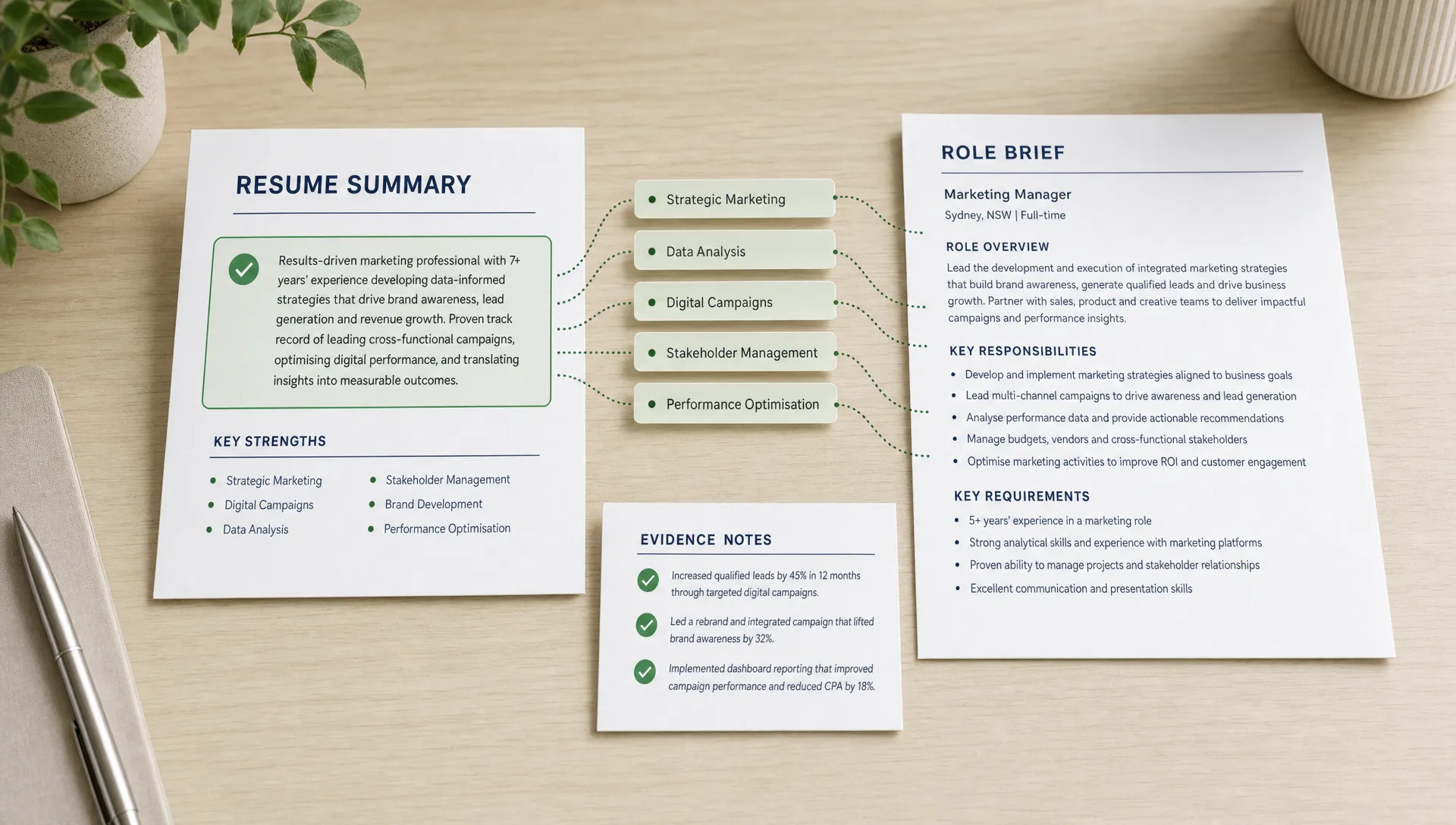
Your summary should change slightly for different roles. That does not mean rewriting your entire resume every time, but it does mean adjusting the top section so it reflects the job description.
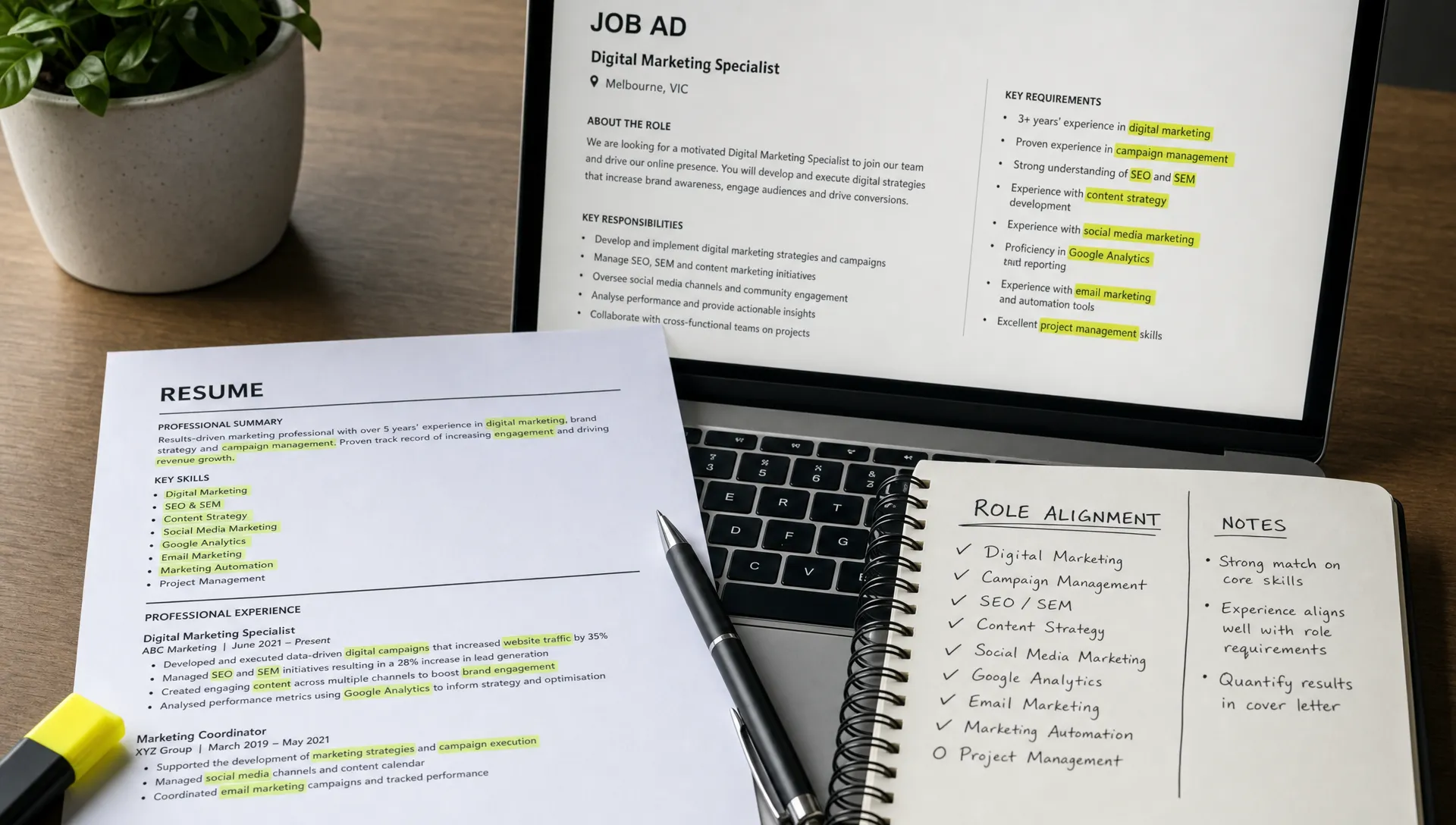
Start by reading the job ad carefully and noticing repeated themes. Look for the employer’s main priorities, not just the longest list of requirements. A junior marketing role might emphasise content, analytics, and collaboration. An administration role might emphasise accuracy, scheduling, and stakeholder communication. A support role might emphasise customer service, troubleshooting, and documentation.
Then choose the parts of your experience that match those priorities. If you are unsure which skills deserve space, this guide to resume skills employers actually notice can help you separate relevant evidence from filler.
A practical tailoring process looks like this:
This is also where AI can help, if you use it carefully. AI tools can speed up drafting, but you should never accept a generic summary without checking whether it is accurate, specific, and genuinely aligned with the job. The same trust principle matters in AI product design, where teams use resources like the AI Product Adoption Deck to improve usability and adoption. For your resume, the lesson is similar: the output only works if it solves the real problem, which is helping an employer understand your fit.
Examples of strong resume summaries
Use these examples as patterns, not scripts. Your summary should sound like you and reflect your actual experience.
Graduate business analyst summary
Recent business analytics graduate with university project experience in data cleaning, dashboard creation, and customer trend analysis. Confident using Excel and SQL foundations to interpret information, communicate insights, and support evidence-based decisions.
Why it works: It names the target field, includes relevant technical exposure, and explains how those skills create value.
Entry-level administration summary
Organised administration candidate with experience in customer service, scheduling, document handling, and email communication through part-time work and volunteer roles. Strong attention to detail, calm under pressure, and confident supporting teams with accurate day-to-day coordination.
Why it works: It translates everyday experience into administrative value.
Career changer into tech support summary
Customer service professional transitioning into IT support, with strong troubleshooting, communication, and documentation skills developed through high-volume client-facing roles. Currently building technical capability through self-directed learning and practical support projects.
Why it works: It acknowledges the transition while giving the employer reasons to see potential.
Retail supervisor summary
Retail supervisor with four years of experience leading store teams, managing stock processes, training new staff, and maintaining strong customer service standards. Skilled in prioritising tasks during busy periods, resolving issues quickly, and supporting consistent store performance.
Why it works: It shows leadership and operational experience without relying on vague personality traits.
Early childhood educator summary
Early childhood educator with practical experience supporting safe, inclusive, and engaging learning environments. Strong communication skills with families and colleagues, with a focus on child wellbeing, routine management, and age-appropriate development activities.
Why it works: It reflects the values and responsibilities of the role clearly.
Common mistakes to avoid
A resume summary can weaken your application if it is too generic, too long, or too disconnected from the job.
Watch out for these issues:
Your summary should feel like a preview of the evidence below it. If you say you are strong in project coordination, your resume should show projects, schedules, stakeholders, deadlines, or outcomes. If you say you are analytical, your education, work history, or skills section should support that claim.
Should your resume summary mention soft skills?
Yes, but only when they are specific and supported.
Soft skills matter, especially for early-career candidates. Communication, teamwork, reliability, adaptability, and problem-solving are all valuable. The issue is that many people list them without context.
Instead of writing this:
Excellent communication and teamwork skills.
Write something more grounded:
Strong communication and teamwork skills developed through group consulting projects, customer-facing retail work, and volunteer event coordination.
The second version is stronger because it shows where the skills came from. It also helps employers picture how you might behave in the workplace.
Should your job summary be ATS-friendly?
Yes, but ATS-friendly does not mean robotic.
Applicant tracking systems can help employers filter, organise, and search applications. A clear summary with relevant role keywords can support readability, especially if those keywords match your real experience. For example, if the job ad repeatedly mentions “stakeholder communication,” “case management,” or “data entry,” and you genuinely have that experience, it may make sense to include those terms naturally.
But do not overload the summary with a keyword list. A human still needs to read it. The best summary works for both systems and people: clear language, relevant terms, and evidence that matches the role.
How your summary connects to the rest of your application
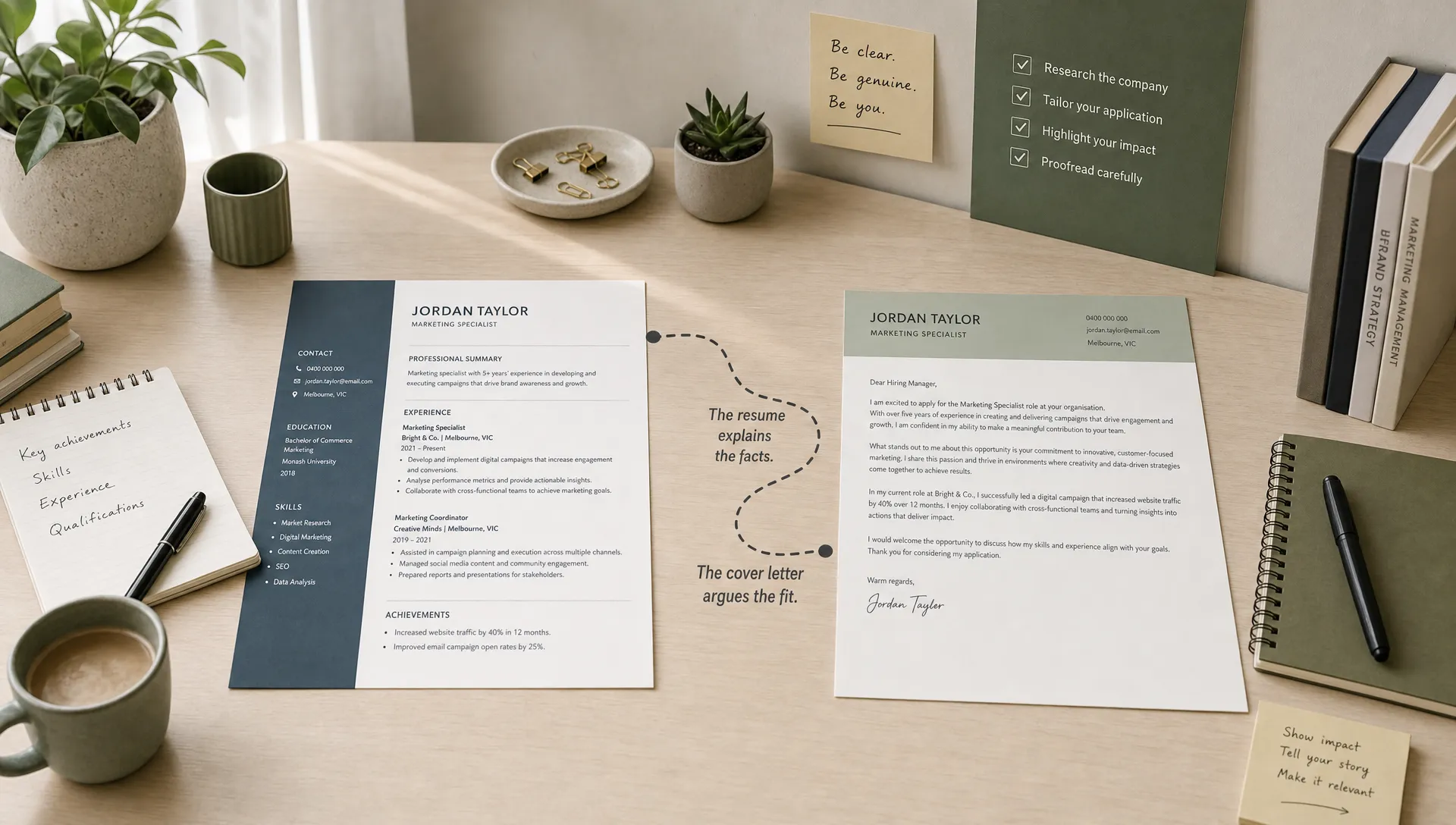
Your resume summary should not do the same job as your cover letter. The summary is a quick positioning statement. The cover letter gives you more room to explain motivation, fit, and context for a specific role.
Think of your resume summary as the headline of your professional case. The rest of your resume provides the evidence. Your cover letter explains why that evidence matters for this employer.
A quick editing checklist before you apply
Before sending your resume, read your summary and ask yourself:
If the answer to the fourth question is yes, your summary is probably too generic. Add context, role alignment, or evidence.
Frequently Asked Questions
How long should a job summary for resume applications be? Two to four lines is usually enough. Aim for around 40 to 80 words, depending on your experience and the role. Keep it specific, readable, and relevant to the job.
Do I need a resume summary if I have no experience? Yes, but focus on education, projects, volunteering, part-time work, placements, and transferable skills. You do not need years of experience to show role fit.
Should I use first person in my resume summary? Most resumes avoid first-person pronouns. Instead of “I am a marketing graduate,” write “Marketing graduate with internship experience in campaign reporting and content planning.”
Can I use the same summary for every job? You can keep the same foundation, but you should tailor it for each role. Adjust the wording to reflect the employer’s priorities and the evidence that matters most.
What is the biggest mistake in a resume summary? The biggest mistake is being too vague. Phrases like “hard-working team player” need context. Show where your strengths come from and how they relate to the role.
Build a clearer resume before you apply
A strong resume summary helps employers understand your value quickly, but it works best when the rest of your application supports it.
Versadox helps job seekers build stronger resumes and cover letters, compare applications against real roles, identify gaps, and improve alignment before applying. With resume building, role comparison, readiness scoring, ATS-ready templates, and guided improvements, you can move from guesswork to a clearer application strategy.
If your current summary feels generic, start by rewriting it around the role you actually want. Then check whether the evidence in your resume backs it up. That is how you turn a short paragraph into a stronger first impression.
The Perfect Time is a Myth: The Unfiltered Truth About Career Moves
Waiting for perfect economic conditions is a complete myth. Use this data-driven, four-step strategic blueprint to confidently design and execute your next massive career pivot.





.svg)