Timing matters in a job search, but not in the superstitious way people often imagine. There is no magic minute when every recruiter suddenly opens your resume with fresh enthusiasm. There are, however, smarter windows that help your application arrive while the role is still active, the shortlist is still forming, and the hiring team has not yet been buried under hundreds of similar resumes.
The real answer to the best time to apply for a job is this: apply as early as you can after the role is posted, during the employer's normal review rhythm, and only once your application is strong enough to be taken seriously.
That last part matters. A fast, generic application may get seen sooner, but it can also get rejected sooner. The goal is not just to be first. The goal is to be early and relevant.
The best time to apply for a job: the practical answer
If you are looking for a simple rule, aim to submit within the first 24 to 72 hours after a job goes live. This is usually when recruiters are actively checking responses, screening early matches, and deciding whether the role is attracting the right kind of candidates.
A useful timing hierarchy looks like this:
- Best window: Within the first 24 to 72 hours of the job being posted, if your resume and cover letter are ready.
- Best days: Tuesday, Wednesday, and Thursday tend to fit well with normal hiring workflows.
- Best time of day: Morning to early afternoon in the employer's local time zone, especially before recruiters have finished their daily screening.
- Best season: Late January to June and July to November are often stronger in Australia, depending on the industry.
- Best exception: If your application is weak, take the time to tailor it properly before submitting.
Think of timing as a visibility advantage, not a substitute for fit. Recruiters can still see applications submitted at night or on weekends because most systems accept applications 24/7. But humans usually review them during business hours, and early applicants may be reviewed before the shortlist becomes crowded.
Why early applications often get more attention
Hiring is not always a neat, linear process. Some employers keep a job open until the closing date, then review every applicant together. Others start screening immediately and move strong candidates into interviews before the closing date arrives.
That second pattern is why early applications can matter. If a recruiter finds several strong candidates in the first few days, they may start conversations quickly. By the time you apply a week later, the role may still appear open, but the hiring team's attention may already be focused on people who got in earlier.
Early applications can also help because recruiters are usually trying to reduce uncertainty. When a role opens, they want to know whether the market has suitable candidates. A clear, relevant resume that arrives early can become a benchmark for the rest of the search.
Still, timing does not erase competition. If your resume does not clearly match the role, an early submission will not save it. Many job seekers get ghosted not because they applied on the wrong day, but because their resume did not make the match obvious enough. If that sounds familiar, the bigger issue may be the mechanics of the hiring funnel, which Versadox explores in why applicants are often getting ghosted.
Best days of the week to apply
Tuesday to Thursday are usually strongest
Tuesday, Wednesday, and Thursday are often the safest days to apply because they sit in the middle of the working week. Hiring teams are past the Monday catch-up, but not yet dealing with the Friday rush to finish tasks before the weekend.
This does not mean every Tuesday application wins and every Saturday application fails. It simply means midweek tends to align with how many recruiters organise their work. They are checking new applications, scheduling interviews, following up with hiring managers, and clearing shortlists.
Monday can work, but be strategic
Monday morning can be useful if a job was posted over the weekend or late on Friday. Your application may appear near the top of the pile when the recruiter starts reviewing new submissions.
The risk is that Monday can also be noisy. Hiring teams may be catching up on meetings, approvals, internal updates, and emails. If you apply on Monday, try to do it early and make sure your documents are polished. A strong Monday application is better than waiting until Wednesday just because someone told you Wednesday is ideal.
Friday is not useless, but it can be slower
Friday applications can still be effective, especially if the job was posted that day. The main drawback is response speed. A recruiter may not review your application until the following week, and by then it could be mixed with weekend submissions.
If Friday is the only time you can apply properly, apply. Do not delay a strong application for the sake of a theoretical timing advantage. Just avoid sending a rushed version at 4:55 pm because you are worried about missing the week.
After-hours applications are acceptable
Applying at night is not automatically bad. Applicant tracking systems do not sleep. The issue is not whether the platform accepts your resume, but when a person reviews it.
If you apply after hours, the application will usually wait in the system until the next review cycle. That is fine, especially if the alternative is not applying at all. For Australian roles, pay attention to time zones. If you are in Perth applying for a Sydney-based role, submitting late at night in your local time may land very late on the east coast.
Best hiring seasons in Australia
The best time of year to apply depends on your industry, seniority, and the type of role you want. A casual hospitality job, a graduate program, a government role, and a corporate analyst position may all run on different rhythms.
Late January to March
Late January and February often bring renewed hiring activity after the summer holiday period. Managers are back, budgets are clearer, and teams start acting on plans that were paused in December.
This can be a good period for graduates, early-career applicants, and career changers who want to reposition themselves at the start of the year. The key is to prepare before the market wakes up. If you wait until every role is already live, you may spend the first few weeks just fixing your resume.
April to June
April to June can be a productive window because many organisations are still hiring before the end of the financial year. Some teams want roles filled before budgets reset. Others are finalising headcount or replacing people who moved earlier in the year.
For students and graduates, this can also overlap with recruitment cycles for internships and graduate programs, depending on the employer. If you are targeting structured programs, check opening dates early because the best time to apply is often the week the program opens, not the week before it closes.
July to September
July can bring a new financial year mindset. Some employers have refreshed budgets, new priorities, and clearer approval to hire. This makes July to September a useful period for professional roles, career changes, and people moving into growth industries.
It is also a good time to reassess your positioning. If you applied heavily in the first half of the year without success, do not simply repeat the same resume. Look for patterns in the roles you missed and update your evidence before the next wave.
October to November
October and November can be strong because employers may want to secure candidates before the December slowdown. Some hiring managers prefer to interview before the holiday period so a new starter can begin in January.
This window can move quickly. If you see a role that fits, do not assume you have weeks to think about it. Hiring teams may be trying to finalise decisions before leave schedules make interviews harder.
December and public holiday periods
December is usually slower for many office-based roles in Australia, especially as teams approach Christmas and summer holidays. That does not mean no one hires. Healthcare, retail, logistics, hospitality, tourism, and essential services may be very active.
If you apply during a slow period, adjust your expectations. Response times may be longer, and hiring managers may not be available. Use the time to prepare stronger documents, refine your target roles, and build a shortlist of companies to watch when hiring picks up again.
Timing is not the same as readiness
One of the biggest traps in job searching is waiting for the perfect time while your confidence slowly drops. The market will never feel completely predictable. A role may open on an inconvenient day. A recruiter may review applications earlier than expected. A company may pause hiring for reasons you will never see.
That is why it helps to separate timing from perfection. You do not need a flawless resume to apply. You need a clear, targeted, credible application that shows why you are a realistic match.
This is especially important for students, graduates, and career changers. You may not meet every requirement, but you can still compete if you make your transferable skills, projects, placements, volunteer work, and measurable achievements easy to understand. If you keep waiting until you feel completely ready, you may miss roles that were suitable enough to pursue. For a useful mindset shift, read Versadox's take on why the perfect time is a myth.
The application prep that lets you move fast
The best applicants are not necessarily people with unlimited free time. They are people who have prepared enough that they can tailor quickly when the right role appears.
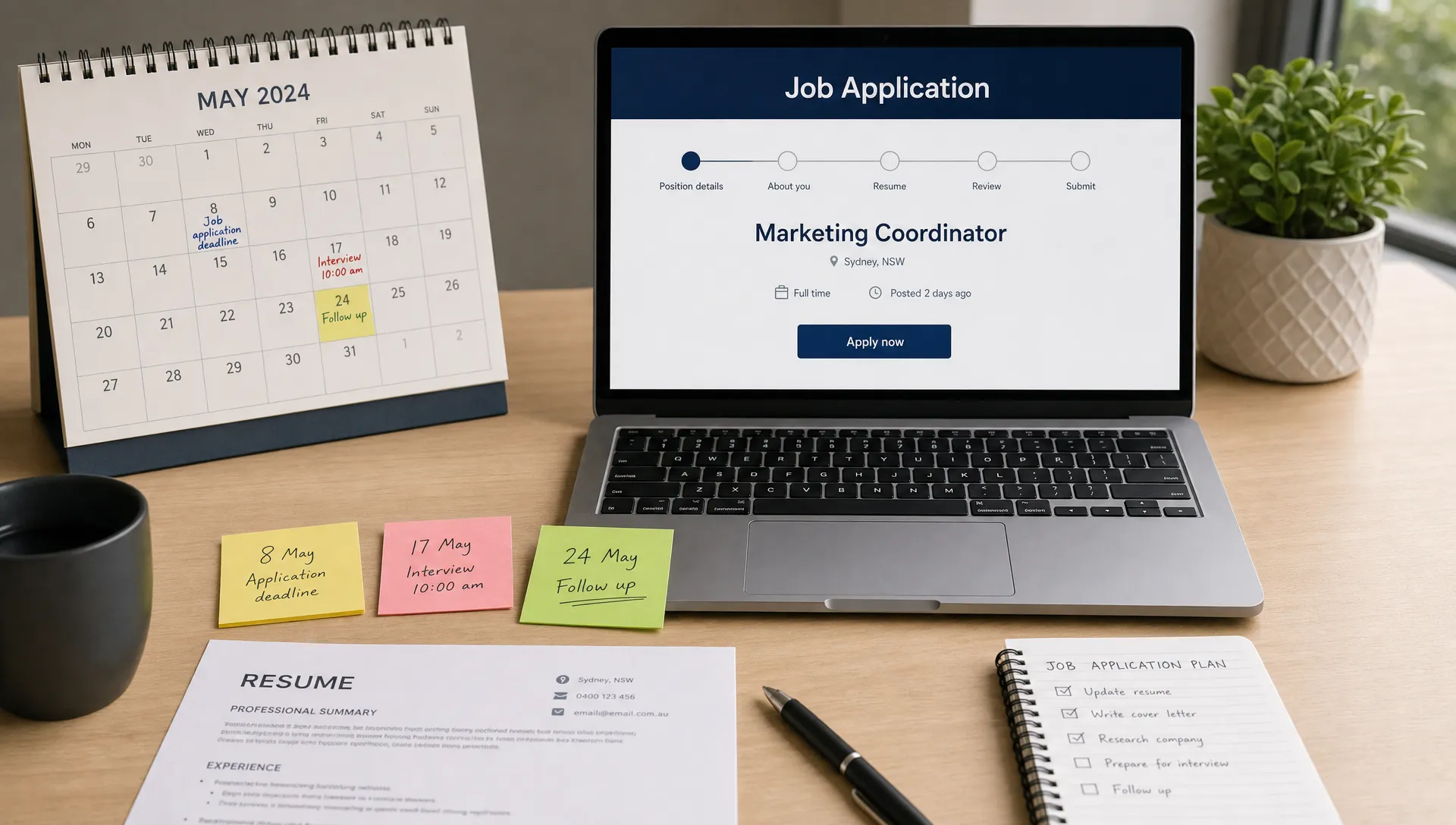
Before you start applying heavily, build a small application system:
- A role-ready base resume: Create a strong version for each role family you are targeting, such as marketing coordinator, junior analyst, customer success, administration, or software support.
- An evidence bank: Keep short notes on projects, achievements, tools used, results, coursework, placements, volunteer work, and customer outcomes.
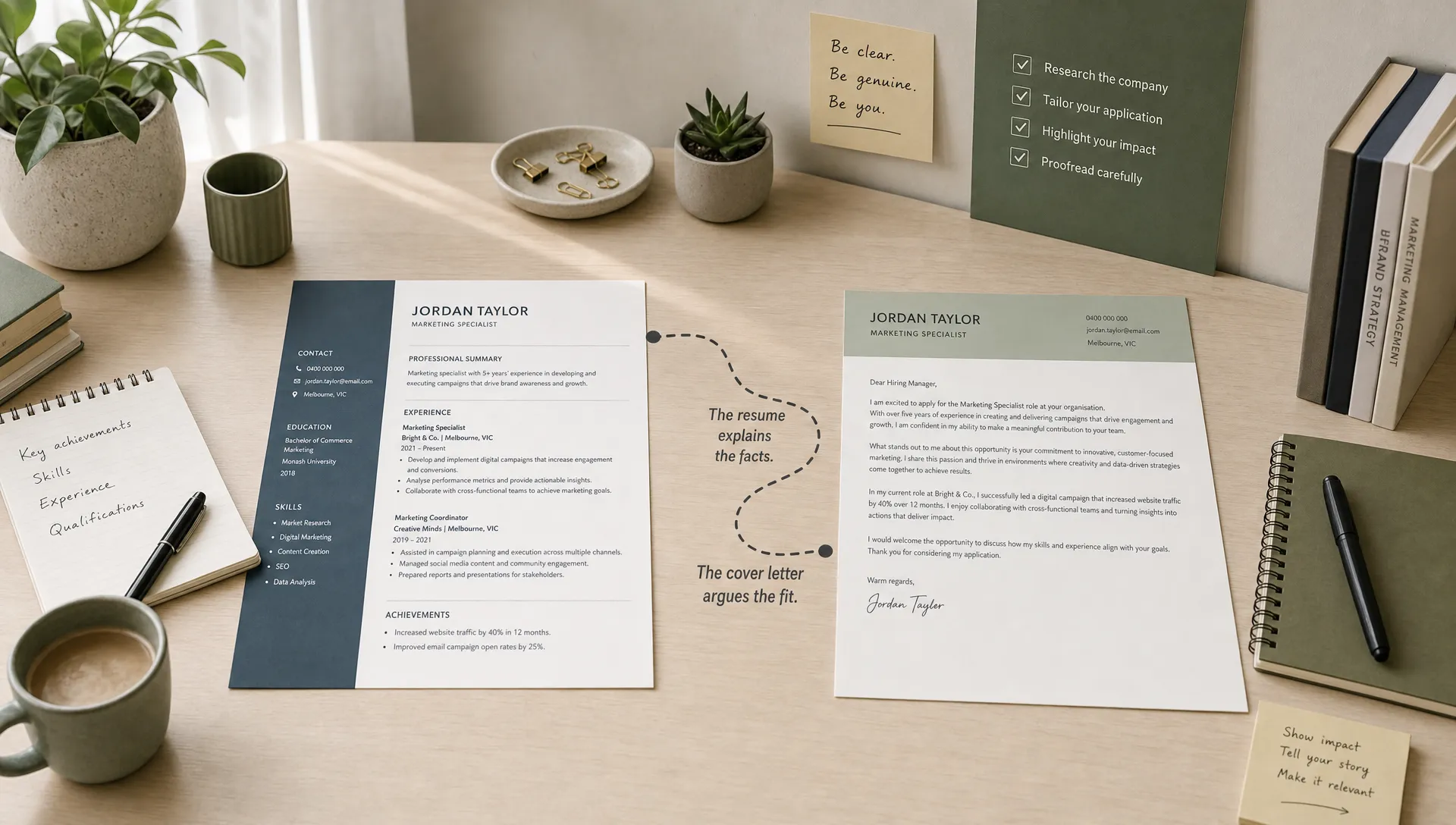
- A flexible cover letter structure: Prepare a clear introduction, a role-specific motivation paragraph, and two or three proof points you can adapt.
- A gap check: Compare your profile against the roles you want and identify missing skills, weak evidence, or unclear positioning.
- A weekly review habit: Update your resume based on the roles you are seeing, not just based on what you already have.
This is where a career intelligence platform can make timing easier. Versadox helps job seekers compare applications against real roles, identify gaps, use ATS-ready templates, build resumes and cover letters, and improve positioning before applying. The point is not to send more applications for the sake of volume. It is to be ready when a good role appears.
If you want a broader workflow, Versadox also explains how to get a job faster with a smarter application, including why evidence and targeting matter more than sending the same resume everywhere.
For applicants in marketing, communications, digital, or campaign roles, it can also help to study how service businesses describe outcomes, positioning, and proof. For example, reviewing a managed-service marketing page can give you ideas for translating campaign work into business-focused language on your resume, such as lead generation, retention, conversion, client management, or brand growth.
What to do when a job has already been posted for days or weeks
A job posting that is not brand new is not automatically a lost cause. Many employers leave roles open for several weeks, and some do not review applications until after the closing date.
Use the age of the posting to guide your effort:
- Less than one week old: Apply as soon as your documents are tailored. This is still a strong window.
- One to three weeks old: Apply if the role is a clear fit, but make your match obvious in the top third of your resume.
- Older than one month: Apply if it is highly relevant, but consider pairing the application with a polite networking message or checking whether the role is still active.
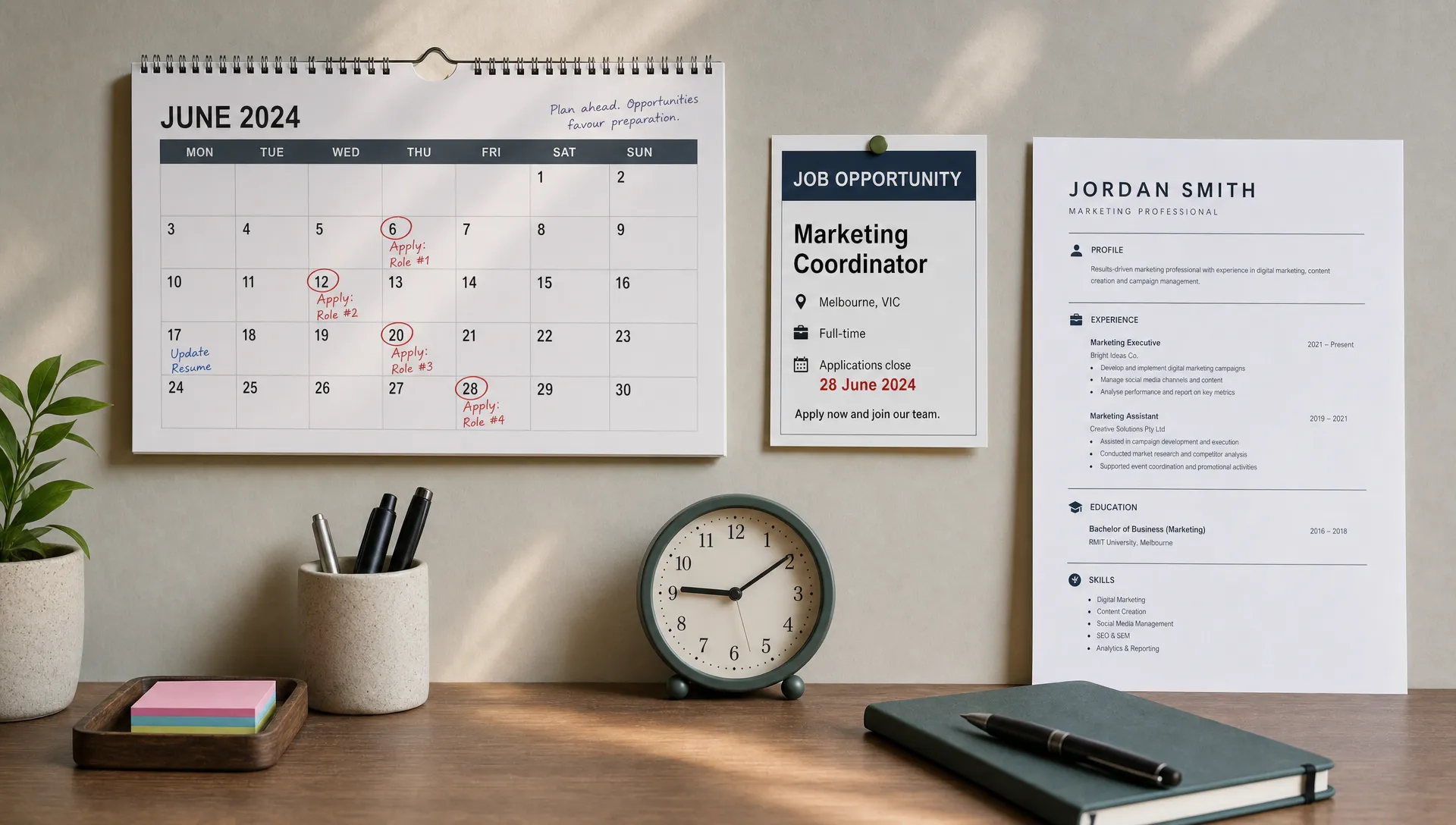
- Closing date listed soon: Prioritise it if it is a strong match, but do not rush a poor application just to beat the deadline.
If you see the same role reposted, it may mean the employer has not found the right candidate yet, the role is ongoing, or the company is building a talent pool. In that case, your application can still be worth submitting, but it needs to clearly answer why you fit the role now.
When you should slow down before applying
Speed is useful only when the application is strong enough to compete. Sometimes the smarter move is to pause for a few hours and fix the fundamentals.
Slow down before submitting if your resume does not reflect the job title, your most relevant skills are buried, your work history reads like a list of duties with no outcomes, or your cover letter could be sent to any company without changing a word.
You should also pause if the role asks for screening questions or selection criteria. These answers can carry real weight, especially in government, education, healthcare, and structured corporate recruitment. A rushed answer can weaken an otherwise strong resume.
Finally, slow down if you can realistically get a referral or insight from someone connected to the company. A short message to a former classmate, industry contact, or employee may help you understand the role better. Just do not use networking as an excuse to delay indefinitely.
How to get seen faster after you apply
Applying at the right time is only the first part. You can improve visibility by making the application easier to process.
Start with the top third of your resume. Recruiters should quickly see the role you are targeting, your strongest matching skills, and your most relevant evidence. If the first page is vague, the timing advantage disappears.
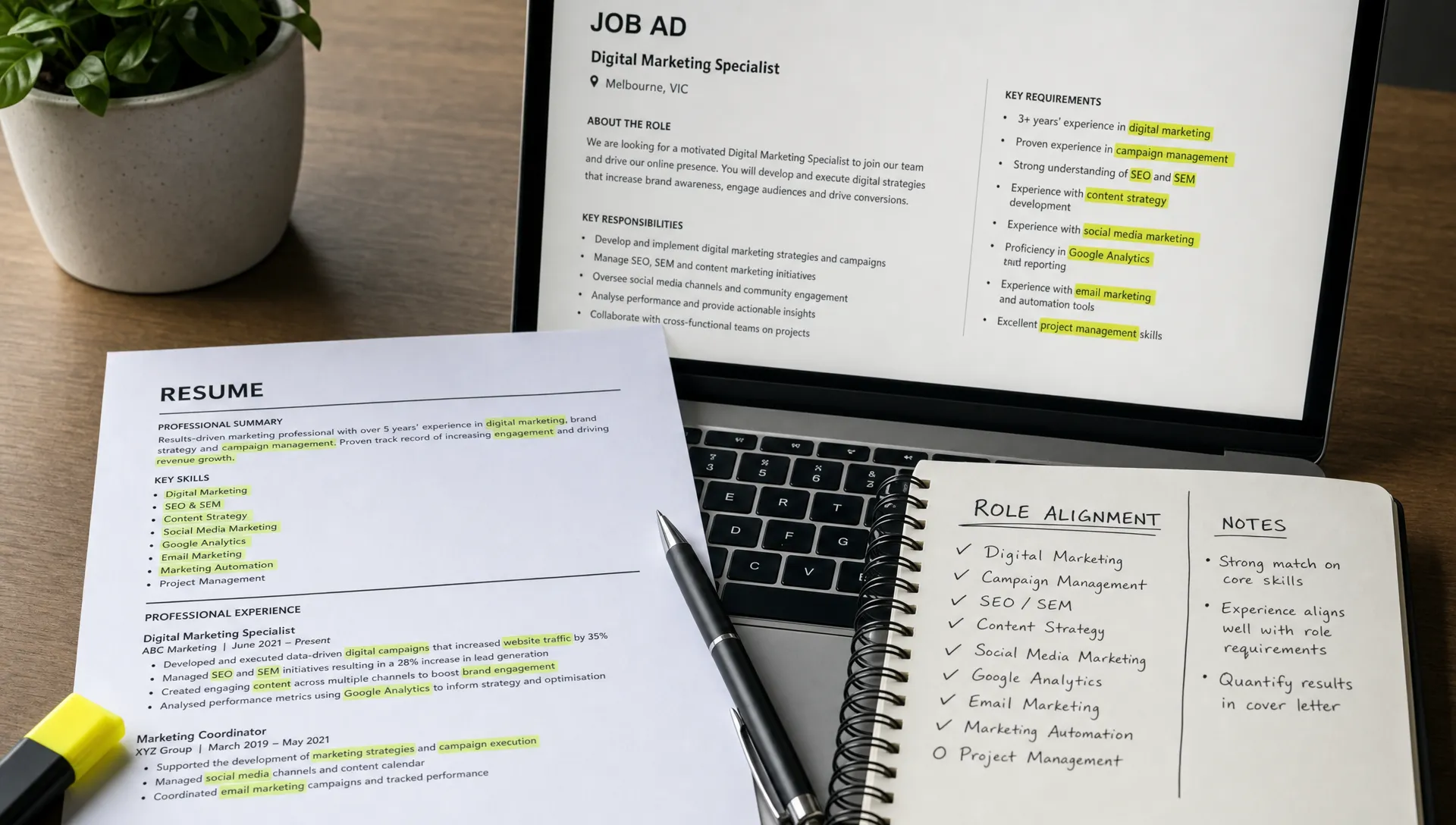
Use the employer's language naturally. If the job ad asks for stakeholder communication, reporting, customer support, scheduling, CRM use, or data analysis, your resume should reflect the skills you genuinely have in similar wording. Do not copy the ad blindly. Match the meaning and back it with evidence.
Apply through the channel the employer prefers. If the job ad directs you to the company website, apply there rather than relying only on a job board. If the platform allows both resume and cover letter uploads, use both when the role is important to you.
If there is a named recruiter or contact person, a short follow-up after about a week can be reasonable. Keep it polite, specific, and brief. Do not ask whether they received your application five minutes after submitting it. Instead, express interest, mention the role, and reinforce one relevant reason you are a strong match.
Frequently Asked Questions
What is the best time to apply for a job? The best time to apply is usually within the first 24 to 72 hours after the job is posted, ideally during the employer's normal business week. Tuesday to Thursday mornings are often practical, but a strong application matters more than the exact hour.
Is it bad to apply for jobs at night? No. Most application systems accept resumes at any time. Applying at night is fine if that is when you can submit a high-quality application. Just remember that a recruiter will usually review it during business hours.
Should I apply as soon as I see a job ad? Apply quickly if your resume and cover letter are already aligned with the role. If they are generic or missing key evidence, spend time tailoring them first. A slightly later targeted application is better than an immediate weak one.
What is the best month to apply for jobs in Australia? There is no single best month for every industry, but late January to June and July to November are often active periods. December and early January can be slower for many office roles, although seasonal and essential industries may still hire strongly.
Can I still apply if a job has been posted for weeks? Yes, especially if the role is a strong match or has a listed closing date that has not passed. For older posts, make your fit very clear and consider a polite networking message if you can find an appropriate contact.
Does applying early help with ATS systems? Applying early does not bypass an ATS, but it can help you enter the review process before the shortlist becomes crowded. Your resume still needs to be readable, relevant, and aligned with the role's requirements.
Apply sooner, but apply smarter
The best time to apply for a job is not just a calendar trick. It is the point where opportunity and readiness meet. If you can prepare your resume, cover letter, evidence, and role alignment before the right job appears, you can move quickly without sounding generic.
Versadox is built for that moment. It helps you score your resume, compare your application against real roles, identify gaps, build stronger resumes and cover letters, and export ATS-ready documents with more confidence. If you want to get seen faster, start by making sure your next application is ready before the next opportunity goes live at Versadox.





.svg)