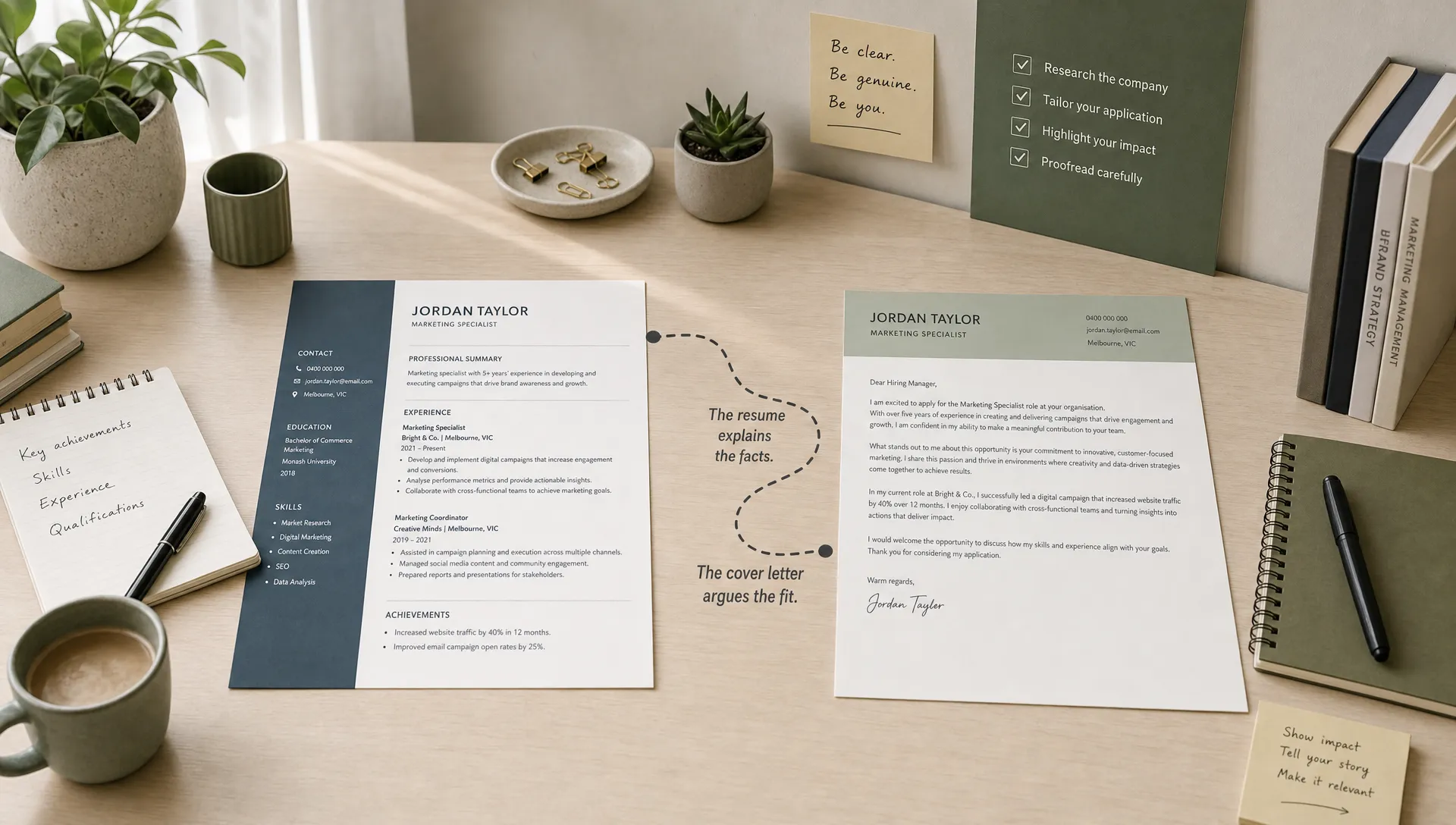
There is a fine line between presenting yourself confidently and making claims you cannot back up. Many job seekers know they need to sell themselves, but they worry about sounding arrogant, fake, or too polished. Others go the opposite way and minimise their achievements so much that employers cannot see their value.
The goal is not to oversell or undersell. The goal is to make your skills and experience believable, relevant, and easy to verify.
That matters even more if you are a student, graduate, early-career candidate, or career changer. You may not have a long list of formal job titles yet, but you still have evidence. Casual work, internships, uni projects, volunteering, personal projects, sport, community leadership, customer service, and group assignments can all show capability when you describe them properly.
Overselling usually happens when the language gets bigger than the proof. Strong applications do the opposite. They make clear claims, then support them with context, examples, and outcomes.
Why overselling backfires
Hiring teams are not only reading for enthusiasm. They are reading for risk. When a resume says someone is an “expert”, “strategic leader”, or “highly advanced” in a skill, the employer silently asks: based on what?
If the evidence is thin, the claim can create doubt. A recruiter may wonder whether you understand the role, whether you copied language from a template, or whether your interview answers will match your resume. The problem is not confidence. The problem is unsupported confidence.
Overselling can also make interviews harder. If you describe yourself as an expert in Excel, stakeholder management, Python, digital marketing, or project leadership, you may be asked detailed follow-up questions. If your real experience is basic or assisted, the mismatch becomes obvious quickly.
A better approach is to show the level you are actually at. You can still sound strong. In fact, precise language often sounds more credible than inflated language because it gives the employer something concrete to trust.
The simple rule: match every claim to proof
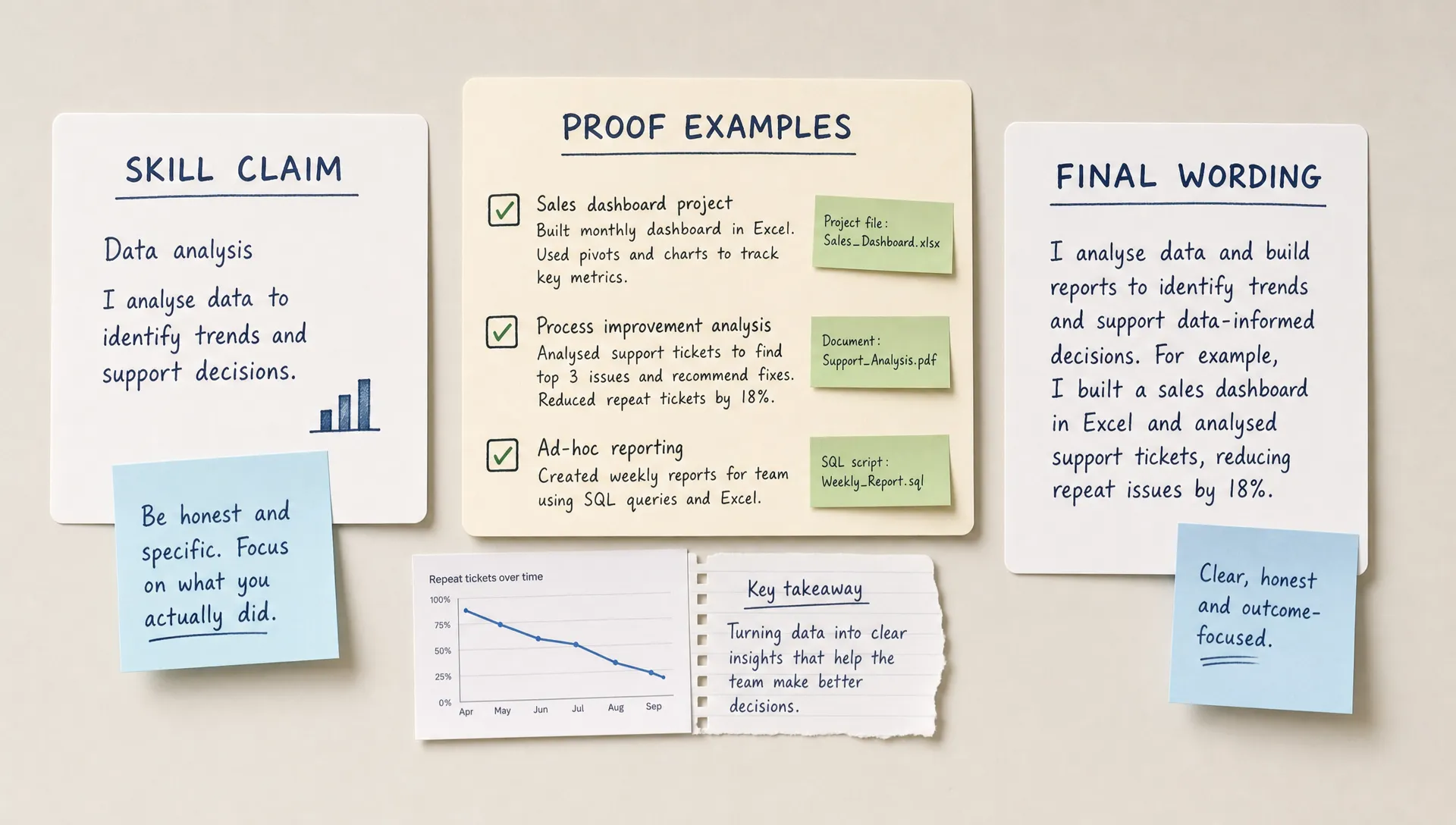
Before adding a skill to your resume or cover letter, ask: what could I point to if someone asked me to prove this?
Proof does not always mean a big commercial result. It can be a project you completed, a process you followed, a tool you used, feedback you received, a problem you solved, or a responsibility someone trusted you with.
For example, “strong communication skills” is vague on its own. But it becomes more believable when you say you handled customer enquiries, presented research findings, wrote weekly updates for a team project, trained a new staff member, or explained technical information to non-technical people.
If you want to understand the difference between listing skills and making them convincing, Versadox has a useful guide on which resume skills employers actually notice. The key is relevance. Employers do not need every skill you have. They need the skills that connect to the role.
Use the right level of ownership
One of the easiest ways to avoid overselling is to describe your level of involvement accurately. Many people exaggerate because they use the same verbs for every experience. “Led”, “managed”, and “delivered” sound impressive, but they are not always accurate.
Choose verbs that match what you actually did:
- Observed: You gained exposure, shadowed someone, or learned how a process worked.
- Assisted: You supported a task, prepared materials, gathered information, or helped a team member.
- Contributed: You completed part of a project, shared ideas, produced work, or helped improve an outcome.
- Owned: You were responsible for a task from start to finish and could explain your decisions.
- Led: You coordinated people, set direction, managed timelines, or were accountable for the final result.
- Improved: You changed a process, reduced errors, increased efficiency, or helped create a better outcome.
This language gives you room to be honest without sounding weak. “Assisted with weekly reporting by cleaning data and checking figures for accuracy” is stronger than “data expert” if your actual role was support-based. “Contributed to a group marketing plan by researching competitors and presenting customer insights” is stronger than “marketing strategist” if you were part of a student project.
Accuracy builds trust. It also helps you speak naturally in interviews because the resume reflects what you truly did.
Turn duties into evidence
A common mistake is writing only what the job required, not what you personally brought to it. Duties are useful, but they can make every candidate sound the same. Evidence shows how you performed the duty.
Start with a basic responsibility, then add context. What type of environment were you in? How often did you do it? Who did it help? What changed because of your work?
For example, instead of writing:
- Responsible for customer service
- Worked in a team
- Used Microsoft Excel
- Helped with social media
You could write:
- Supported customers during busy weekend shifts, resolving product questions and escalating complex issues to supervisors.
- Collaborated with a four-person project team to plan tasks, track deadlines, and deliver a final presentation.
- Used Excel to organise survey responses, check duplicates, and summarise key findings for a uni assignment.
- Drafted social media captions and scheduled posts for a student club campaign promoting an upcoming event.
None of those examples oversell. They simply add enough detail to show the skill in action.
Use numbers, but do not force them
Numbers can make your experience more credible, but they are not magic. A weak metric can feel just as inflated as a vague claim, especially if it sounds guessed.
Use numbers when they are true and useful. They can show scale, frequency, volume, time, accuracy, or improvement. You do not need dramatic results. Even simple measures can help employers understand the context of your work.
Useful numbers might include:
- The number of customers, clients, students, team members, or stakeholders you supported.
- The frequency of a task, such as daily, weekly, monthly, or during peak periods.
- The size of a project, event, dataset, portfolio, roster, or budget you helped with.
- The time saved, errors reduced, response time improved, or completion rate achieved.
- The number of tools, systems, documents, reports, or deliverables you worked with.
If you do not know the exact number, use a truthful range or remove the number altogether. “Supported high-volume customer enquiries during lunch rushes” is better than inventing “served 300 customers daily” because it sounded impressive.
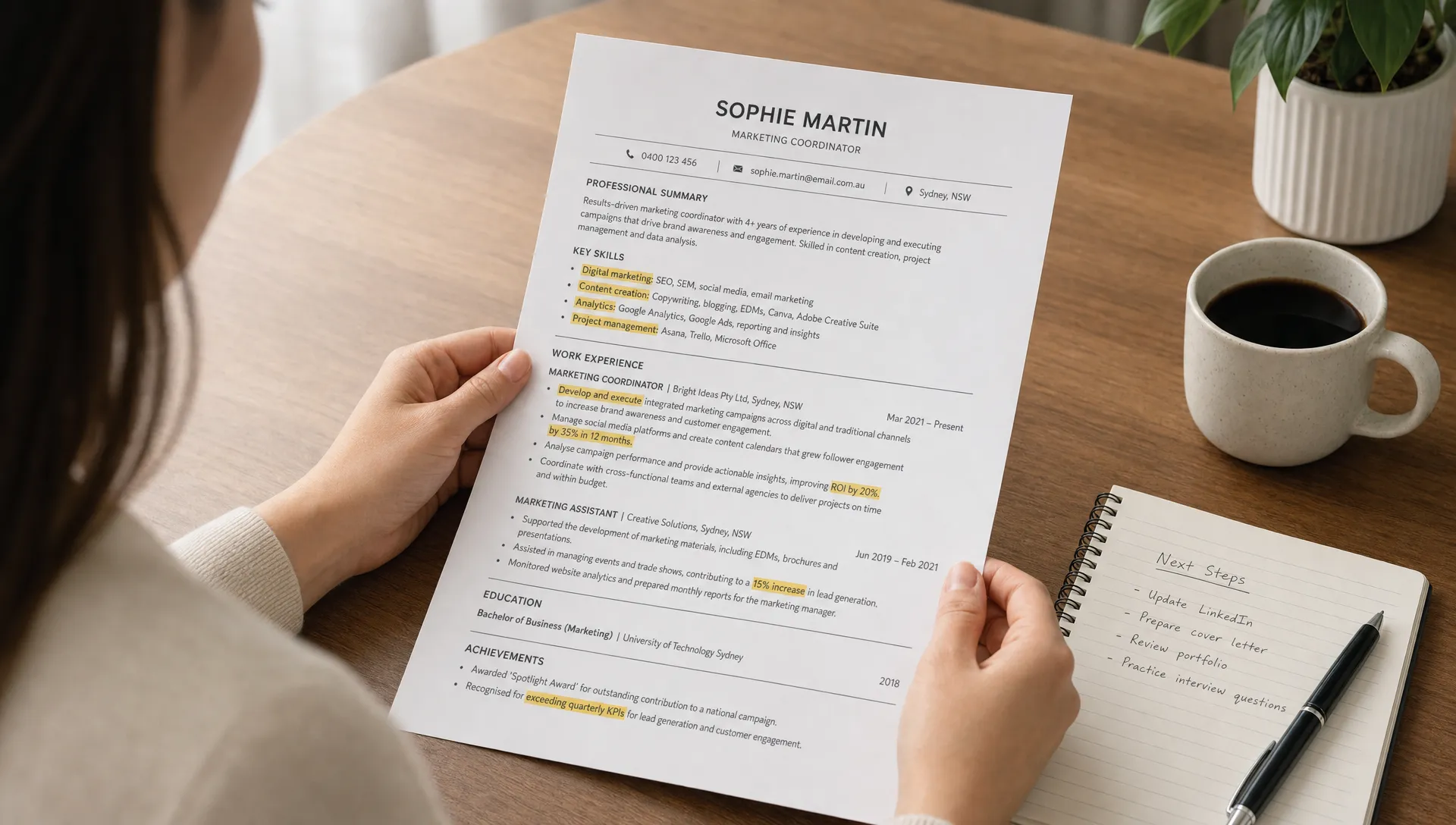
Replace big claims with specific stories
Overselling often hides behind big adjectives. Words like “exceptional”, “outstanding”, “expert”, “visionary”, and “highly skilled” may sound polished, but they can feel empty if the surrounding detail is generic.
Specific stories are more persuasive. You do not need to write long paragraphs on your resume, but you do need enough detail to make the reader believe you.
Here are a few ways to make common claims more grounded:
- Instead of “excellent leader”: Say you coordinated a group assignment, allocated tasks, checked progress, and helped the team submit on time.
- Instead of “great problem solver”: Say you identified a recurring booking error, reported the pattern, and helped reduce repeat issues.
- Instead of “strong communicator”: Say you explained product options to customers, handled complaints calmly, or presented findings to classmates.
- Instead of “fast learner”: Say you learned a new system within two weeks and used it to process orders, update records, or complete reports.
- Instead of “detail-oriented”: Say you checked invoices, edited documents, reviewed data entries, or found inconsistencies before submission.
The specific version gives the employer a mental picture. It also shows you understand what the skill looks like in real work, not just in resume language.
Be honest about developing skills
You do not have to pretend to be fully formed. Employers often hire for potential, especially in entry-level, graduate, internship, and career-change roles. What they need to see is that your developing skills are relevant and that you are aware of where you need to grow.
If you are learning a skill, frame it clearly. For example, “Currently building SQL skills through coursework and applying queries to small datasets” is more credible than “SQL expert”. “Developing project coordination skills through volunteer event planning” is stronger than pretending you managed a corporate project.
This approach works well because it shows self-awareness. You are not hiding your level. You are showing progress, initiative, and direction.
It also helps with role fit. If a job requires advanced experience you do not have, no amount of wording can fix that. But if the role asks for foundational knowledge, willingness to learn, and transferable experience, honest positioning can make you a strong candidate.
Tailor your evidence to the role
You do not need to show every skill and every experience in every application. Overselling sometimes happens when job seekers try to be everything at once. They describe themselves as creative, analytical, strategic, operational, technical, people-focused, detail-oriented, innovative, adaptable, and results-driven all in the same short summary.
That usually weakens the application. A better question is: what does this specific employer need to trust?
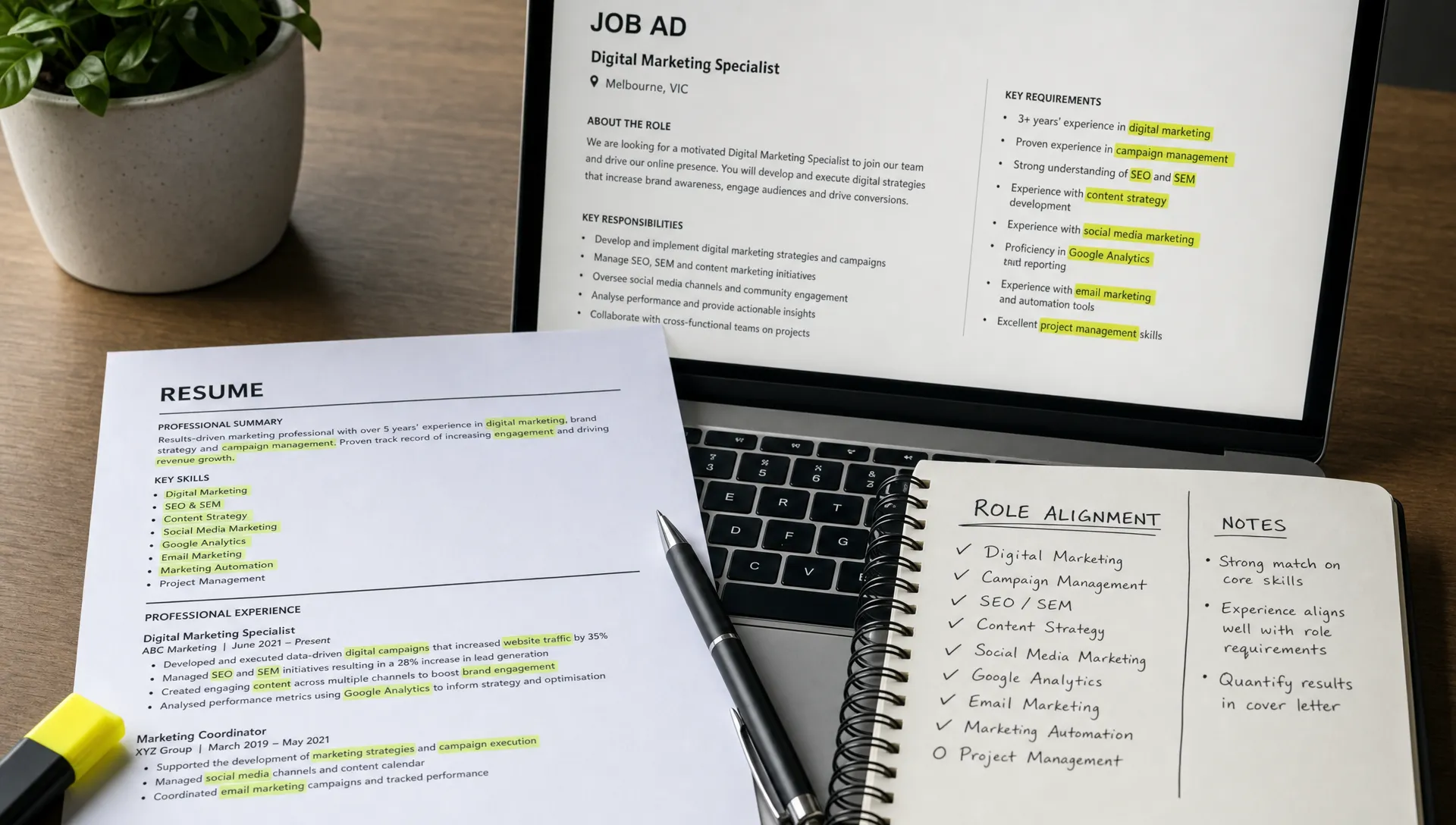
Read the job ad closely and look for repeated themes. If the role mentions customer support, scheduling, data entry, stakeholder communication, and accuracy, your evidence should point there. If the role focuses on research, writing, analysis, and collaboration, choose examples that prove those things.
Your resume summary is one of the most important places to do this. Rather than writing a broad personal pitch, use it to connect your strongest evidence to the role. If you need a structure, this guide on how to write a strong job summary can help you keep it focused and credible.
Show transferable experience without stretching it
Career changers and early-career applicants often worry that their background is “not relevant enough”. This is where many people accidentally oversell. They try to rename their past experience so aggressively that it no longer sounds like what they actually did.
You do not need to disguise your background. You need to translate it.
For example, hospitality experience can show customer handling, prioritisation, teamwork, resilience, cash handling, upselling, and working under pressure. Retail can show product knowledge, conflict resolution, stock control, visual merchandising, and sales support. Uni projects can show research, planning, presentation, writing, analysis, and collaboration.
The key is to connect the experience to the new role without pretending it was the same role. If you worked in retail and want an admin role, do not claim you were an office administrator. Instead, show the admin-like tasks you actually did, such as updating records, checking stock data, using POS systems, coordinating rosters, preparing store paperwork, or communicating with suppliers.
This is especially useful when building a smarter application strategy. Rather than sending the same broad resume everywhere, you can focus on roles where your proof is already close to what the employer needs. Versadox explains this idea further in its guide on how to get a job faster with a smarter application.
Use AI carefully without losing your voice
AI tools can help you organise your thoughts, improve clarity, and identify stronger wording. But they can also create a resume that sounds more senior, more polished, or more generic than you really are.
That is risky. If your application sounds like a corporate brochure but your interview answers sound completely different, the gap can hurt your credibility. It is also worth being cautious with online resources built around AI-detector avoidance, such as AI rewriting prompts and detection tools, because the bigger issue in job applications is not whether text can pass a detector. It is whether the words accurately represent you.
Use AI as an editor, not a mask. A good prompt is not “make me sound impressive”. A better prompt is “make this clearer while keeping the same level of experience” or “turn this responsibility into a concise resume bullet without exaggerating”.
After using AI, read every sentence and ask three questions:
- Would I say this naturally in an interview?
- Can I prove this with a real example?
- Does this match the level of role I am applying for?
If the answer is no, revise it.
Keep your cover letter grounded
Cover letters are where overselling can become especially noticeable. Because the format is more conversational, candidates sometimes use broad statements like “I am the perfect person for this role” or “I will bring unmatched value to your organisation”.
You do not need that language. A strong cover letter can be confident and grounded at the same time.
Use the cover letter to explain why your background fits the role, then give one or two examples. For instance, if the role values organisation and communication, mention a time you coordinated deadlines, handled competing priorities, or kept people informed. If the role values customer service, describe the type of customer environment you worked in and what you learned from it.
The best tone is calm confidence. You are not begging, and you are not boasting. You are helping the employer understand why your experience is relevant.
If you struggle with wording, use this simple formula:
Action + context + skill + result
For example:
“Prepared weekly stock updates for the store manager, using attention to detail and basic Excel skills to help identify low inventory before peak trading periods.”
That sentence works because it tells the reader what happened, where it happened, what skill was involved, and why it mattered. It does not claim more than it proves.
You can adjust the formula for different experiences:
- “Supported onboarding for new team members by explaining shift procedures and answering common questions during their first week.”
- “Analysed survey responses for a university research project, identifying common themes and summarising findings for a group presentation.”
- “Handled customer complaints in a fast-paced retail environment, using active listening and clear escalation steps to resolve issues professionally.”
This is the kind of language that feels believable because it is specific. It shows capability without turning every task into a dramatic achievement.
What to remove from your application
Sometimes the best way to avoid overselling is to cut weak language. If a phrase does not add evidence, it may be taking up space.
Consider removing or rewriting phrases like:
- “Proven track record” if you do not include the record.
- “Expert” if you have only basic or intermediate exposure.
- “Dynamic professional” if it does not say what you do.
- “Results-driven” if there are no results nearby.
- “Responsible for” if you can use a more active and specific verb.
- “Passionate about” if you can show action instead of emotion.
This does not mean your resume should be plain or boring. It means every line should earn its place. Strong applications are usually not the loudest. They are the clearest.
Frequently Asked Questions
How do I show skills and experience if I do not have much work history? Use evidence from study, volunteering, casual jobs, internships, personal projects, sport, community work, or leadership roles. Focus on what you did, the skills involved, and the outcome or context.
Is it bad to use confident language on a resume? No. Confidence is important. The issue is unsupported confidence. You can use strong language when it is backed by clear examples, accurate verbs, and relevant evidence.
Should I include skills I am still learning? Yes, if they are relevant and you describe your level honestly. Phrases like “currently developing”, “foundation knowledge of”, or “applied through coursework” can be useful when accurate.
How can I tell if I am overselling myself? Check whether you can explain every claim in an interview with a real example. If a statement sounds impressive but you cannot prove it, rewrite it with clearer context or reduce the level of the claim.
What is the best way to make transferable experience sound relevant? Translate the task, do not disguise it. Show how your previous experience involved similar skills, such as communication, organisation, analysis, customer service, problem solving, or teamwork.
Build an application that sounds like you, only stronger
You do not need to exaggerate to compete. You need to understand your evidence, choose the right examples, and connect your skills and experience to the role in front of you.
Versadox helps job seekers do that with resume and cover letter tools, job alignment analysis, readiness scoring, gap identification, ATS-ready templates, and guided application improvements. If you want to know where you stand before you apply, Versadox can help you build a clearer, stronger, and more honest application.





.svg)