Most cover letters do not fail because the applicant is underqualified. They fail because they sound generic, repeat the resume, or leave the employer to guess why the person is a good fit.
A strong cover letter has a simple job: connect your experience to this role, at this company, at this point in your career. That is especially important if you are a student, graduate, early-career applicant, or career changer. You may not have a perfectly linear work history yet, but you can still show relevant evidence, motivation, and readiness.
If you want to learn how to write cover letters that win more interviews, start by changing the question. Do not ask, “How do I make myself sound impressive?” Ask, “What does this employer need to believe before they invite me to interview?”
That shift makes your letter clearer, more targeted, and much easier to write.
What a winning cover letter actually does
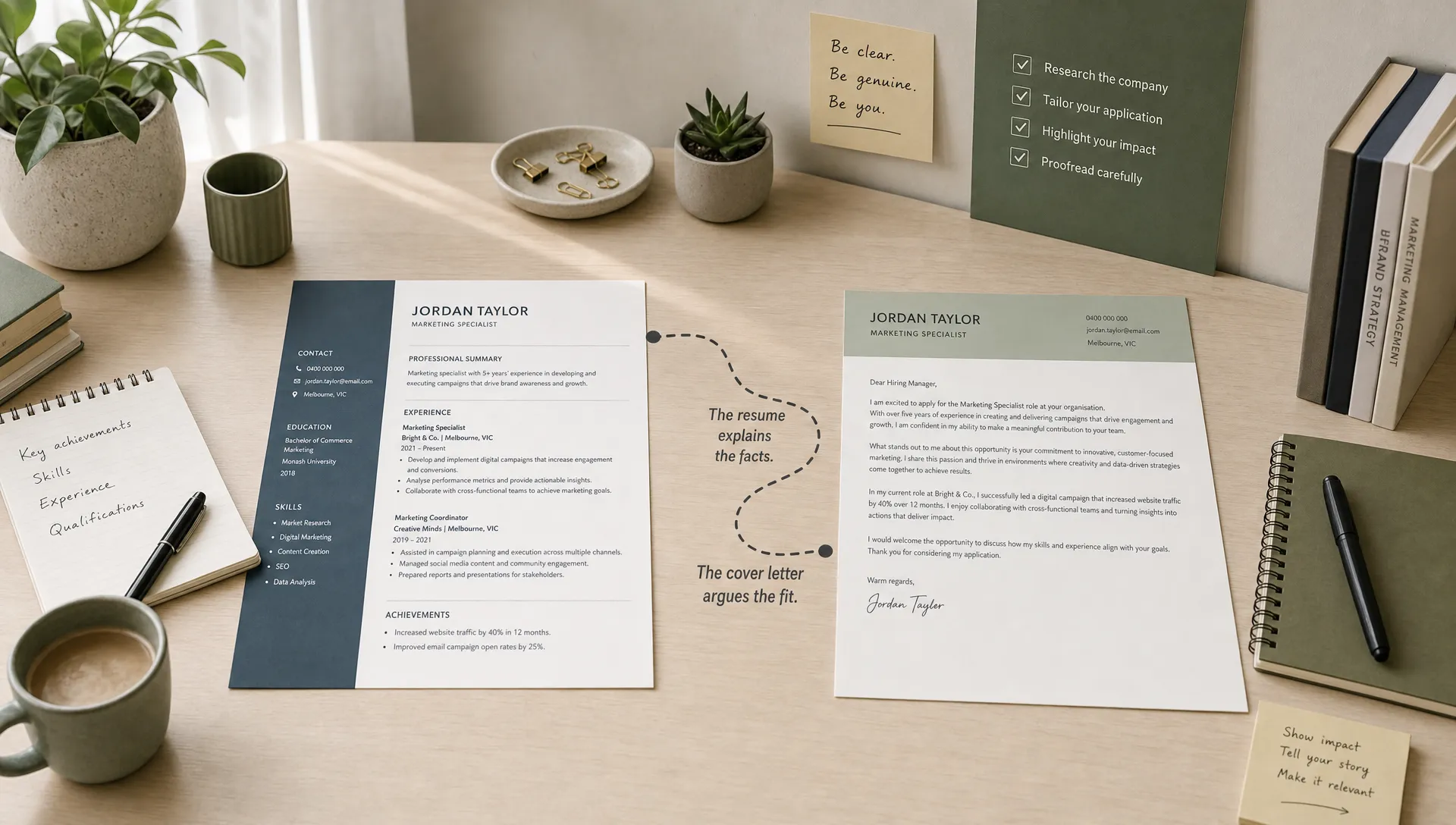
Your resume shows your experience, education, skills, and achievements. Your cover letter explains the fit.
That means the letter should not be a long personal biography. It should not restate every role you have held. It should not be a formal essay filled with phrases like “I am writing to express my sincere interest.”
A winning cover letter does three things well:
- Shows you understand the role and its priorities.
- Proves you have relevant skills or potential through specific examples.
- Explains why your background makes sense for this opportunity.
If you are still unsure how the two documents should work together, this guide to the difference between a cover letter vs resume explains the distinction clearly. In short, your resume carries the evidence. Your cover letter turns that evidence into a persuasive argument.
Start with the job ad, not a blank page
The fastest way to write a weak cover letter is to open a blank document and start with yourself. The better approach is to start with the employer.
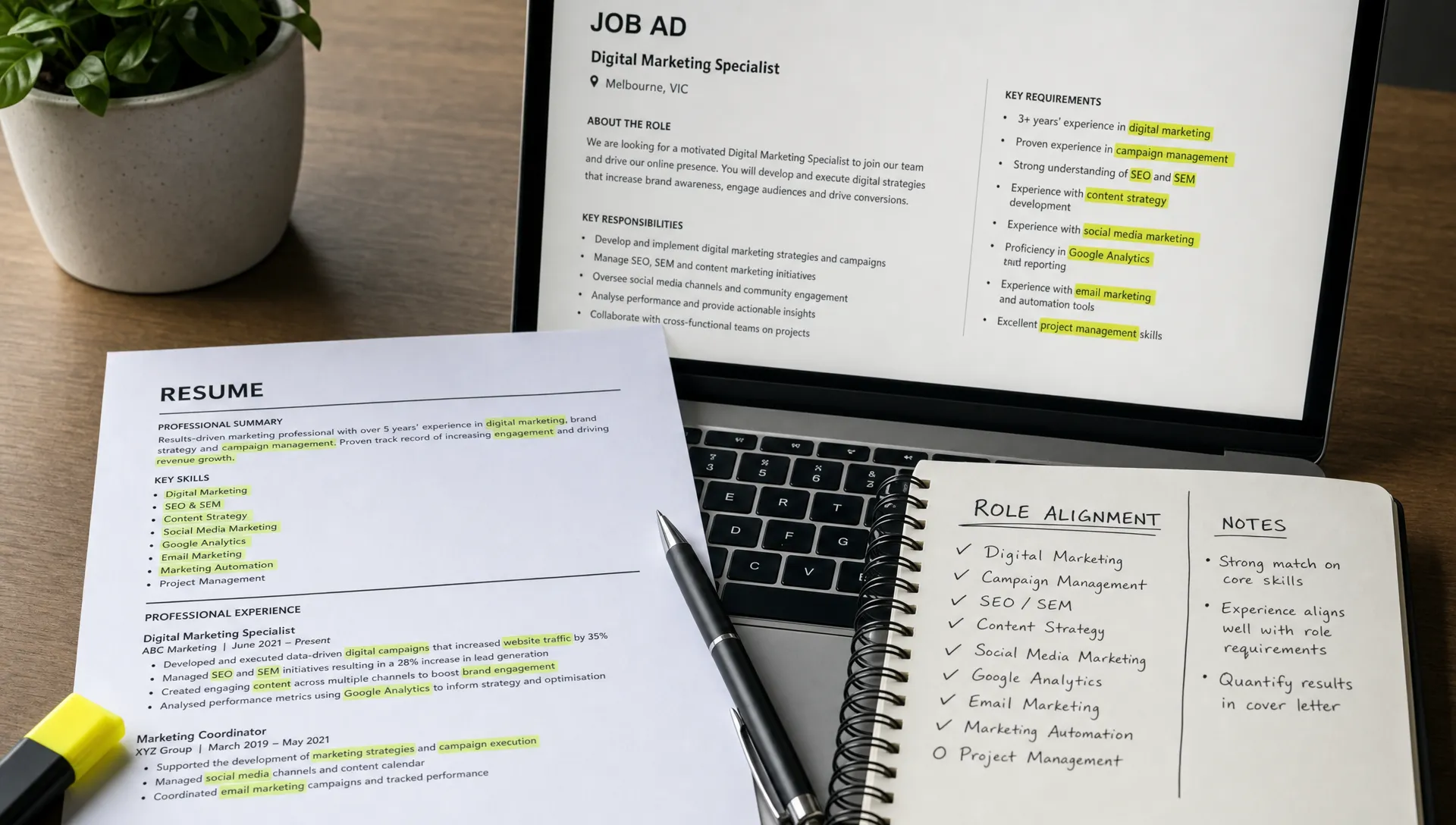
Before writing, read the job ad and highlight what matters most. Look for repeated themes, not just individual keywords. Employers often reveal their real priorities through the way they describe responsibilities, success measures, and team expectations.
For example, a customer support role might mention “high-volume enquiries,” “clear written communication,” “problem-solving,” and “CRM systems.” A graduate analyst role might focus on “data interpretation,” “stakeholder communication,” and “attention to detail.” A marketing assistant role might emphasise “campaign coordination,” “content creation,” and “reporting.”
Once you understand the role, choose two or three points you can genuinely prove. These become the backbone of your cover letter.
Do not try to address every requirement. A focused letter that proves the most important points is stronger than a broad letter that mentions everything lightly.
Use a simple cover letter structure
A good cover letter does not need to be complicated. In most cases, aim for three to five short paragraphs and keep it to one page.
Use this structure as a guide:
- Opening paragraph: Name the role, show clear interest, and introduce your strongest fit.
- Evidence paragraph: Give one specific example that proves a key skill or experience.
- Second evidence or motivation paragraph: Add another relevant proof point or explain your connection to the organisation’s needs.
- Closing paragraph: Reaffirm your interest and invite the next step.
This structure works because it matches how recruiters read. They want to quickly understand whether you are relevant, credible, and worth interviewing.
Write an opening that gets to the point
Your opening paragraph should answer the employer’s first question: “Why is this person applying, and are they relevant?”
Avoid vague openings such as:
“I am writing to apply for the position of Marketing Assistant. I believe I would be a great fit for this role.”
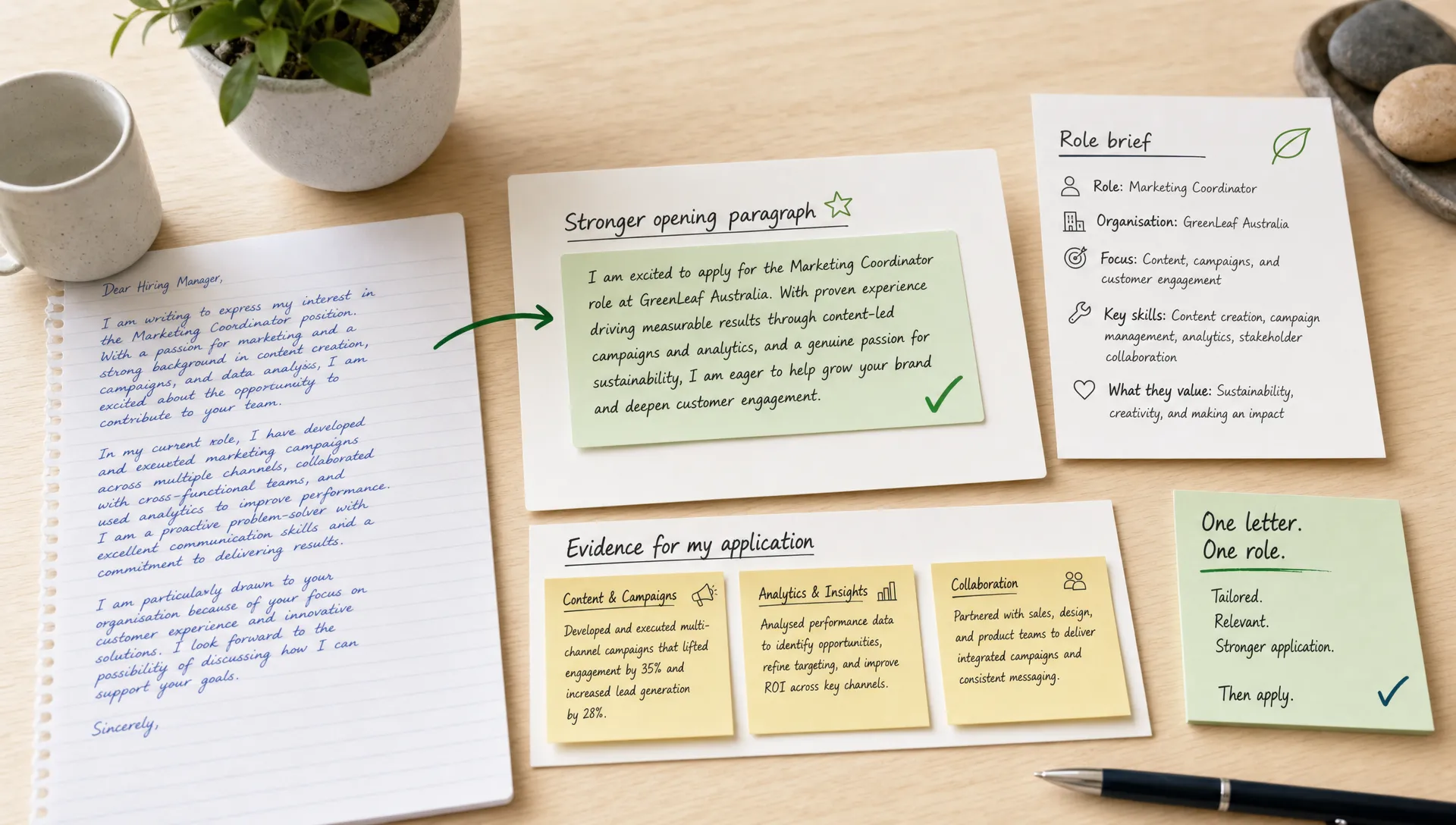
That sentence is polite, but it says very little. A stronger opening adds context and fit:
“I am excited to apply for the Marketing Assistant role at Brightline Media because it combines the areas I have been building experience in: social content, campaign coordination, and performance reporting. Through my communications degree and part-time work managing content for a student society, I have developed practical experience creating posts, tracking engagement, and coordinating deadlines across a small team.”
This opening works because it is specific. It names the role, links the applicant’s background to the job, and previews evidence.
If you are a career changer, your opening can do even more work. It can explain the transition before the employer sees it as a risk.
For example:
“After three years in retail team leadership, I am applying for the Customer Success Coordinator role because it aligns closely with the work I have enjoyed most: solving customer issues, improving processes, and helping people get value from a product or service. My experience handling escalations, training new staff, and managing daily service targets has prepared me to support customers in a structured, outcome-focused environment.”
This does not apologise for a non-traditional background. It translates it.
Prove your skills instead of listing them
Many applicants write cover letters like this:
“I have excellent communication skills, strong attention to detail, and the ability to work well in a team.”
Those skills may be true, but they are not persuasive on their own. Employers see these phrases constantly. What they want is proof.
A better version is:
“In my part-time administration role, I handled customer enquiries, updated records, and prepared daily appointment notes for a team of five consultants. Because accuracy was important, I created a checklist for common booking errors, which helped reduce follow-up corrections and made handovers easier during busy periods.”
This example proves communication, organisation, initiative, and attention to detail without simply listing them.
When choosing what to include, focus on skills that match the role and can be backed by a real situation. If you need help choosing the strongest examples, this article on the best skills for a cover letter gives practical guidance on turning common strengths into credible proof.
Show you understand the employer’s world
A cover letter becomes more convincing when it shows you have thought about the employer’s context. You do not need to flatter the company or repeat its “About us” page. You do need to show you understand the kind of work they do and the problems the role helps solve.
For example, if you were applying for a logistics, operations, customer service, or sales role at a business that supplies and delivers physical products, such as a company selling premium shipping containers, your letter might connect your experience to stock accuracy, delivery coordination, customer enquiries, and clear communication around product options.
That kind of tailoring feels practical because it links your skills to the business model. It also shows the employer you are not sending the same letter everywhere.
You can build this understanding by reviewing the job ad, company website, product pages, recent updates, and customer-facing language. Ask yourself what the role is really there to improve. Is it speed, accuracy, service quality, compliance, growth, retention, safety, or coordination?
Once you know that, your cover letter can speak directly to the employer’s priorities.
Tailor your cover letter without rewriting everything
Tailoring does not mean starting from zero every time. It means adjusting your evidence and language so the letter fits the role.
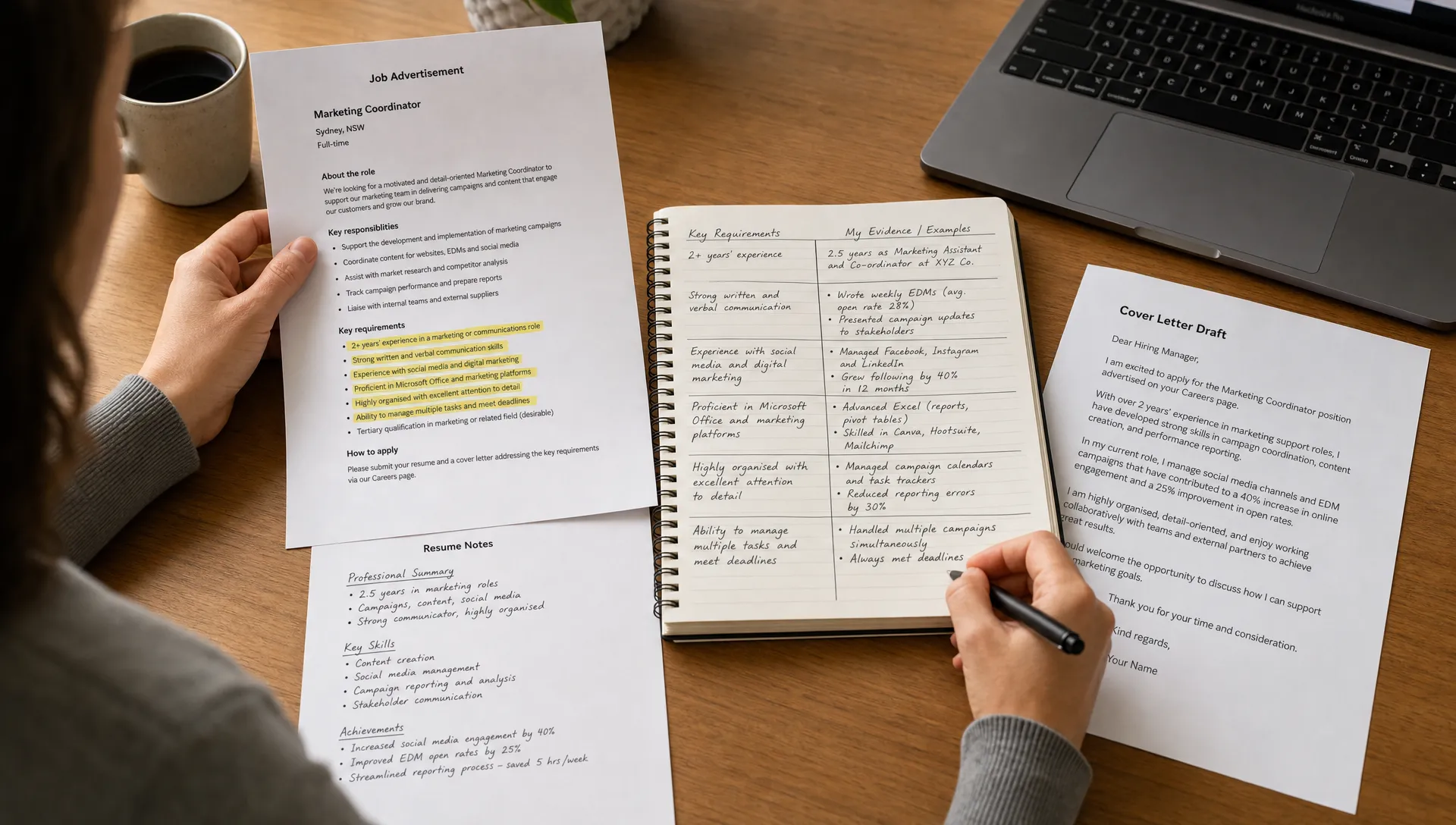
A practical approach is to create a core evidence bank. This is a simple collection of examples from study, work, volunteering, projects, placements, or personal initiatives. For each example, record what you did, what skill it proves, and what outcome it created.
Then, for each application, choose the most relevant examples.
You might have one example that proves customer communication, another that proves data accuracy, and another that proves leadership under pressure. A retail assistant applying for an office administration role might focus on record-keeping, customer communication, and rostering support. The same person applying for a sales role might focus on product knowledge, upselling, and handling objections.
This is how strong applicants move faster without becoming generic. They reuse evidence, but they customise the argument.
If you want to improve your wider process, not just one document, these job hunting strategies for better application results can help you apply with more focus and less guesswork.
Use the right tone for Australian employers
In Australia, cover letters are usually professional, direct, and evidence-based. You do not need exaggerated claims. You also do not need overly formal language that sounds unnatural.
Aim for confident but grounded. Write like a capable person explaining why the role makes sense.
Instead of:
“I am the perfect candidate for this position and would bring unparalleled value to your organisation.”
Try:
“I believe my experience supporting customers, managing competing priorities, and improving daily processes would allow me to contribute effectively in this role.”
The second version is more credible because it is specific and measured.
This matters particularly for students and career changers. If you oversell, the letter can feel disconnected from your resume. If you undersell, the employer may miss your potential. The goal is accurate confidence.
Address gaps or limited experience carefully
If you are applying for your first professional role, changing careers, or returning to work, your cover letter can help frame your background positively.
You do not need to highlight every gap. You do need to explain what makes you ready.
For limited experience, focus on transferable evidence:
- University projects that involved research, teamwork, presentations, or deadlines.
- Casual jobs that involved service, responsibility, sales, organisation, or problem-solving.
- Volunteer roles that involved coordination, communication, leadership, or reliability.
- Personal projects that show initiative, learning ability, creativity, or technical skills.
For career changes, make the connection explicit. Do not assume the employer will translate your experience for you.
A hospitality supervisor moving into HR administration could write:
“Although my background is in hospitality, much of my experience has centred on people coordination, onboarding, performance conversations, and compliance with workplace procedures. I am now looking to apply that experience in a more formal HR support environment, where my communication skills and practical understanding of frontline teams would be valuable.”
That paragraph makes the transition understandable. It also shows direction, not desperation.
Keep the letter focused on the interview decision
Your cover letter does not need to answer every possible question. Its goal is to help you get an interview.
That means every paragraph should support the hiring decision. If a sentence does not help the employer understand your fit, motivation, or evidence, cut it.
Common content to remove includes:
- Generic statements about being passionate, hardworking, or enthusiastic without proof.
- Long explanations of your life story.
- Repetition of every resume bullet point.
- Apologies for not meeting every requirement.
- Salary expectations, availability issues, or personal details unless requested.
A concise letter often feels more confident than a long one. It suggests you understand what matters.
A practical cover letter example
Here is a simple example for a graduate applying for a project coordinator role:
“Dear Hiring Manager,
I am excited to apply for the Project Coordinator role because it aligns closely with the experience I have developed through my business degree, internship, and part-time administration work. The role’s focus on scheduling, stakeholder communication, and documentation particularly stood out to me, as these are areas where I have built practical strengths.
During my internship with a local community organisation, I supported a small events team by updating project timelines, preparing meeting notes, and following up with suppliers before key deadlines. I also helped create a shared task tracker so the team could see outstanding actions more clearly. This experience strengthened my ability to organise information, communicate professionally, and stay calm when priorities changed.
In my current administration role, I handle customer enquiries, maintain accurate records, and coordinate appointments across multiple staff calendars. These responsibilities have helped me develop strong attention to detail and a service-focused approach, both of which I believe would be valuable in supporting project delivery.
I would welcome the opportunity to discuss how my organisation skills, communication experience, and willingness to learn could contribute to your team. Thank you for considering my application.
Kind regards,
[Name]”
This letter works because it is clear, relevant, and supported by evidence. It does not claim the applicant has years of project experience. Instead, it shows the building blocks of readiness.
Edit your cover letter like a recruiter
Once you have written a draft, review it from the employer’s perspective. Do not just check spelling. Check relevance.
Ask yourself:
- Can the employer tell which role this is for within the first few lines?
- Have I addressed the most important requirements from the job ad?
- Have I included proof, not just claims?
- Does the letter explain why my background makes sense?
- Is the tone professional, natural, and confident?
- Could I remove any sentence without losing meaning?
Also check that your cover letter and resume tell the same story. If the letter says you are strong in stakeholder communication, your resume should contain evidence of communication. If the letter says you are interested in data analysis, your resume should show relevant coursework, projects, tools, or achievements.
This consistency builds trust.
Common cover letter mistakes to avoid
Even capable applicants can weaken their chances with avoidable mistakes.
One common mistake is using the same opening for every role. Recruiters can spot this quickly. Another is focusing too much on what the applicant wants, such as growth, learning, or career progression, without explaining what they can contribute.
It is fine to mention that you are excited to learn. But employers are hiring to solve a problem. Balance your motivation with value.
Another mistake is writing too formally. Phrases like “I hereby submit my application” or “I would be most honoured” can make the letter feel distant. Clear, professional language is usually stronger.
Finally, do not rely on AI-generated wording without editing it. AI can help structure ideas, but your final letter should include real examples, accurate details, and a tone that sounds like you. Generic AI wording is often easy to recognise because it sounds polished but empty.
Frequently Asked Questions
How long should a cover letter be? A cover letter should usually be one page, with three to five short paragraphs. Aim for enough detail to prove fit without repeating your entire resume.
Should every job application include a cover letter? If the employer asks for one, definitely include it. If it is optional, a strong tailored cover letter can still help, especially when your background needs context or you want to stand out.
How do I write a cover letter with no experience? Focus on transferable evidence from study, volunteering, casual work, projects, sport, leadership, or personal initiatives. Show the employer you understand the role and have relevant building blocks, even if your experience is not identical.
Can I use the same cover letter for multiple jobs? You can reuse your structure and some examples, but you should tailor the opening, role priorities, and proof points for each application. A generic letter is less likely to win interviews.
What is the best way to start a cover letter? Start by naming the role, showing genuine interest, and linking your strongest relevant experience to the employer’s needs. Avoid vague openings that could apply to any job.
Build a stronger application before you apply
Learning how to write cover letters is not about sounding more impressive. It is about making your fit easier to see.
The best letters are specific, evidence-based, and connected to the role. They show that you understand what the employer needs, that your experience has relevance, and that you are ready for the next conversation.
If you want more confidence before sending your next application, Versadox helps you compare your resume and cover letter against real roles, identify gaps, and make guided improvements before you apply. A clearer application gives employers fewer reasons to hesitate and more reasons to interview you.





.svg)