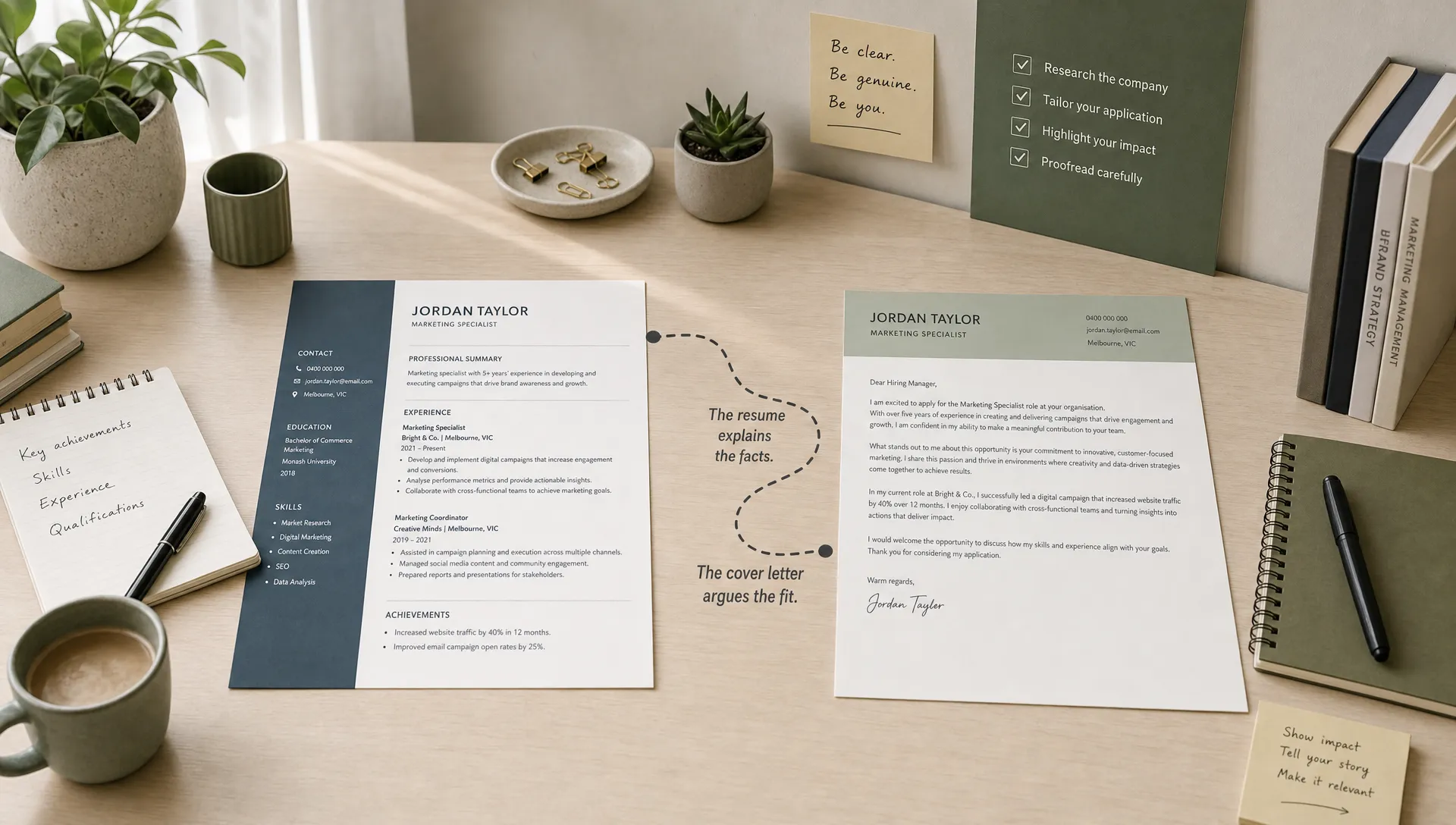
A cover letter is not a longer version of your resume. It is your chance to explain why your experience, motivation and strengths make sense for this specific role. If you have ever stared at a blank page wondering what to write in a cover letter, the answer is simpler than most templates suggest: write the missing argument that connects your background to the employer’s problem.
That does not mean writing a dramatic life story, listing every skill you have, or copying the job ad back to the hiring manager. A strong cover letter is focused, relevant and evidence-based. It gives the reader a reason to look more closely at your resume and imagine you doing the job well.
In a competitive Australian job market, where many applicants have similar qualifications, the best cover letters create real impact by doing three things clearly:
Start With the Real Purpose of a Cover Letter
Before you write a single sentence, it helps to know what a cover letter is supposed to do. Your resume presents evidence. Your cover letter interprets that evidence for the role in front of you.
If you are still unsure how the two documents should work together, it is worth understanding the difference between a cover letter vs resume before you start tailoring your application.
A cover letter should answer questions a resume may not fully explain, such as:
The mistake many applicants make is treating the cover letter as a formality. They write polite, generic paragraphs that could be sent to any employer. That is why so many cover letters sound the same. Impact comes from specificity.
Recruitment teams are also becoming more efficient and data-driven. Some employers and agencies now use tools such as AI-first recruitment platforms to manage screening, outreach and scheduling, which makes clarity and relevance even more important. Your application needs to communicate fit quickly, both to people and to the systems helping them manage large candidate pools.
What to Write in a Cover Letter: The Core Ingredients
A good cover letter does not need to be complicated. In most cases, aim for three to five concise paragraphs. The goal is to make every section earn its place.
A targeted opening
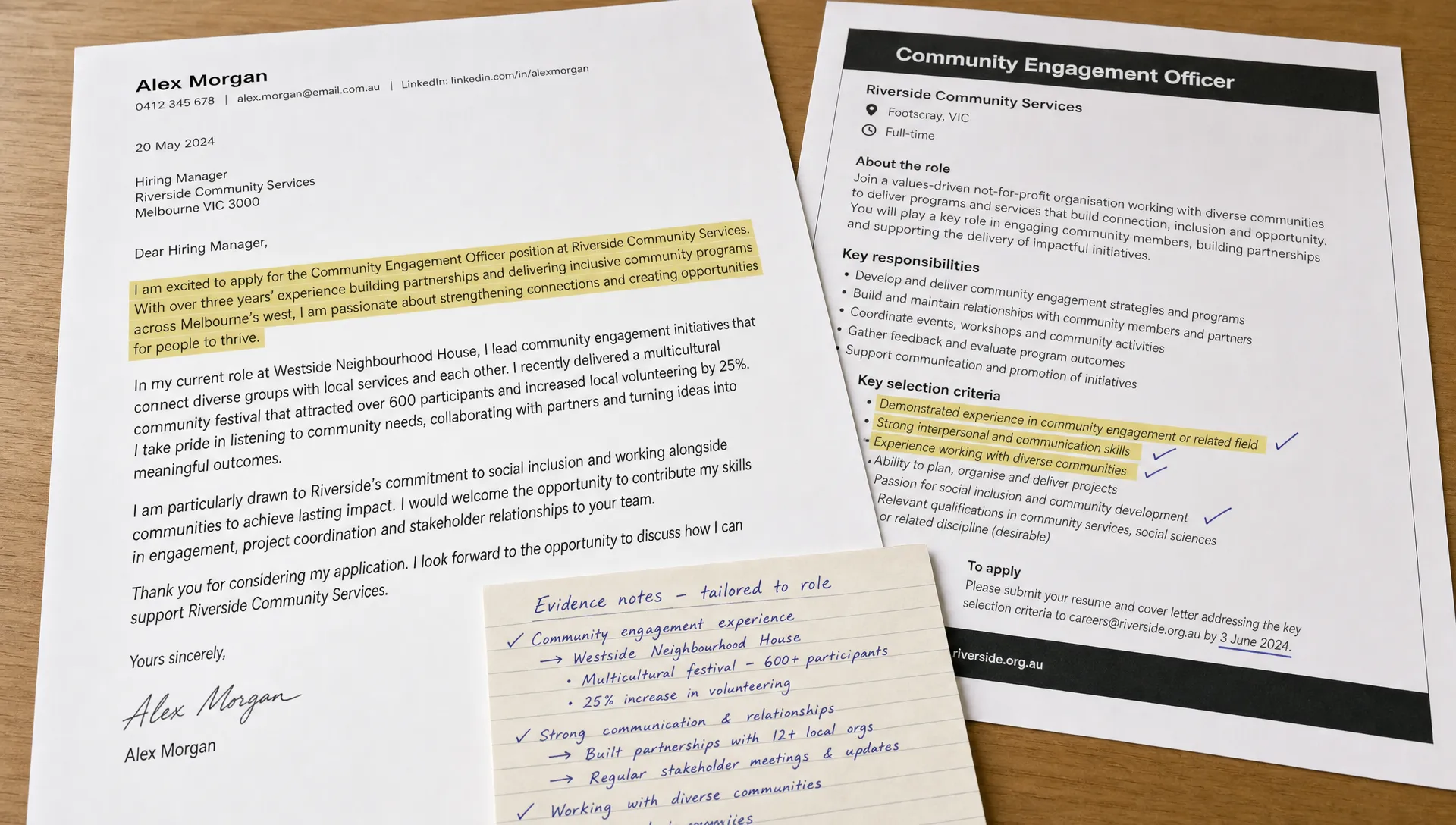
Your opening should immediately connect you to the role. Avoid starting with a generic line like, “I am writing to apply for the position of...” The hiring manager already knows that.
Instead, open with a clear statement of fit. Mention the role, the type of value you bring and the reason the opportunity makes sense.
For example:
“I am excited to apply for the Marketing Coordinator role because it combines the areas where I have built the strongest early-career experience: campaign support, content coordination and data-informed reporting.”
That sentence works because it does more than state interest. It frames the candidate around the role’s likely priorities.
If you are a graduate, you can still write a strong opening:
“As a recent commerce graduate with internship experience in customer research and CRM reporting, I am drawn to this role because it offers the chance to apply analytical and communication skills in a client-focused environment.”
If you are changing careers, your opening should make the transition feel intentional:
“After five years in retail leadership, I am applying for this customer success role because it aligns closely with the strengths I have built in client communication, problem solving, team training and service recovery.”
The best opening answers the reader’s first question: “Why is this person relevant?”
A short reason for interest
Employers want to know that you are not applying randomly. You do not need to flatter the company or overdo the enthusiasm. You simply need to show that you understand something meaningful about the role, organisation or industry.
This could relate to:
Keep it grounded. A sentence like “I admire your company’s commitment to excellence” says almost nothing. A stronger version would be:
“I am particularly interested in the role’s focus on improving onboarding processes, as my recent project work involved mapping customer pain points and recommending clearer support materials.”
Now the interest is connected to capability.
One or two proof-based examples
This is the most important part of the cover letter. Claims are easy. Proof is what makes them believable.
Instead of writing, “I have strong communication and teamwork skills,” show where those skills appeared in real work, study, volunteering or projects.
For example:
“In my final-year project, I coordinated a four-person team to research customer retention challenges for a local business. I managed timelines, facilitated weekly check-ins and presented our recommendations to the client, which helped me build confidence translating research into practical actions.”
This example works because it has context, action and relevance. It tells the reader what the candidate did and why it matters.
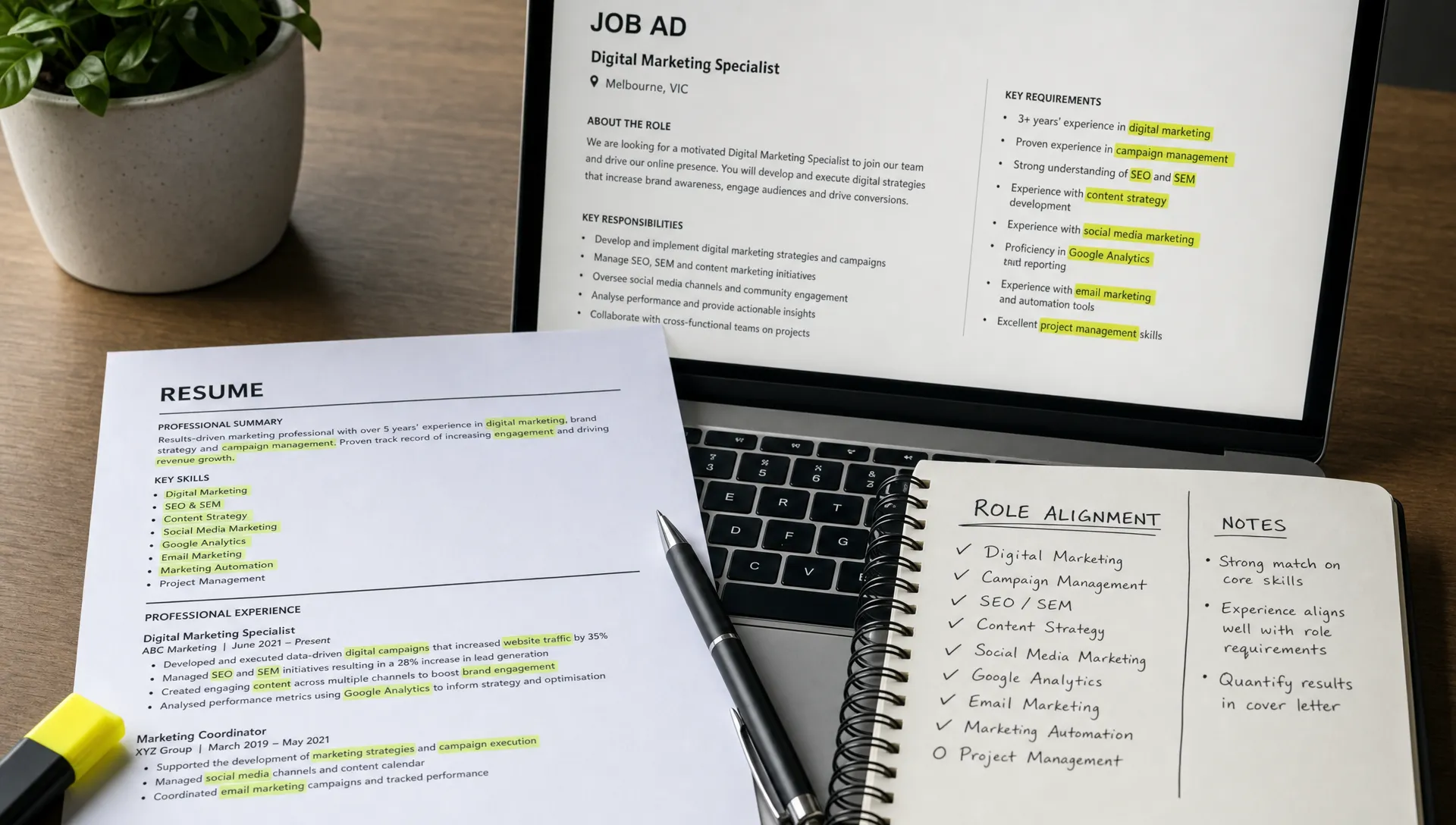
If you are unsure which strengths to include, focus on the skills the job ad repeats or prioritises. For more guidance, Versadox has a separate guide on the best skills for a cover letter and how to support them with evidence.
A clear link to the role
After giving an example, do not assume the reader will connect the dots. Spell out the relevance.
A useful phrase is: “This experience would help me...”
For example:
“This experience would help me contribute to your team’s need for accurate reporting, stakeholder communication and practical follow-through.”
That one sentence turns a past example into future value.
This is where many cover letters fall short. They describe achievements, but they do not explain why those achievements matter to the employer. Real impact comes from making the link obvious.
A confident closing
Your closing should be polite, direct and forward-looking. Avoid sounding desperate or overly formal.
A strong closing might be:
“I would welcome the opportunity to discuss how my experience in customer support, process improvement and team coordination could contribute to this role. Thank you for considering my application.”
You do not need to write, “I look forward to hearing from you at your earliest convenience.” It is fine, but it has become so common that it rarely adds impact.
Write for the Role, Not for Yourself
One of the biggest mindset shifts in cover letter writing is moving from “What do I want to say about myself?” to “What does this employer need to understand quickly?”
That does not mean hiding your personality. It means choosing the most relevant parts of your story.
Read the job ad carefully and look for patterns. Most job ads give clues about what matters most, even if they are not perfectly written. Pay attention to repeated responsibilities, required tools, soft skills and outcomes.
For example, if a role mentions stakeholder communication, deadlines and reporting, your cover letter should not spend most of its space on your passion for the industry. Passion may help, but it is not the strongest evidence. You would be better off writing about a time you coordinated information, met deadlines and communicated clearly.
If the role is entry-level, the employer may be looking for coachability, reliability and transferable skills. If it is a more experienced role, they may be looking for judgement, ownership and measurable results. If it is a career-change role, they may be looking for a credible bridge between your past experience and the new position.
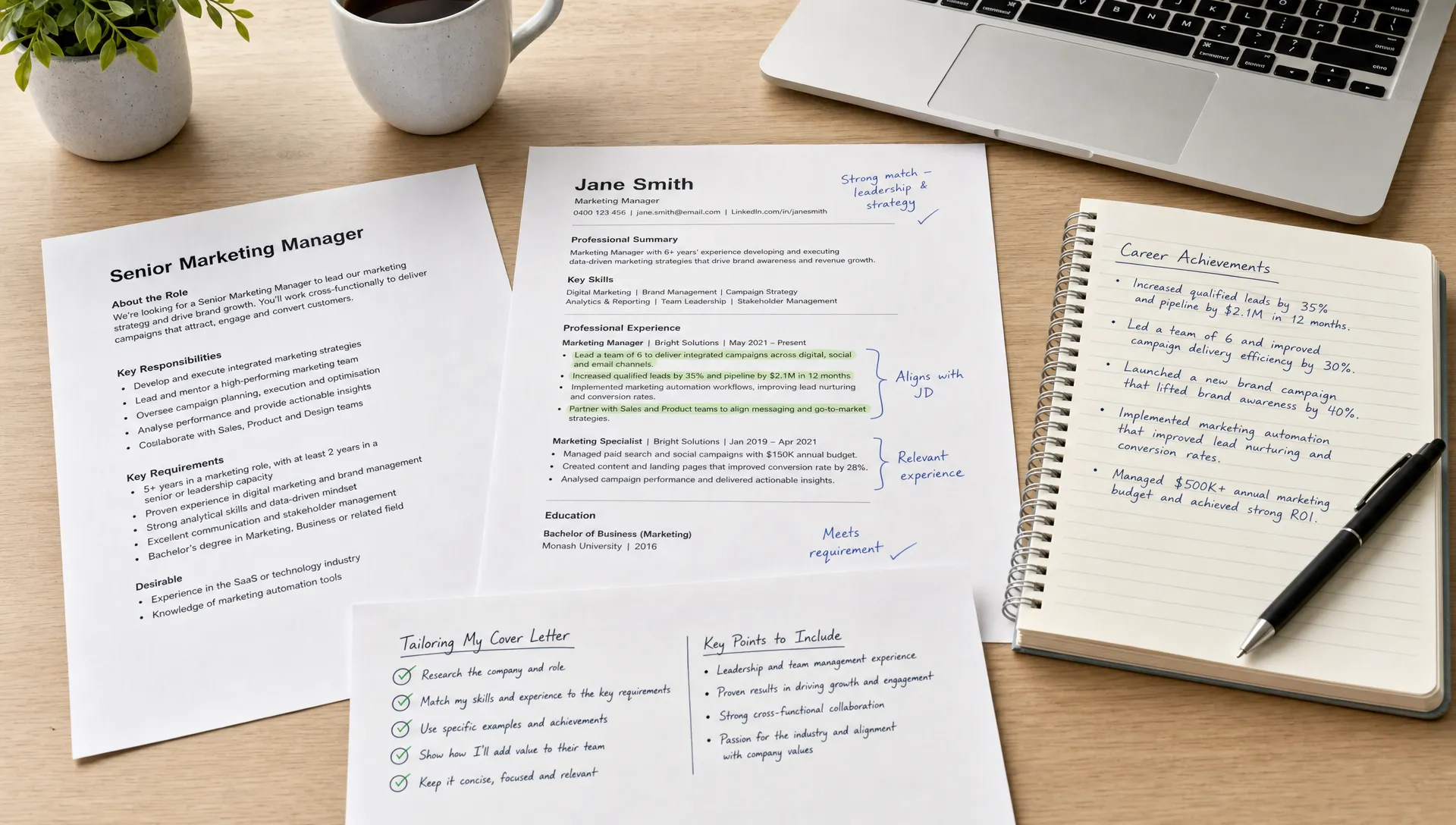
This is also why sending the same cover letter to every employer weakens your application. The structure can stay similar, but the content should shift based on the role.
How to Choose the Best Examples
When deciding what to write, use a simple filter: relevance first, impressiveness second.
A huge achievement that has little connection to the role may not be as useful as a smaller example that directly proves the skill the employer needs.
Good examples often come from:
The best example usually has three parts: the situation, what you did and the result or learning. You do not always need a number, but when you have one, use it.
Compare these two sentences:
“I have experience managing social media and creating content.”
“I managed weekly Instagram and LinkedIn posts for a student society, increasing event registrations by improving post timing, clearer calls to action and more consistent promotion.”
The second version is stronger because it shows action and outcome. Even without a precise percentage, it gives the reader something concrete.
What If You Do Not Have Much Experience?
If you are a student, graduate or early-career applicant, you may feel like you do not have enough to write about. The key is to stop thinking only in terms of job titles. Employers also value evidence from study, projects, volunteering and real responsibilities.
You can write about:
For example:
“While completing my degree, I balanced part-time hospitality work with full-time study, which strengthened my time management, customer communication and ability to stay organised during busy periods. These habits would support the fast-paced coordination required in this role.”
That is a credible statement. It does not pretend the candidate has years of corporate experience. It shows transferable value honestly.
What If You Are Changing Careers?
Career changers often make one of two mistakes. They either apologise for not having direct experience, or they ignore the transition completely. Neither approach is ideal.
A better strategy is to name the bridge. Explain what carries over from your previous work and why the move makes sense.
For example:
“My background in teaching has given me strong experience explaining complex information, adapting communication styles and managing competing priorities. I am now looking to apply those strengths in a learning and development role, where they align closely with employee training, stakeholder support and content delivery.”
This works because it does not ask the employer to guess. It shows the connection clearly.
If you are changing careers, your cover letter should not try to cover your entire past. Select two or three transferable strengths that matter most for the new role. Then support them with examples.
What to Avoid Writing in a Cover Letter
A cover letter can lose impact quickly if it feels generic, exaggerated or unfocused. Hiring managers do not expect perfection, but they do expect relevance and care.
Avoid these common issues:
If you are worried about sounding too confident, aim for evidence rather than hype. You do not need to oversell yourself to write persuasively. The goal is to be clear, specific and honest.
For a broader approach to improving results across multiple applications, you can also build a more focused process using targeted job hunting strategies instead of relying on volume alone.
A Simple Cover Letter Structure You Can Use
You do not need a complicated formula. Use this structure as a flexible guide:
Here is a simplified example:
“I am excited to apply for the Project Assistant role because it aligns with my experience supporting timelines, coordinating information and communicating with different stakeholders. Through my recent internship and university project work, I have developed the organisation and follow-through needed to support busy teams.
In my internship with a local nonprofit, I helped coordinate project updates across three internal teams, maintained a shared task tracker and prepared weekly summary notes for the program manager. This strengthened my ability to manage details, clarify priorities and keep people informed.
I am particularly interested in this role because of its focus on practical delivery and cross-team support. My experience balancing study, part-time work and project responsibilities has helped me build a reliable, structured approach to deadlines.
Thank you for considering my application. I would welcome the opportunity to discuss how my coordination skills, attention to detail and willingness to learn could support your team.”
This example is not flashy, but it is useful. It shows fit, proof and motivation without wasting space.
Edit for Impact Before You Send
The first draft is rarely the strongest version. Editing is where your cover letter becomes sharper.
Before sending, ask yourself:
Also check the basics: the company name, role title, spelling, grammar and formatting. Small errors can make a tailored letter feel careless.
If you are applying to several roles, keep an evidence bank of examples you can adapt. This makes tailoring faster and helps you avoid starting from scratch every time.
Frequently Asked Questions
What should I write in the first paragraph of a cover letter? Start by naming the role and giving a clear reason you are a strong fit. Mention your most relevant experience, study area or transferable strength, then connect it to the role’s main needs.
Should a cover letter repeat my resume? No. Your cover letter should highlight and explain the most relevant parts of your resume, not repeat every detail. Use it to show why your background matters for this specific job.
How long should a cover letter be? In most cases, keep it to one page with three to five concise paragraphs. The reader should be able to understand your fit quickly.
What if I do not know the hiring manager’s name? Use a professional greeting such as “Dear Hiring Manager” or “Dear Recruitment Team.” It is better to be clear and respectful than to guess incorrectly.
Can I use AI to write my cover letter? Yes, but use it as a support tool, not a replacement for your judgement. The strongest cover letters still need your real examples, accurate experience and tailored reasoning.
Apply With More Clarity and Confidence
Knowing what to write in a cover letter becomes much easier when you understand the role, choose the right evidence and connect your strengths to the employer’s needs.
Versadox helps job seekers build stronger resumes and cover letters, compare applications against real roles, identify gaps and improve readiness before applying. If you want to move beyond guesswork, use Versadox to refine your application and position yourself with more confidence before you hit submit.
The Perfect Time is a Myth: The Unfiltered Truth About Career Moves
Waiting for perfect economic conditions is a complete myth. Use this data-driven, four-step strategic blueprint to confidently design and execute your next massive career pivot.





.svg)