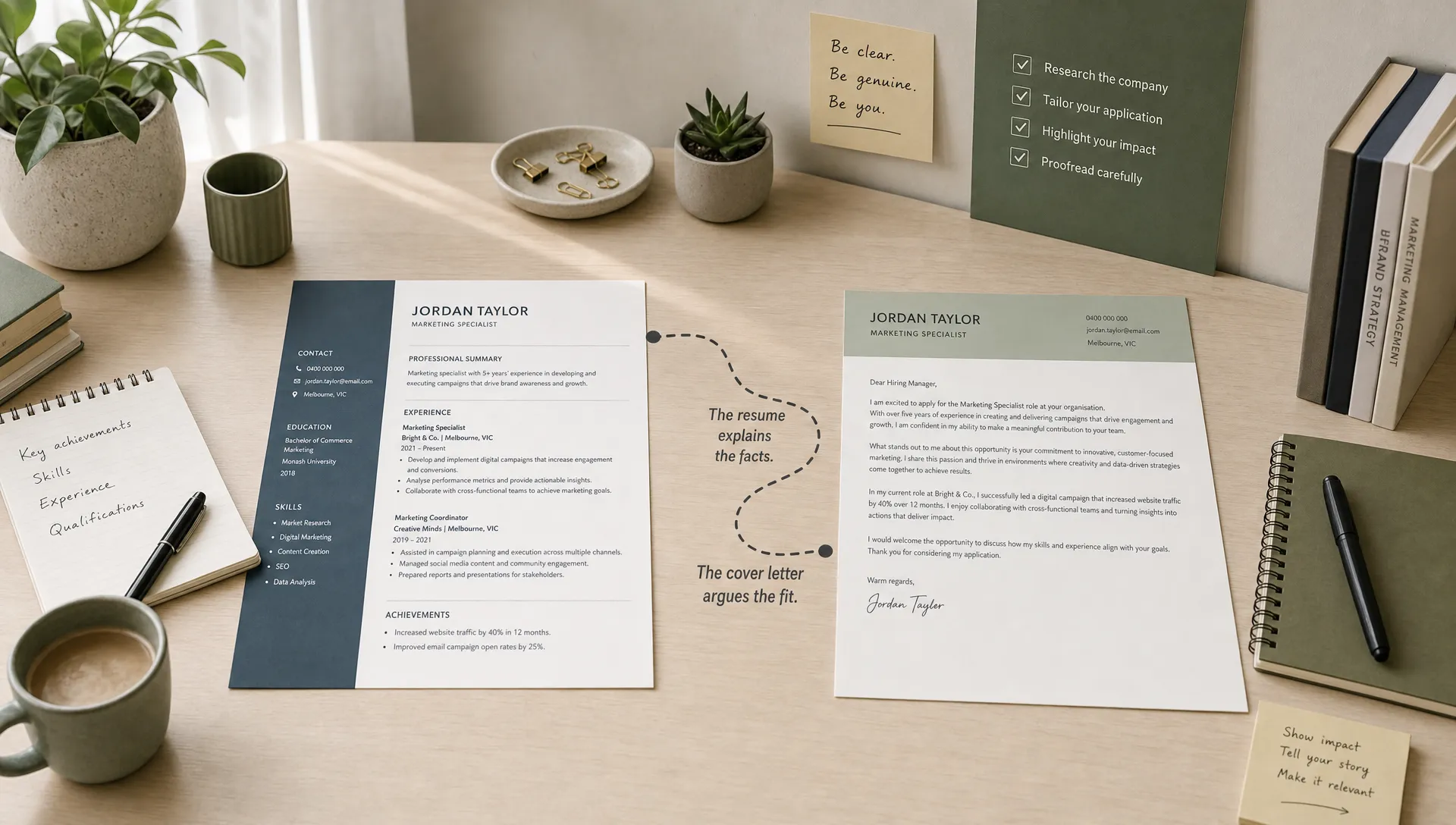
Your work experience section is usually the first place a recruiter looks after your name, contact details, and summary. It answers the employer’s biggest question: have you done work that prepares you for this role?
Formatting matters because even strong experience can look weak if it is hard to scan, poorly ordered, or buried under vague duties. A clear work experience in a resume should help a hiring manager understand your role, employer, dates, responsibilities, and impact within seconds.
For students, graduates, and career changers, the goal is not to pretend you have more experience than you do. The goal is to present the experience you have in a clean, relevant, and evidence-based way.
What the work experience section should achieve
A properly formatted work experience section should do three things at once.
First, it should make your employment history easy to follow. Recruiters should not have to guess where you worked, when you worked there, or what your job title was.
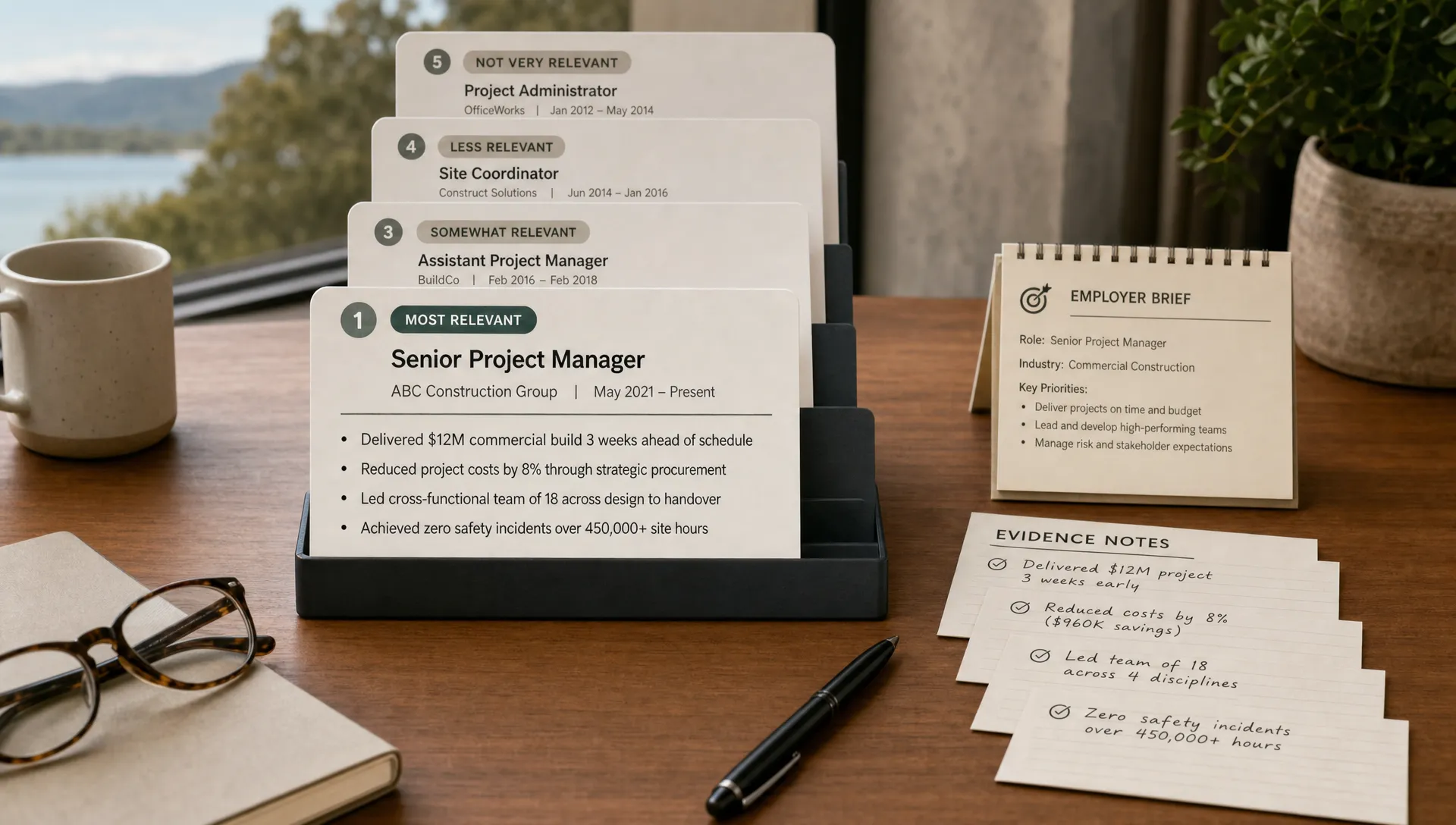
Second, it should show relevance. Every role does not need to be described in the same level of detail. The roles most connected to the job you want should receive more space and stronger bullet points.
Third, it should give proof. Instead of listing only tasks, your bullet points should show how you contributed, what tools or processes you used, and what changed because of your work.
That is why formatting is both visual and strategic. Layout helps the reader scan. Content helps them decide whether to keep reading.
Use reverse chronological order for most resumes
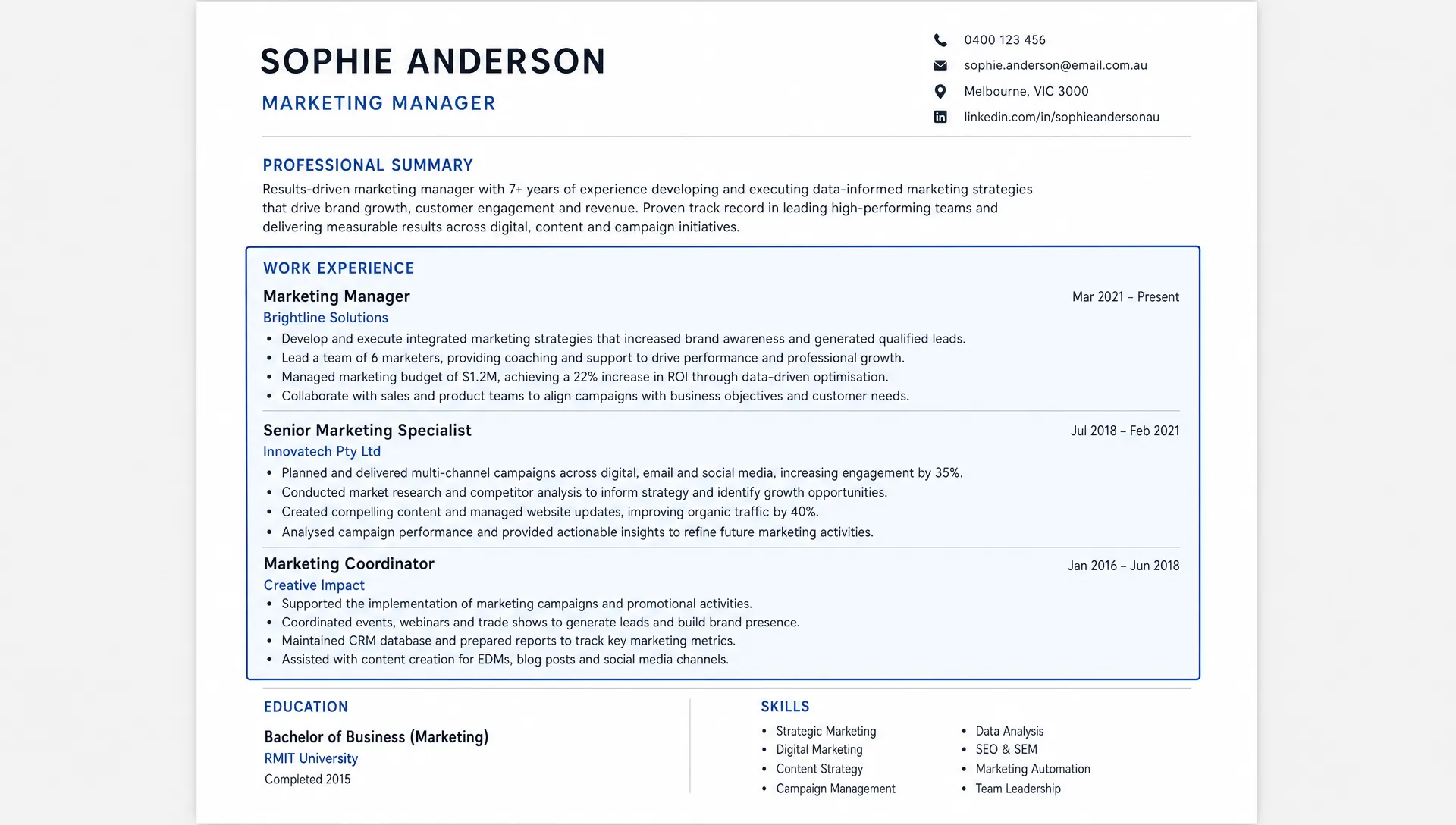
For most job seekers in Australia, the best format is reverse chronological order. That means your most recent or current role appears first, followed by earlier roles.
This format works because employers usually care most about what you have done recently. It also matches the way recruiters expect to read resumes, which reduces friction during a quick scan.
A standard order looks like this:
- Current or most recent job
- Previous job
- Earlier relevant job
- Internships, placements, volunteering, or projects if they support your application
If you are a student or recent graduate, you can still use this format. Your section might include part-time work, internships, clinical or industry placements, volunteering, campus leadership, or freelance projects. The key is to label each experience honestly and highlight the transferable skills that match the role.
If you are changing careers, reverse chronological order is still usually the safest choice. You can make the transition clearer by placing a targeted resume summary above your experience section. If you need help with that, Versadox has a guide on writing a strong job summary for your resume that can help connect your past experience to your next direction.
What to include for each role
Each role entry should follow a consistent structure. Consistency makes your resume look professional and helps applicant tracking systems read the information correctly.
Include these details for every role:
- Job title
- Employer or organisation name
- Location, such as Sydney NSW, Melbourne VIC, or Remote
- Dates of employment, using month and year
- Three to six bullet points for relevant roles
- One to three bullet points for older or less relevant roles
A simple role entry can look like this:
Customer Service Assistant
BrightMart Retail, Brisbane QLD
Mar 2024 to Present
- Assisted 60+ customers per shift across checkout, returns, and product enquiries in a high-volume store.
- Resolved common customer issues by following store policies and escalating complex cases to supervisors.
- Trained two new team members on register processes, stock checks, and customer service standards.
This format works because it is easy to scan, uses clear dates, and leads each bullet point with an action.
Avoid placing dates in a way that is hard to find. Dates should be aligned consistently, either after the employer line or on a separate line. Do not hide them in paragraphs.
Choose the right section heading
Use a heading that employers and hiring systems understand. The safest headings are:
- Work Experience
- Professional Experience
- Employment History
- Relevant Experience
For most applicants, “Work Experience” is the clearest option. If you are a graduate or career changer with mixed experience, “Relevant Experience” can work well because it allows you to include internships, placements, and volunteering that directly support the role.
Avoid creative headings like “My Journey” or “Where I’ve Made an Impact” for this section. They might sound personal, but they can make your resume less scannable. Save personality for your summary, cover letter, and interview examples.
Good formatting is not only about where information sits on the page. It is also about how each bullet point is structured.
A weak bullet point often reads like a job description:
- Responsible for helping customers and answering questions.
A stronger bullet point shows what you did, where you did it, and what value it created:
- Supported customers with product selection and returns, helping reduce repeat enquiries by giving clear information at first contact.
A practical formula is:
Action verb + task or context + tool, method, or scope + result or purpose.
You do not need a number in every bullet point. Numbers are useful when they are real and relevant, but forced metrics can look exaggerated. If you cannot quantify the result, use evidence such as frequency, scale, stakeholder type, process, or outcome.
For example:
- Coordinated weekly appointment reminders for a health clinic, improving communication between reception staff and patients.
- Prepared product listings in Shopify using supplied images, pricing details, and SEO descriptions for a small retail business.
- Supported group assignment planning by allocating tasks, tracking deadlines, and presenting findings to a class of 30 students.
If you already have content and want to make the wording sharper, focus next on improving your resume work experience description so each bullet point is specific and role-aligned.
Adjust the detail based on relevance
Not every job needs equal space. A common mistake is giving a recent but irrelevant role six bullet points, then giving a highly relevant internship only one line.
Use more detail when the role proves skills the employer asked for. Use less detail when the role is older, repetitive, or unrelated.
For example, if you are applying for a marketing assistant role, a university marketing society role may deserve more detail than a casual hospitality role. The hospitality role still matters, especially for customer service, reliability, and teamwork, but the marketing experience should carry more of the application.
A good balance might look like this:
- Five bullet points for your most relevant recent role
- Three bullet points for a related casual or part-time role
- Two bullet points for older work that shows reliability or transferable skills
- One short line for very old or low-relevance roles, if needed
This keeps your resume focused. It also helps employers understand why your background makes sense for the specific role.
If you do not have much paid work experience, do not leave the section empty. Employers still want evidence that you can communicate, follow through, solve problems, and learn quickly.
You can include:
- Internships and industry placements
- Volunteer roles
- Student leadership roles
- Freelance or client projects
- University projects that involved real tools, clients, research, or teamwork
- Family business responsibilities, if relevant and described professionally
The important rule is to label the experience accurately. Do not call a university project a job. Do not present informal help as full-time employment. You can still make it sound professional without overstating it.
For example:
Digital Marketing Project
University of Technology Sydney, Sydney NSW
Aug 2025 to Oct 2025
- Developed a campaign proposal for a local hospitality brand, including audience research, content themes, and performance goals.
- Created sample social media posts and a basic reporting framework using Google Sheets.
- Presented recommendations to a panel of tutors and received distinction-level feedback for strategic clarity.
If you worked on a website, brand, or no-code project, be specific about your contribution. For instance, if you assisted a business that used a specialist Webflow and Framer agency such as BeBranded, your resume should explain your actual role, such as preparing content, coordinating feedback, testing pages, or supporting launch communications.
This approach is especially useful for graduates and career changers because it shows practical exposure without pretending you owned the entire project.
If you have worked in multiple roles at the same company, format them in a way that shows progression. You can group them under one employer if the dates are close and the roles are connected.
For example:
Operations Coordinator
Northside Logistics, Perth WA
Jan 2025 to Present

Operations Assistant
Northside Logistics, Perth WA
Feb 2023 to Dec 2024
- Promoted after consistently meeting dispatch accuracy and customer response targets.
- Coordinated daily delivery updates between warehouse staff, drivers, and customer service teams.
- Maintained shipment records and escalated delays to improve visibility across the team.
For short-term contracts, include “Contract” beside the job title or in the employer line. This prevents employers from assuming you left multiple roles quickly.
For example:
Administrative Support Officer (Contract)
Local Council, Adelaide SA
May 2025 to Aug 2025
- Processed community service enquiries and updated resident records using internal systems.
- Prepared meeting notes and document packs for weekly team briefings.
For freelance work, you can group similar projects under one freelance entry if you have several small clients. Keep the wording outcome-focused and avoid listing every minor task.
Many employers use applicant tracking systems to store, search, or filter applications. ATS software is not the only thing that decides whether you progress, but poor formatting can make your resume harder to read.
To keep your work experience section ATS-ready:
- Use standard headings like “Work Experience” or “Professional Experience”
- Avoid placing important details only in headers, footers, text boxes, or graphics
- Use simple bullet points instead of icons
- Keep dates in a consistent month and year format
- Avoid complex columns for your main work history
- Save and submit your resume in the file type requested by the employer
Clean formatting helps both humans and systems. A visually impressive resume is not useful if the employer cannot quickly understand your background.
Tailor the section before each application
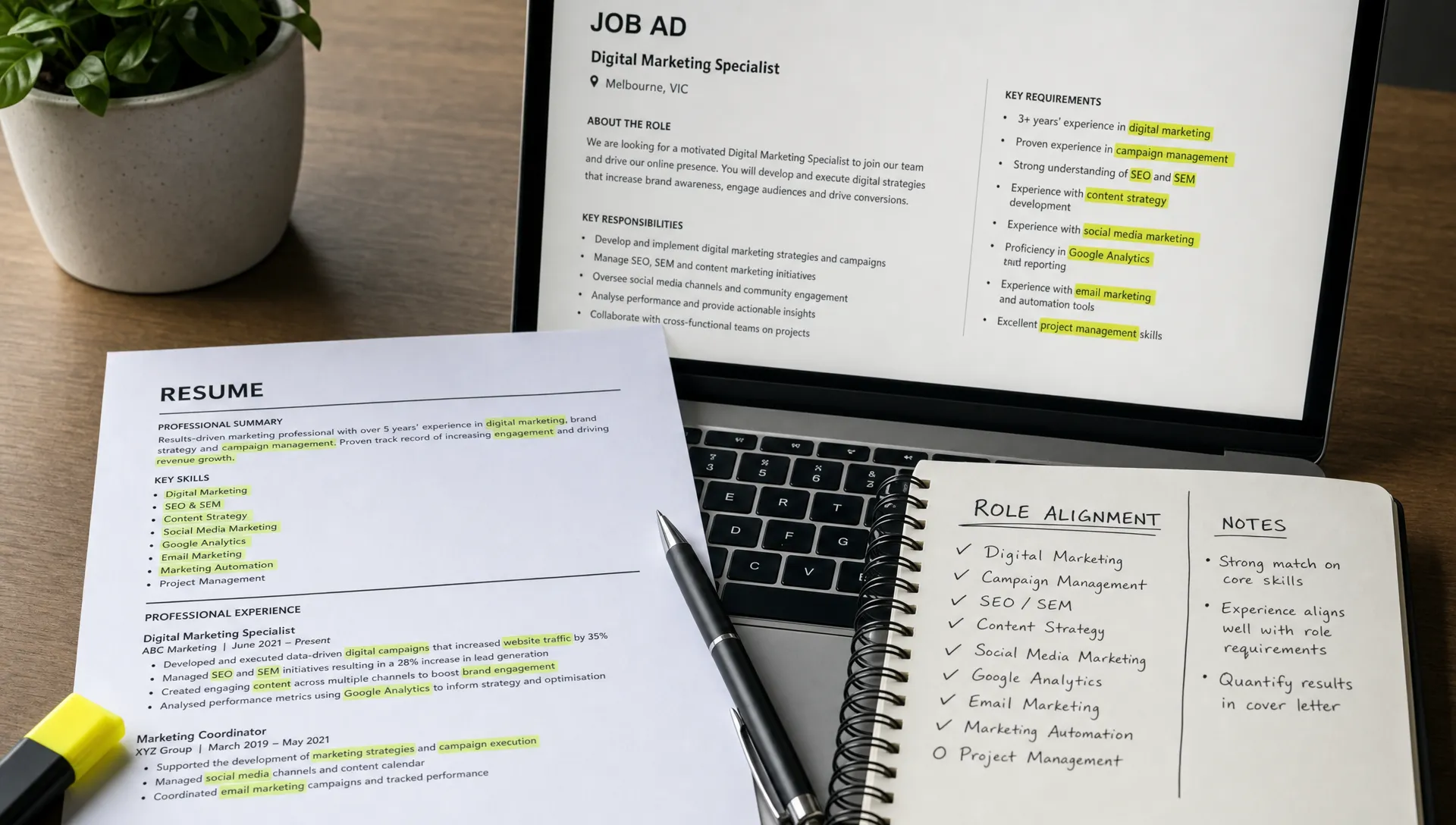
A properly formatted resume is not static. Before applying, check whether your work experience section reflects the job ad.
Look for repeated requirements in the ad, such as customer support, data entry, stakeholder communication, scheduling, reporting, sales, compliance, teamwork, or software tools. Then make sure your most relevant examples are visible in your experience section.
This does not mean rewriting your whole resume every time. Often, small changes are enough:
- Move the most relevant bullet point higher in the role entry
- Replace a generic duty with a more specific example
- Add a tool or process mentioned in the job ad, if you genuinely used it
- Reduce detail from unrelated roles to create space
- Match your job title wording only when it is accurate and honest
If you are unsure how much to adapt, this guide on matching your resume to the job you want explains how to align your summary, skills, and experience without losing authenticity.
Small formatting problems can make a strong candidate look careless. Before submitting your resume, check for these issues:
- Inconsistent date formats, such as “03/24” in one role and “March 2024” in another
- Missing employer names or unclear job titles
- Long paragraphs instead of bullet points
- Too many bullet points for old or unrelated roles
- Bullet points that start with weak phrases like “Responsible for”
- Unexplained short contracts that look like job hopping
- Overly designed layouts that make the experience section hard to follow
- Repeating the same bullet point structure across every role
Also check the basics: spelling, tense, and punctuation. Use present tense for your current role and past tense for previous roles. For example, use “coordinate” for a current role and “coordinated” for a past role.
A simple final checklist
Before you send your resume, review your work experience section against this checklist:
- Your most recent or most relevant experience appears first
- Each role includes job title, employer, location, and dates
- Dates use a consistent month and year format
- Bullet points begin with clear action verbs
- The most relevant roles have the most detail
- Claims are supported by examples, tools, scope, or results
- Internships, volunteering, and projects are labelled honestly
- The layout is simple enough for ATS and recruiter scanning
- The section is tailored to the role you are applying for
If your work experience section passes these checks, it is likely much easier for an employer to understand your value.
Frequently Asked Questions
How many bullet points should each job have on a resume? Most relevant roles should have three to six bullet points. Older or less relevant roles can have one to three. The goal is not to fill space, but to show the strongest evidence for the job you want.
Should I include every job I have ever had? Not always. If a job is very old or unrelated, you can shorten it or leave it out, especially if your resume is becoming too long. Keep roles that show relevant skills, career progression, reliability, or important industry experience.
What date format should I use for work experience in a resume? Use month and year, such as “Mar 2024 to Present” or “Jan 2022 to Nov 2023”. This is clearer than only listing years and more professional than using inconsistent shorthand.
Can I include volunteer work in my work experience section? Yes, especially if it is relevant to the role or helps prove transferable skills. Label it clearly as volunteer experience so you are accurate and transparent.
Should work experience come before education? If you have relevant work experience, it usually comes before education. If you are a student or recent graduate with limited work history, education may come first, followed by relevant projects, placements, and work experience.
Apply with a clearer work experience section
A well-formatted work experience section makes your resume easier to read, easier to trust, and easier to match to the role. It helps employers see not just where you worked, but how your experience connects to what they need.
If you want a clearer view of how your resume compares against real roles, Versadox can help you assess alignment, identify gaps, and make guided improvements before you apply. For students, graduates, and career changers, that clarity can make the difference between sending another generic application and applying with confidence.





.svg)